
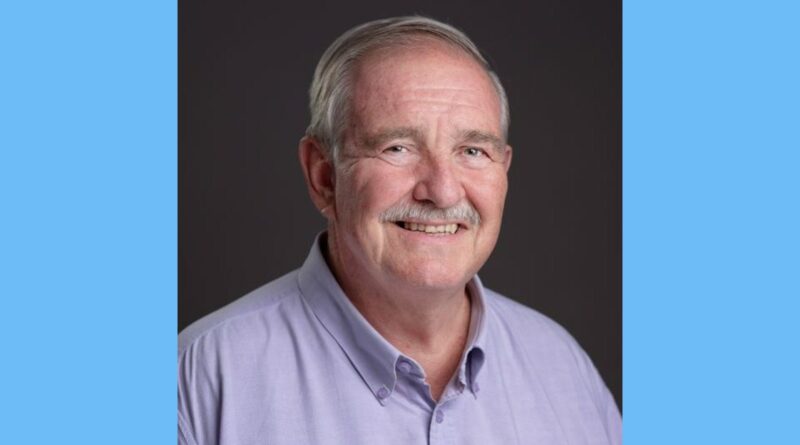
Professor David Nutt: ‘The biggest revolution in the treatment of mental disorders’
For Professor David Nutt, legalising research into and use of psychedelics for treatment of addiction, depression and post-traumatic stress disorder (PTSD) would be “the biggest revolution in the treatment of mental disorders probably in the history of the world”.
The Edmond J. Safra Professor of Neuropsychopharmacology in Imperial College London, Nutt was speaking to The Sofia Globe ahead of his May 14 presentation at the 2026 Sofia Science Festival “Using science to reduce the harms and enhance the benefits of drugs“.
He repeatedly has expressed his frustration at legislation, which he sees as motivated by political considerations and societal views, barring such research and treatment.
Psychedelics have a clinical utility in treatment of depression, addiction and PTSD, he says.
“So I think for those indications, it’s really stupid not to have them as medicines. And in fact, the reason they’re not medicines was nothing to do with health harms or even failure of evidence,” Nutt says.
“They were taken out of medicine because government in the 1970s were angry that they were changing the way young people tended to view politics and voting. So it was an unnecessary, it was a deliberate ploy, I believe, in order to try to stop people thinking differently about life and about decisions they’re making.”
Asked for his full list of disorders that could be treated with this line of therapy, he names depression and PTSD that have not responded to other treatments “certainly most addictions – definitely tobacco, alcohol, probably opiates, and possibly gambling”.
To these, he adds other disorders, such as obsessive-compulsive disorders “and then also moving outside of psychiatry, there is really good evidence in people with chronic pain, cluster headaches. Those are two areas where we can say there is definite evidence”.
“And then there’s obviously the research going on in areas like stroke, other forms of brain trauma, other disorders like, for instance, irritable bowel syndrome and that, but at least five or six disorders where the evidence is strong enough, I believe.”
He adds: “And then there’s another area which is, you might say, these are not disorders. These are just life experiences, but they’re still very important and quite traumatising to people. And those are people who are facing death, end of life, people in palliative care who, again, have got a mixture of end of life concerns, but also maybe chronic pain”.
Further, there is another group “a growing group of people who are called cancer survivors”.
These are people in whom cancer has gone away “but they don’t know if it’s going to come back, because the treatments they’re using are not around for long enough to know whether you get a permanent cure. And many of them with psychedelics can also help”.
When it is put to him that those opposing his views would argue that patients would go on – in 1960s parlance – “bad trips” or have their psychosis aggravated, Nutt says that his team strongly recommends that people with a history of psychosis or first-degree family who have been psychotic do not take a psychedelic trip because it could bring on or exacerbate their psychosis.
A separate aspect is that for people who have mental illnesses such as depression or trauma disorders such as PTSD or addictions “when they have the trip, it is not blissful. It is not like they’re going to some wonderful place and having a fabulous mystical…heavenly angels playing wonderful tunes”.
“The trips are usually very challenging because what they’re doing is they’re revisiting traumas that have led to their ongoing mental problems. And those trips can be enormously therapeutic, but they are challenging. We don’t call them ‘bad trips’, because we think they’re necessary.”
Nutt points out that, for example, the treatment for arachnophobia is being exposed to spiders “which makes you very, very, very distracted and very anxious. But you have to do that to overcome the fear”.
“It’s a bit like that. With psychedelic therapy, you have to go back and confront your demons in a way to confront the traumas that led you to be depressed or anxious. And that is challenging, but in the end, very rewarding.”
Asked if he has supporters of his view that the treatment should be legally available, he says: “Patients are behind us”.
“There are lots of patients who are writing to me and emailing me and saying, can I get therapy? And I say, no, because it’s illegal.”
Treatment may only be administered if it is a matter of a clinical trial.
“I think there have been surveys now that suggest around about 50 per cent of the population are sympathetic to psychedelic therapy for people who’ve got mental illnesses, people that need it.”
In the UK, there are some political parties that are supportive of a change, such as the Green Party, while the Liberal Democrats have said that they would review the drug laws if they were in a governing coalition, he says.
But parties, whether Labour or the Tories are “banging the old drum – drugs are bad”.
“Politically, the pendulum has not swung very much in the UK, if at all. Obviously, it’s swung quite a lot in America recently, because now we’ve got Trump and his allies saying that they really do believe that psychedelics are the future. They’re probably overstating it.”
But it’s nice to have some politicians that are being supportive rather than hostile, Nutt says, pointing to the example of Australia, which has allowed psilocybin for treatment-resistant depression and MDMA for treatment-resistant obesity in a national experiment to assess whether this could mean healing for people who are not being healed by other kinds of medicines.
Asked what legislative reforms he would implement if he could, Nutt says that users of drugs that are less harmful than alcohol should not be penalised, while drugs such as fentanyl, heroin and crack cocaine should stay illegal.
“I would still not be punishing use, but I would be using the Portuguese model, whereby users who are dependent would go into therapy and users that are not dependent, who are using them recreationally, would have civil sanctions to induce them to use less harmful drugs.”
How access to drugs less harmful than alcohol is a complicated question, he says: “Personally, I think I would use agencies such as pharmacies, where you have experts, pharmacists who are dispensing medicines, it would be perfectly possible to allow low-ish doses, doses which are in the same range, that come from suppliers that have got quality controls, to be made available to individuals, possibly with some kind of certification from their doctor, that the doctor doesn’t mind them taking it”.
Asked whether there was not a conundrum, that the legislative bar on research and therapeutic use of psychedelics raises the question whether there is sufficient evidence of the benefits, Nutt says: “Well, the laws were designed to stop research because the laws were designed to make sure the law could not be challenged by evidence. That’s why it was a particularly cruel and vindictive law.”
However, he adds, in some countries – not many – exemptions have been made for research, which is conducted mainly at academic centres, the only places that can afford the costs and working through the bureaucracy required to use the exemptions.
“The evidential base now for something like psilocybin, magic mushroom juice, is really overwhelming. So over, I think now 12 trials in depression, all of which are positive.”
“When you compare that with the evidential base, for instance, for getting say, Prozac licenced – Prozac was licenced on the basis, I think, of two positive trials and four failed trials. With psilocybin, we’ve got 12 positive trials and no failed trials. And the trials have been done in academic centres rather than done, as many of the drug company trials are done, in very, very much less rigorous ways,” he says.
“So I think we can say psilocybin, categorically, we have enough evidence. With MDMA, the same.”
LSD is “trickier,” Nutt says. There have been relatively few trials in the modern era, it is a more complicated drug to use, it has more stigma attached to it and individuals have to be kept in hospital overnight because its effects last longer.
“There’s not an overwhelming body of evidence in the modern era. But if you go back to the 50s and 60s, there were, I think, 40 000 patients treated with LSD with generally pretty good outcomes and actually remarkably very few adverse effects. So I think historically, we can say the safety data for LSD is strong and the modern efficacy data is moderate.”
Asked whether there has been engagement with defence and military authorities about opening the way for the use of psychedelics to treat veterans who have PTSD, Nutt says: Of course the military should have it.
“I tell you, I have been in discussions with military leaders for 15 years to do this, some of them are sympathetic, but others say ‘the law overrides any decision I want to make for our people’.”
Having recently met at delegation from Ukraine at the European Parliament, he says that Ukrainian doctors want access to drugs like MDMA to use it in treatment, but cannot because it is illegal.
“Currently, and this is bizarre, Ukrainian law is based on Russian law. Only a few years ago they changed their law to allow morphine. The Ukrainians, because of the war, changed their law to allow morphine.
“They haven’t yet managed to persuade that there would be a net benefit to changing the law to allow this therapy and it’s completely absurd.”
In Australia, the MDMA experiment has been going for two years now and just recently the government was sufficiently pleased by the outcomes that they have now agreed to fund veterans’ MDMA therapy, he says.
“And that will have the advantage, obviously, of not just helping veterans, but also the data have been collected quite systematically in Australia, building up a greater body of evidence of the utility.”
Asked about his work on coming up with an alternative to alcohol, so as to have its pro-social benefits without the negatives such as addiction and other serious health risks, Nutt says: “Well, I can show you a bottle”.
He flourishes the bottle: “There you go. So, that’s a whisky alternative to alcohol called Cask”.
It’s a botanical drink made of botanical extracts which mimics the effect of a small glass of whisky, but it doesn’t have any alcohol and won’t cause the problems that alcohol causes.
“So, yes, we’ve managed to make a series of botanical drinks which serve that purpose. But the big ambition, which I think is what you were referring to, a long-term ambition was to make a small molecule.”
We call it Alcarelle, he says: “you get the pleasures of alcohol, but without the harm.”
“In my laboratory, I have three molecules, three lead molecules. We’ve made over 50 molecules. We have three lead molecules. The limiting factor there is raising funding to take the molecules through food safety testing.
“Because alcohol is a food stuff, we have to comply with food safety testing to sell something alongside alcohol. The botanical is not too difficult because in our drinks, we only use botanicals which are already approved as foods. But for a new molecule, Alcarelle, we have to take it through food safety testing, and that’s very expensive.”
Asked whether there has been resistance from the alcohol lobby, he says that 15 years ago “they were pretty hostile” but that has changed, as middle-aged people and especially young people are switching away from alcohol or reducing consumption. That makes the industry interested in alternatives to maintain its market share.
“I mean, I’m not against the alcohol. If alcohol didn’t harm you, I’d be in favour of it. The problem is it does harm you. I’m in favour of the sociability. So I’m in favour of social drinking, but ideally without the harms of alcohol.”
Following his presentation at the Sofia Science Festival, being held at the Sofia Tech Park in Bulgaria’s capital city, Professor Nutt will be holding a book-signing.
Why should people buy your book, he is asked.
“Because this is going to be the biggest revolution in the treatment of mental disorders probably in the history of the world,” he says.
The Sofia Globe is a media partner of The Sofia Science Festival.


