
Bulgaria’s largest parliamentary group refuses mandate to seek to form government
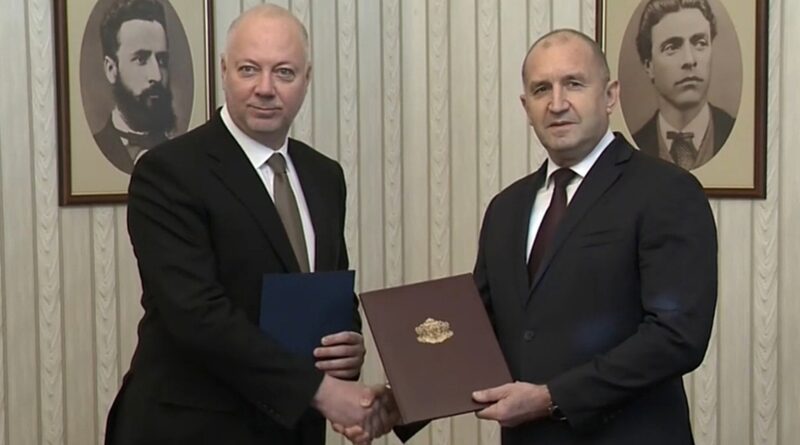
As it had repeatedly announced in advance that it would, the Bulgarian Parliament’s largest group – Boiko Borissov’s GERB-UDF – refused on January 12 a mandate to seek to form a government.
This was part of a process that seems to show Bulgaria inexorably on the path to early parliamentary elections in the spring.
Outgoing Prime Minister Rossen Zhelyazkov, who was elected into office on January 16 2025, was the sole representative of GERB-UDF to meet head of state President Roumen Radev for the brief ceremony.
The Zhelyazkov government resigned in December against the backdrop of mass street protests against corruption and abuse of power, and in particular against Borissov and Magnitsky Act-sanctioned Delyan Peevski, seen as holding sway over the government while formally not participating in it.
Radev told Zhelyazkov: “You showed wisdom and responsibility by resigning as a result of the mass protests throughout the country.
“But society expects us, in addition to relieving the tension, to continue to govern responsibly, in accordance with all the requirements of the Bulgarian constitution until a new caretaker government takes office,” Radev said.
Zhelyazkov said: “These days it is exactly one year since the moment when I successfully presented you with the Cabinet I had formed in this hall, expecting the National Assembly to vote on it.
“In this one year, a government that was formed within the spirit of constructivism and the implementation of important strategic goals for the country, has done a huge amount of work in terms of volume and significance, fulfilled its strategic goals, despite the unpopularity of a large part of the decisions and acts that did not have a short-term and medium-term goal, but looked much further into the future with a view to the sustainable development of Bulgarian society,” Zhelyazkov said.
“This government went through six votes of no confidence and at the moment when civil society demanded new legitimacy, the Bulgarian government, guided by the understanding that GERB – UDF has always professed during these years – to ensure stability and security for the country, resigned.
“We do not view this as a political retreat, but we view it within the spirit of the democratic traditions that we have been following for the last three decades, namely sustainable development of Bulgaria and avoiding any division in society in the name of the well-being of the Bulgarian people,” he said.
Radev must, in accordance with the constitution, take the next step in the process, which is offering to Parliament’s second-largest group, opposition We Continue the Change – Democratic Bulgaria (WCC-DB), the second mandate to seek to form a government.
He said on January 12 that he would do so “in coming days”.
WCC-DB repeatedly has said that it will refuse the mandate.
After that, Radev may offer the third and final mandate to the parliamentary group of his choice. Should that come to nothing, he must appoint a caretaker government and decree a date for parliamentary elections.


