
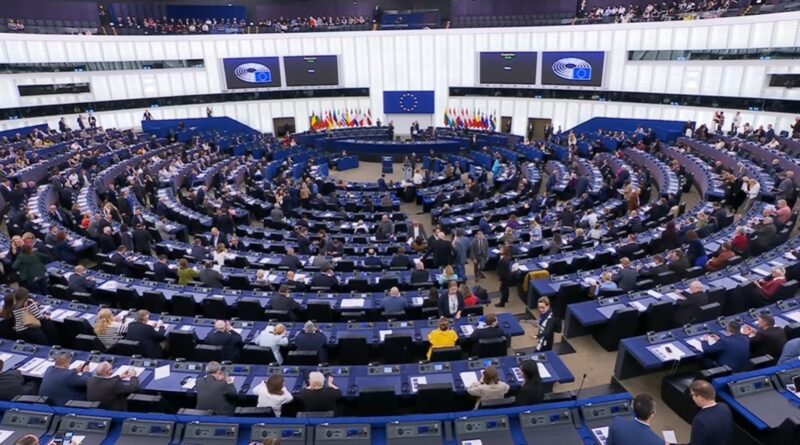
European Parliament approves AI Act amendments, ‘nudifier’ ban
The European Parliament voted on June 16 to give its final approval to the amendment of certain rules within the EU as part of the digital omnibus package.
The vote was approved with 423 votes in favour, 57 against and 174 abstentions.
The legislation postpones the application of certain parts of the AI Act to ensure that the necessary standards and support measures are in place.
Obligations on high-risk AI systems will apply from December 2 2027 for stand-alone high risk AI systems; and from August 2 2028 for AI systems embedded as safety components and covered by EU sectoral legislation on safety and market surveillance.
The law also delays the application of watermarking obligations on AI-generated content until December 2 2026. By this time, AI-generated content will have to be labelled in a machine-readable way to increase transparency.
The law bans AI systems that generate child sexual abuse material or create images, videos and audio depicting an identifiable person’s intimate parts, or sexually explicit activities, without their consent.
Providers will not be allowed to place these systems on the EU market, unless they come with adequate technical safeguards to prevent the creation of such material. The prohibition also applies to deployers using them for this purpose.
Companies will have until December 2 2026 to bring their systems in line.
Other changes to the AI Act include the removal of overlapping requirements on AI for machinery products by clarifying that they only need to comply with sectoral safety, while ensuring an equivalent level of health and safety.
During the plenary debate, co-rapporteur for the Internal Market and Consumer Protection committee Arba Kokalari (EPP, SE) said: “To all the entrepreneurs and engineers out there, we are pressing the pause button on the AI Act and we are reducing red tape.
“It must be simpler to build the future’s tech companies in Europe and to stay in Europe, so we can become an AI continent,” Kokalari said.
“Do that, and we can ensure our prosperity, our security and our future,” she said.
Co-rapporteur for the Civil Liberties, Justice and Home Affairs committee Michael McNamara (Renew, IE) said: “This omnibus was about establishing legal certainty by extending certain timelines while preserving the AI Act’s architecture and strengthening protections where possible”.
“We agreed to a limited change on machinery products, with clear safeguards, and secured an outright ban on AI nudification apps,” McNamara said.
“They impact real people, overwhelmingly women, with the purpose of humiliating, degrading and objectifying them. I’m proud that this Parliament fought for the ban, which will enter into force before the end of this year,” he said.
Before the law can enter into force, it still needs to be adopted formally by the Council of the EU.
Most of the provisions of the AI Act will start to apply on August 2 2026.