Radev threatens Bulgarian veto if Russian Patriarch remains on proposed EU sanctions list
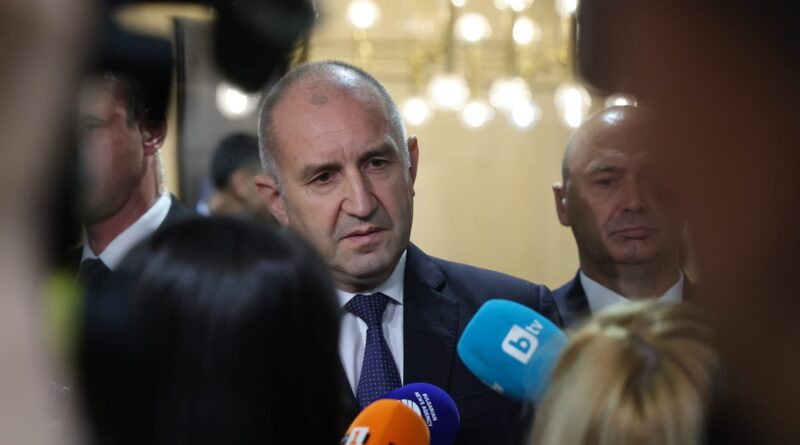
Bulgaria will veto the new sanctions package against Russia if it includes measures against Russian Orthodox Church head Patriarch Kirill, Prime Minister Roumen Radev told journalists in Brussels on June 18 before the start of the European Council meeting.
Kirill, born Vladimir Gundyayev, is a close ally of Russian ruler Vladimir Putin and allegedly worked for Soviet secret service the KGB.
In Bulgaria, Kirill is remembered for his aggressive comments against Bulgaria’s leaders in 2018 and for the episode in which then vice president Iliyana Yotova, the Radev ally who is now head of state, fell on her knees before him on receiving him.

Putin’s regime has declared Bulgaria a hostile nation since Russia’s illegal invasion in 2022 of Ukraine, and Russia’s ambassador in Sofia, Eleonora Mitrofanova, is notorious for her disparaging comments about Bulgaria and Bulgarians, although no administration has declared her persona non grata. The reasons for this lack of a response on the part of a succession of Bulgarian governments – elected and caretaker – to her offensive comments, have never been publicly explained.
Radev, whose government took office on May 8 2026, has a track record while head of state of opposing sanctions on Russia and of calling for a “diplomatic” solution to that country’s illegal war on Ukraine. Soon after taking office, his government said that Bulgaria would no longer supply military weaponry to Ukraine.
Radev acknowledged to reporters that the European Council would not be discussing the proposed 21st package of sanctions on Russia, which would be discussed in July when EU foreign ministers meet.
“Bulgaria has already expressed certain reservations about these sanctions, because we have already stated our position that we will not allow sanctions that harm and pose a risk to Bulgaria and the economy,” Radev said.
“I can also point out the risk to the functioning of Lukoil, I can point out the risks to supplying the capital’s metro with spare parts, as well as the concerns of the Ministry of Agriculture and Rural Development about the supply of fertilisers to Bulgaria and the entire EU, so all these things are yet to be considered in the EU councils.”
“We are following our own national interest. If we see a significant risk to the operation of Neftochim, we will ask for it to be excluded from the package,” Radev said.
Regarding the possible inclusion of the Russian Patriarch on the sanctions list, Radev called for “not mixing politics and religion”.
“Let’s not mix politics with religion. Today in Sofia I said that the time of the Crusades is over. This war has already gone beyond the trenches. It has spread to the economy, energy, we see that it affects culture and sports, and now it remains to encompass religion,” he said.
According to Radev, the issue is not so much related to the personality of Patriarch Kirill, but rather to the attitude towards the Russian Orthodox Church as an institution.
“I’m not interested in Patriarch Kirill. I’m interested in the Russian Orthodox Church, because Russian Orthodoxy contributed to our liberation from five centuries of Ottoman slavery. I don’t care what the patriarch does. I’m interested in the entire Russian society that has this church. It is Eastern Orthodox, just like ours. We are one family,” Radev said.
Radev said that the position of the Bulgarian Orthodox Church should also be heard on such issues .
“The Bulgarian Orthodox Church should also have an opinion here when we talk about this type of sanctions. How exactly will this type of sanctions contribute to the end of the war?” Radev said.
Radev said that he would speak with Ukrainian President Volodymyr Zelenskyy later on June 18 on the sidelines of the European Council. “The meeting is at the request of the Ukrainian side and I expect to learn the reason,” he said.
Arguably the best-remembered encounter between Radev, when Bulgaria’s President, and Zelenskyy, was when the Ukrainian President visited Sofia and delivered to Radev a humiliating dressing-down.
Radev said on June 18 that Bulgaria will support the start of negotiations for Ukraine’s membership in the European Union.
“Bulgaria will in no case hinder the process of starting negotiations. Bulgaria will in no case hinder common European decisions on Ukraine,” Radev said.
Regarding military aid to Kyiv, Rade said that each country decides for itself what support to provide.
“Whoever wants to deliver military aid to Ukraine, let them do so. We make decisions about our deliveries based on what we have in stock and whether we can do it,” Radev said.
During Kirill’s visit to Bulgaria in 2018 in honor of the 140th anniversary of Bulgaria’s liberation from the Ottoman Empire, Radev said he thanked all ethnicities that were struggling for Bulgaria’s independence from the Ottomans as a part of Russia’s Imperial Army: Russians, Romanians, Finns, Ukrainians, Belarusians, Poles, Lithuanians, Serbs and Montenegrins.
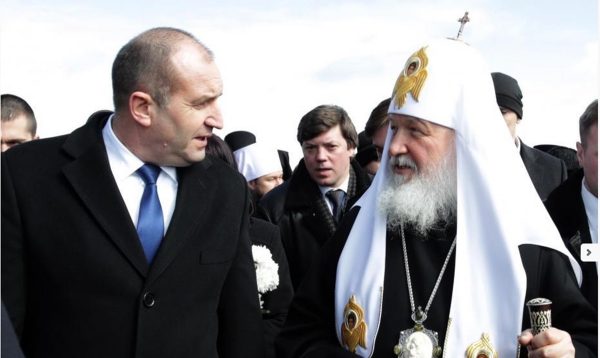
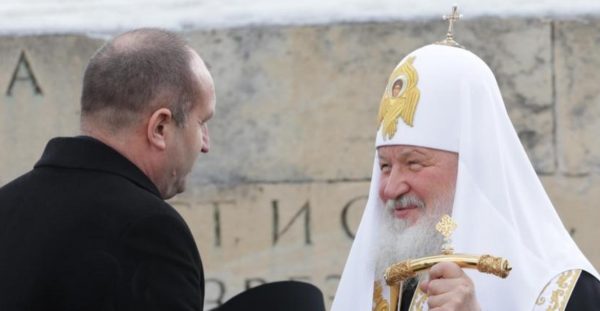
In response, Kirill criticised the statement and said that Bulgarians should only thank Russia, not anyone else, and that there was no place for “false interpretations of history”. Kirill said that Bulgarians have been known since the Soviet era for being bad speechmakers, who are unable to speak without paper notes.
In 2023, two Swiss newspapers, citing classified archives, said that Kirill worked for the Russian intelligence service in Switzerland in the 1970s.
Le Matin Dimanche and Sonntagszeitung said that the police had verified that Kirill was a member of the KGB.
According to the Sonntagszeitung and Le Matin Dimanche weeklies, the Swiss police file on the man who today serves as the spiritual head of the Russian Orthodox Church “confirms that ‘Monsignor Kirill’, as he is referred to in this document, worked for the KGB.”
Under the code name Mikhailov, Kirill’s mission was to influence the World Council of Churches, already infiltrated by the KGB, the papers said. Allegedly, his mission was to tone down the lack of religious freedom in the Soviet Union.
(Photo of Radev: government.bg)