
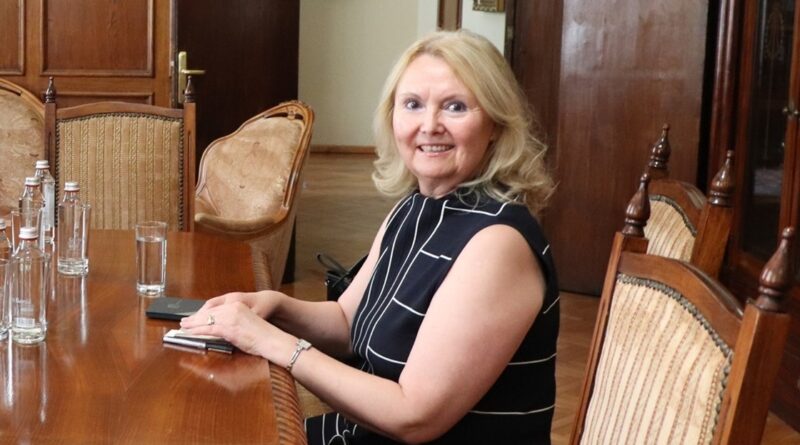
Croatia’s ambassador to Bulgaria on the euro adoption experience
Croatian ambassador in Sofia Jasna Ognjanovac described in a television interview on September 24 her country’s experience of the euro adoption process.
Croatia joined the euro on January 1 2023. The European Union’s finance ministers approved on July 8 the final steps that will see Bulgaria use the euro as its currency from January 1 2026.
“In our case, there were no strong opponents of the euro. First, because Croatia is a tourist country. Last year, we had over 21 million tourists. They most often come from countries in the euro zone, so the euro was close and familiar to us,” Ognjanovac told Nova Televizia.
She said that at the time of the introduction of the euro, 61 per cent of Croatians fully supported the euro.
“Our government started the information campaign very early – a year before the actual exchange of the kuna with the euro, precisely to explain to people what would actually happen and thus remove confusion and fears,” Ognjanovac said.
She said that Croatia and Bulgaria have the same history regarding their currencies.
“And our kuna was tied first to the German mark and then to the euro, just like here. Currently in Bulgaria, when you sell your apartment or car, you will announce the price in euro, and the payment will be made in leva. The situation was the same in Croatia.
“The difference is that now that we are part of the euro zone, we are at the table with the other members and participate in making decisions about the future of the euro, about interest rates and other important issues for our currency, Ognjanovac said.
“In Bulgaria, you now follow the decisions made by the euro zone. Your lev is tied to the euro, but you are not part of those who make the decisions. After January 1, the governor of the Bulgarian National Bank will also have a say in the future of the single currency,” she said.
Ognjanovac said that when a country is part of a certain group, everyone else in it stands behind it in some way.
“They protect your trade and currency. You are not alone. The conditions for borrowing money from financial markets are becoming much more favourable, and this will also affect the interest rates at which banks grant loans.
“In fact, these 20 euro zone countries are a kind of guarantor of your financial stability. One of the direct consequences of the introduction of the euro in Croatia is that for the first time in history our economy has an investment rating of A, which is very important for investors and for our economy,” she said.
“Croatia introduced the euro under much worse circumstances than the situation Bulgaria is in now. Covid, the war in Ukraine, global supply problems, were the reason why Croatia had inflation of about 11 per cent before the introduction of the euro,” Ognjanovac said.
“After that, it constantly fell. It is currently around four per cent. Calculations by Eurostat and the Croatian Statistical Institute show that only 0.2 percent of the inflation at that time was due to the euro. Now the situation with you is much different. Inflation here, as in Europe, is significantly lower – you are in a much better position,” she said.
She said that in 2022, before the introduction of the euro, the average salary was about 1000 euro, and now it is 1500 euro.
Labour productivity had also seriously increased, she said.
“GDP per capita on entering the European Union in 2013 was 12 000 euro, and now it is 22 000 euro. After entering the European Union and the eurozone, we have made serious progress.”
Ognjanovac said that in Croatia, there were calls to boycott stores. Merchants took advantage of the situation to raise prices even more.
“Some of the supermarkets tried to take advantage of the situation by adding a mark-up, instead of simply converting the prices into euro, as stipulated by law.
The government responded with very serious inspections, but consumer organisations were also part of the control, Ognjanovac said.
“We opened a free phone line so that anyone who doubts the price could call and report the trader.
In the first two months after the introduction of the euro, many fines were imposed. About 400 000 euro of them went into the budget.
“Our goal was not for the budget to collect additional funds, but to demonstrate the government’s firm determination not to allow consumer fraud, after which these attempts stopped,” she said.
Ognjanovac gave an example – a hairdresser on her street raised her prices significantly. The hairdresser was fined 3000 euro because she could not explain the increase.
“The government prepared a ‘white list’ of merchants who transparently announce their prices. This way, people chose to go to these shops and not to those that are not transparent.
“I am sure that your government will stop such attempts here too, because this is what is provided for in your law,” Ognjanovac said.
“I returned to Croatia to welcome 2023 and see how things will happen with the banks and the conversion of kunas into euro.
“On December 31, I withdrew kunas from an ATM. At 1am, I returned and withdrew euro. Things happened smoothly and without any problems,” Ognjanovac said.
“I am sure that here, on January 1 next year, there will be no difficulties for Bulgarian citizens. All preliminary measures have been taken by your government,” she said.
For Ognjanovac, the euro is a convenience, she said.
“I get my salary in euro, but I exchange them for leva because I live here. And I actually pay very serious fees to the banks – it’s a few hundred euro a year that I could spend in one of your nice stores or in some other way.”
Ognjanovac said that the euro was introduced in Croatia without any unpleasant surprises, everything went smoothly. In spite of the problems with those who abused prices.
“There were some, but it was not a surprise to the government. We were prepared. There are always people who will try to commit some kind of abuse, but if you are prepared, you can stop them.
“We also had a requirement for traders – to return their prices to the level of December 31, before the introduction of the euro, if they could not justify the increase in price. These attempts ended after the first one to two months.
“I believe that everything is under control here too and that the transition to the euro will proceed without any problems. We can talk again in a year and see how it went,” Ognjanovac said.
For reliable official information on Bulgaria’s transition to the euro, the Association of Banks in Bulgaria has a Q and A, in English.
The official evroto.bg website has an English-language version, while the European Commission made available on July 8 a Q and A on Bulgaria’s changeover to the euro.
(Photo via the Croatian embassy’s Facebook page)


