
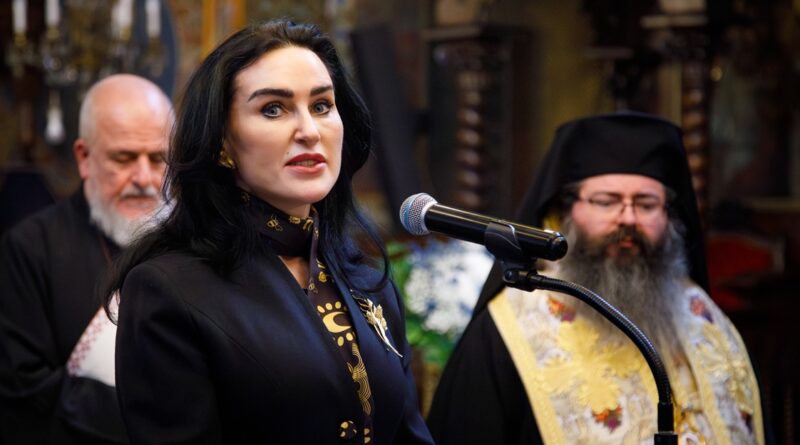
Holodomor inflicted on Ukraine by Stalin’s USSR commemorated in Bulgaria’s capital
The Holodomor, the genocide inflicted on Ukraine by Joseph Stalin’s Soviet Union, was commemorated on November 22 with a service in the St Nedelya church in Bulgaria’s capital city Sofia.
The embassy of Ukraine said in a post on Facebook that at the church, members of the public, public figures and representatives of political life paid tribute to the millions of victims of the Holodomor of 1932–1933, as well as the mass artificial famines of 1921–1923 and 1946–1947.
The Holodomor is a mass famine in Ukraine caused by the Soviet government – the result of a targeted policy of the regime, the embassy said.
The policy of the USSR and Joseph Stalin for forced collectivisation led to the seizure of agricultural production and vital supplies, which caused a devastating famine.
According to various estimates, the victims added up to several million, but the precise number remains unknown, the embassy said.
Dozens of countries, including Bulgaria, recognise what happened in 1932–1933 as an act of genocide against the Ukrainian people.
Bulgaria’s National Assembly voted on February 1 2023 to recognise the Holodomor as genocide. The European Parliament voted its recognition in December 2022.
Ukrainian ambassador Olesya Ilashchuk emphasised the importance of remembering the victims, called for never forgetting what happened and to continue to honour the innocent victims.
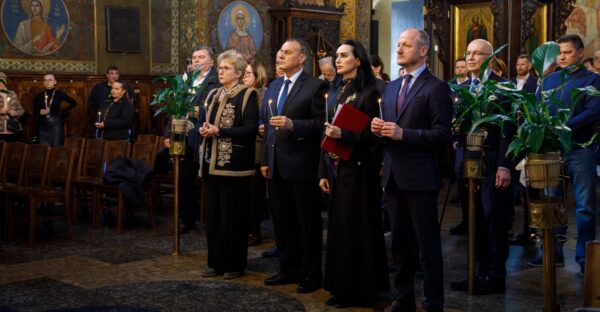
The embassy called on people to light at a candle on November 22 at 4pm and hold a minute of silence in memory of the victims of the Holodomor.
“Let us preserve the truth about this terrible tragedy and pass on the memory of it to future generations so that it never happens again,” the embassy said.
(Photos: Embassy of Ukraine)


