
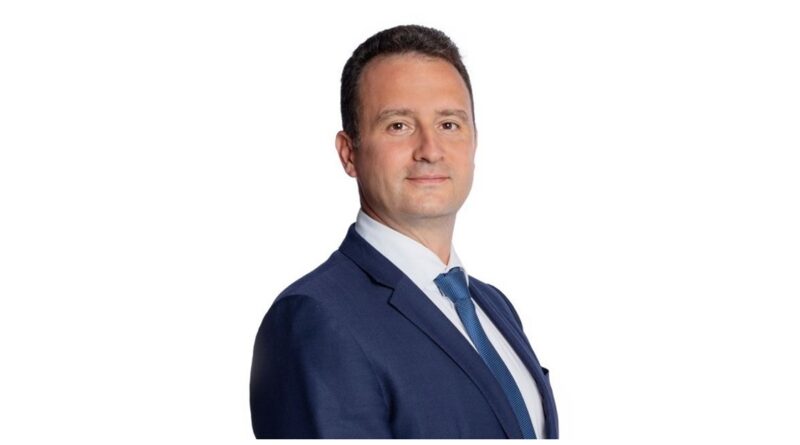
Energy Minister: Special administrator of Lukoil Bulgaria must get permission from government for each move
The special administrator of Lukoil assets in Bulgaria must obtain permission from the government for each specific activity, Energy Minister Zhecho Stankov told Bulgarian National Radio (BNR) in an interview on November 16.
On November 14, the Bulgarian government appointed National Revenue Agency head Roumen Spetsov as special administrator of Lukoil assets in Bulgaria, including the country’s sole refinery. The same day, the US and UK announced temporary derogations from sanctions affecting Lukoil in Bulgaria.
Stankov said that the special administrator “had not been given such rights” as have been claimed.
“Almost like he wakes up with some grandiose idea and does something, on the contrary. The Cabinet is the control body that can allow or prohibit him from certain actions,” Stankov said.
The appointment of Spetsov has been criticised by the opposition We Continue the Change – Democratic Bulgaria coalition and by President Roumen Radev because the revenue agency chief does not have the qualifications set out in law.
Stankov said: “Who knows better the way the refinery is paid and works than the National Revenue Agency? The fact that its current director Roumen Spetsov is taking the helm, will monitor and be the person responsible to our partners in the UK and the US is an additional guarantee for them that everything will be implemented in the way we promised”.
He said that Spetsov’s candidacy to be special administrator of Lukoil had been based on a report submitted by the Minister of Economy, Petar Dilov.
“If the sale of Lukoil’s assets begins only on the territory of Bulgaria, we have created a screening mechanism, which is headed by Deputy Prime Minister Tomislav Donchev, in which I also have a representative through a deputy minister whom I have appointed, so that this owner can be examined in detail whether he is stable and predictable enough to be able to guarantee national security,” Stankov said.
“Through the State Agency for National Security and through this screening committee, the state can guarantee 100 per cent screening and be the last instance to decide whether it agrees or not with such a deal, the goal being to guarantee the security of supplies in the country.”
Stankov said that if the parent company Lukoil sells its assets in Europe during the period of the derogation Bulgaria has received, then the sanctions on all companies will be lifted and in this case the state will not have to do anything.
But if such deals do not happen along the chain, it is a natural principle to request an extension of the derogation with the condition that the special administrator will guarantee that no financial resources are directed to Russia, he said.
Stankov said that Bulgaria has no additional conditions from the US for the exemption from the sanctions imposed on Lukoil to enter into force.
He said that if necessary, the postponement of sanctions against Lukoil could be extended.
According to Stankov, after the derogation, the tension that had built up has already been overcome.
“There are no additional conditions that have been set. On the contrary, the transactions and the way in which the derogation has been granted certainly gives peace of mind to financial institutions in our country, which will continue to provide their services to these enterprises,” he said.
“Extremely important, which I must mention, a letter was received that was disturbing even last week, which in order not to disturb the public, we were in no hurry to share. Namely, that the large companies with which the bank cards work had also submitted information to the banking institutions to terminate the activity with these cards.
“Now, based on this new derogation, I am sure that this has already been overcome and everything will be calm,” Stankov said.
He said that it was not possible under the law in force since 2023 to guarantee the main activity of the special administrator – to ensure that there is no leakage of financial funds from subsidiaries to the parent company:
“Therefore, we took as a basis all the useful practices and documentation that were prepared during the time of Nikolai Denkov as Prime Minister, and developed functions that could give peace of mind to the sanctioning authorities.
“When the figure of a special administrator was created in 2023, he had one main task: if the current management wants to block the work of the refinery because it does not agree to stop processing Russian oil, the special manager should step in and continue the technological work of the refinery.
“In the current hypothesis of sanctions, the management is not unwilling to perform its functions, but is unable to perform them, because from November 21 it was expected that it would not have access to its bank accounts and payments.”
According to Stankov, for this reason, it was necessary for the law to enable the special administrator, entering into the company, to have the opportunity to perform the function of the owner of the capital and to guarantee 100 per cent monitoring and the impossibility of funds being released to be directed to the mother company”.
Stankov said that the option of the Lukoil refinery in Bourgas being bought by the state is “a possibility, but it cannot be undertaken by anyone alone”
“We have not discussed with Dragomir Stoynev, head of the parliamentary group of the Bulgarian Socialist Party – United Left, his statement about the possibility of BEH (Bulgarian Energy Holding) buying Lukoil. I am not part of the joint governance council, where the coalition comments on various ideas, if they want, I can get involved”.
Stankov told BNR that Bulgaria still had six months of petrol, four months of diesel and two months of aviation fuel.
Bozhidar Bozhanov, co-leader of Yes Bulgaria – part of the WCC-DB coalition – told BNR on November 16 that “most likely, the Russian management will continue to manage the Burgas refinery, and Roumen Spetsov will control the transactions.
Bozhanov emphasised that Spetsov does not meet the legal criteria to be special administrator, because “being a tax official and having audited Lukoil does not mean that you have experience in the oil industry.”
But the law was written in such a way that even the choice of a special administrator who does not meet the requirements for a minimum of five years of experience in the oil industry cannot be appealed against, Bozhanov said.
(Photo of Stankov: Energy Ministry)
For exclusive subscriber-only access to The Sofia Globe’s analysis and commentary on events in Bulgaria, please sign up to our page on Patreon:
Become a Patron!