
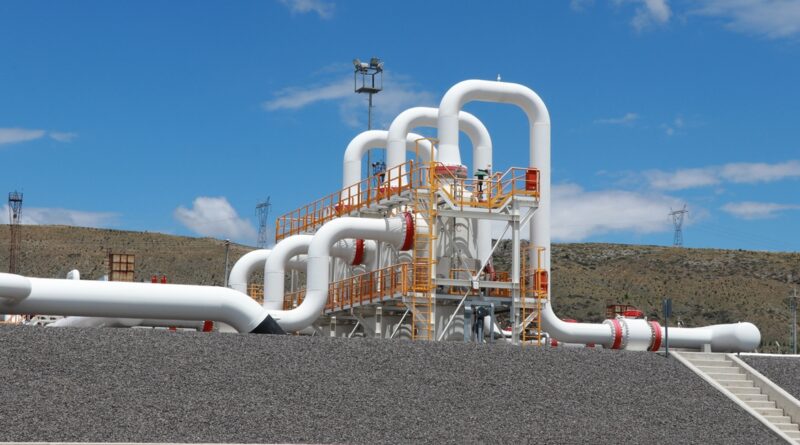
Bulgaria’s controversial contract with Türkiye’s Botaş ‘frozen’ for 15 months
Bulgaria’s state-owned Bulgargaz and Türkiye’s energy firm Botaş signed on July 6 a protocol to freeze the contract between the two companies for 15 months, during which period only the capacity used by the Bulgarian side will be paid for under “improved conditions,” the Bulgarian government information service said.
The contract, signed in 2023 by the Gulub Donev caretaker government appointed by then-president Roumen Radev, long has been widely criticised as highly lucrative for Botaş but wastefully disadvantageous for Bulgaria.
The signing of the protocol took place while Prime Minister Radev was in Ankara for the July 7 – 8 Nato summit. Before the summit, Radev met Turkish President Recep Tayyip Erdoğan.
The Bulgarian government statement did not make clear what the “improved conditions” are and it is unclear what will happen to the debts accumulated by Bulgargaz so far.
According to the statement, Bulgaria and Türkiye have a common interest in using the maximum capacity for natural gas transmission and will work on renegotiating the contract between the two companies under current market conditions.
In spite of the evidence that the contract is not beneficial for Bulgaria, Radev has ardently defended it, accusing previous governments of not using it properly.
The contract put Bulgaria in the absurd situation of paying more than four billion leva without receiving gas.
According to the contract, Bulgargaz receives access to the liquefied gas terminals and the gas transmission network of Türkiye, and is obliged to pay fixed fees of about $500 000 a day, regardless of whether it uses it. And so on for 13 years.
The contract contains other unfavourable conditions, with arguably the worst being that it lacks clauses for renegotiation or termination.
As a result, Bulgargaz is facing virtual bankruptcy, indebted to Botaş by hundreds of millions of dollars, with only 10 per cent of the contracted capacity used.
With a possible 14 tankers per year (or about 1.8 billion cubic metres), Bulgargaz has imported only four tankers in more than three years. The reason – the fees for unloading, regasification and transmission of Botaş are so high that they make the final price of the gas absolutely unacceptable.
Several Bulgarian governments have held talks with Romania, Moldova, Ukraine and Slovakia about joint tenders for these 14 cargoes, but no one has expressed interest.
Bulgaria has long been trying to change the contract with Botaş, but the Turkish side refused. Only a few weeks ago did it give a sign that it is willing to negotiate.
An interview with the Turkish Foreign Minister with Bulgarian news agency BTA made it clear that Ankara wants a comprehensive agreement on cooperation in the field of energy, which will include increasing the capacity for natural gas transmission between Türkiye and Bulgaria.
Türkiye ties the change to a number of agreements in other areas – opening the second railway line between the two countries and participation in the construction of the Black Sea highway, expansion of the Kapitan Andreevo – Kapikule border crossing point, as well as the opening of new checkpoints. It is not clear which of these conditions Bulgaria has agreed to.
Ivailo Mirchev, co-leader of opposition Yes Bulgaria – part of the Democratic Bulgaria coalition – reacted to the “freezing” of the contract by saying that “for years, they have been convincing us that this contract is beneficial for Bulgaria. ‘Experts” from [Radev’s] Progressive Bulgaria claimed that it was concluded under extremely good conditions for the country.”
“If the conditions are so favourable, why does Bulgaria agree to freeze the contract?” Mirchev said.
“The truth is different. This contract, concluded by the caretaker government for 13 years, leads to commitments worth billions of leva, but without clear economic sense for Bulgaria,” he said.
Yes Bulgaria’s other co-leader, Bozhidar Bozhanov, put forward several questions.
Bozhanov asked if the contract was so good, why would it be renegotiated.
“Is Radev admitting through this move that the contract with Botaş was a mistake?” he said.
Bozhadnov asked: “Since Türkiye is deprived of its secure daily income, what will it receive from Bulgaria instead – in energy and infrastructure, for example?”
“Is rescuing Private Peevski for the purpose of Ankara’s control over the Movement for Rights and Freedoms part of the deal?”
Bozhanov asked whether these actions have an impact on the vertical gas corridor project, and “is it appropriate to create new strategic dependencies quietly and without consultations in formats related to national security?”
Nikolai Denov of We Continue the Change – who when he was prime minister pointed to the Botaş contract as one of the failings of the caretaker government headed by Donev (who now is Finance Minister in the Radev government) – asked what Radev had promised.
Denkov asked what commitments had the state undertaken to the make the temporary freeze happen of a contract disadvantageous for Bulgaria.
Temenuzhka Petkova of GERB-UDF said: “If the contract was really so profitable, we shouldn’t be happy that it is frozen for the next 15 months. And notice how the 15-month period also coincides with the holding of local elections. If it is unfrozen on the 16th month, what happens to the accumulated liabilities at the moment?”
Energy expert Martin Vladimirov of the Centre for the Study of Democracy told Nova Televizia on July 7 that renegotiating the agreement with Botaş could become a key element in the diversification of gas supplies to Europe, as long as it is not used to bring Russian gas through Türkiye to the European market.
“This can be an opportunity for Bulgaria, only if we ensure low transmission fees and do not become a Trojan horse for Russian gas to be laundered’ through Türkiye,” Vladimirov said.
Vladimirov said that Bulgaria has the potential to play a strategic role in the transfer of liquefied natural gas from global markets to Central Europe, but only if the Turkish gas infrastructure is used for real diversification.
He said that Bulgaria, Romania and Greece are already working on the Vertical Gas Corridor. Its aim is to transport natural gas from terminals in the Aegean Sea to markets in Central Europe.
However, he said, this corridor is not sufficient on its own to completely displace Russian gas.
That is why Türkiye could be the key missing piece, he said.The country has large LNG terminals that are currently half-empty. If this capacity is included in the regional infrastructure, Türkiye could become a major LNG gateway to Southeast and Central Europe.
Vladimirov said that Türkiye should be integrated into the Vertical Gas Corridor and become part of the solution for Europe’s energy independence.
The deal with Botaş could be an instrument in this regard, but only if it is renegotiated under completely different conditions, he said.
The most important change in it should be the price for access to the Turkish gas infrastructure.
“Currently, we pay three times more for transmission through Türkiye than for transmission through Greece . If the fees are reduced to Greek levels, natural gas trade through Türkiye could become much more profitable and competitive,” he said.
In this hypothesis, Bulgaria could actually use the Turkish LNG terminals and the contract could become part of a broader transatlantic cooperation between US LNG exporters, the European Union, Türkiye and Bulgaria.
” However, this requires creativity and a lot of work. For now, we are more likely to see an attempt to stop the leak and the loss ,” Vladimirov said.
He said that this scenario also poses a serious risk, as Türkiye is trying to resell to Europe excess quantities of Russian natural gas that it cannot consume on its own territory.
This creates a danger that Botaş will use the Bulgarian gas transmission network for supplies that formally come from Türkiye, but in reality preserve Europe’s dependence on Russian gas.
“We need to make sure that this will not happen,” Vladimirov said.
Radev, speaking to reporters on July 7, said that the new agreements do not include additional conditions, but create conditions for Bulgaria to position itself as a gas trader with the countries of Central and Eastern Europe.
“We will not pay anything for capacity, we will not be charged any obligations, only if we ask a tanker to dock at the Turkish terminals, of course we will pay for the transmission, but I drew attention to the most important thing – significantly, significantly lower prices, which give us a great competitive advantage for gas trade in the entire region and this is the most important part of this protocol,” Radev said.
‘We are already moving into a new dimension of positioning Bulgaria on the energy map. We are becoming very strong and we will make sure that our government takes advantage of this.”
Radev said that a total of $360 million is owed under the previous contract with Botaş.
“Clearing this debt will not burden Bulgarian finances,” he said.
“All politicians who over the years did not use this contract did not optimize it, but sabotaged it, because with the energy contribution of the assemblage, adopted in 2023, they sabotaged the signed memorandum, inflicted severe reputational damage as a reliable partner, damage that we will still make efforts to minimize with the actions of the current government ,” Radev said.
“I would like to advise these same people who were screaming loudly every day about how we pay half a million without using the contract to find another basis for an attack on me and the government. We have accumulated debts because Bulgaria has not paid since July 2024 , but based on this protocol, we are already finding effective solutions that do not burden Bulgarian finances ,” he said.
Asked how he managed to convince Erdoğan that the contract would be frozen for the next 15 months, Radev said: “This is a result of the mutual trust and friendship that we have built over the years.
“My word means something and his word means something. Absolutely nothing else was promised,” Radev said.
“It is in the interest of both countries and Europe that we work for greater connectivity in transport, energy and the transfer of green energy,” he said.
Radev said that neither Bulgaria nor Türkiye set any conditions for signing the protocol.
(Photo: Botaş)