
Bulgarian government sets up coordination centre on introduction of the euro
Bulgarian Prime Minister Rossen Zhelyazkov announced on December 30 that the government was setting up a coordination centre on the introduction of the euro, which the country is adopting as its currency as of January 1 2026.
According to a Bulgarian government information service statement, Zhelyazkov said that the purpose of the centre was “even more active communication with citizens and businesses with a view to the introduction of the single European currency from the beginning of 2026”.
The goal is “to achieve the best possible coordination of institutions at the central, territorial and municipal levels,” Zhelyazkov said.
The role of the coordination centre will be particularly important in the coming months,”in which there may be challenges surrounding the transition from lev to euro,” he said.
“We rely on citizens and businesses, on their tolerance and on their understanding that the introduction of the euro will have a long-term positive effect on the Bulgarian economy and on changing the environment in which the country is developing,” Zhelyazkov said.
The centre will be headed by the chairman of the State Commission for Commodity Exchanges and Markets Vladimir Ivanov.
It will include deputy ministers of the Interior, Transport and Communications, and Finance, as well as the management of the State Agency for National Security, the Consumer Protection Commission, the National Revenue Agency, the Customs Agency, the Bulgarian Anti-Fraud Agency, and the district governors.
The statement said that in connection with issues related to the introduction of the euro that are of regional or local importance, it is also envisaged to establish regional coordination centers under the district governors, in which the mayors of the municipalities on the territory of the respective district will participate.
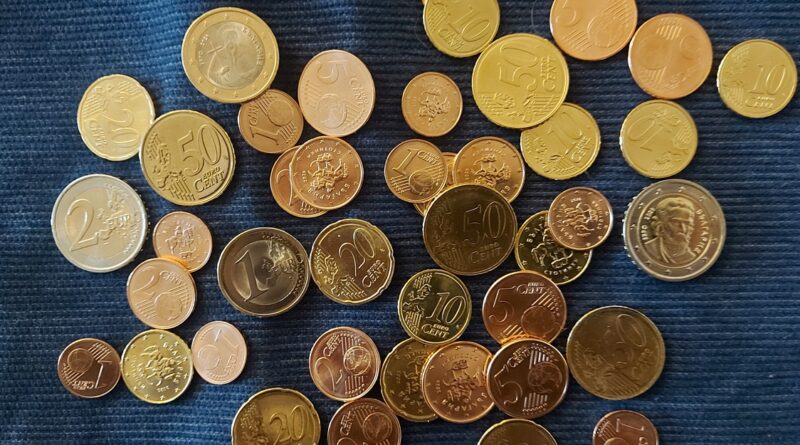
Bulgarian National Television (BNT) reported on December 30, the last working day of the year, a queue formed in front of the Bulgarian National Bank building, with people wanting to exchange their leva for euro or buy starter packs with euro coins.
According to BNT, on New Year’s Eve, taxi service customers should keep in mind that after 9pm, they will not be able to use bank cards, and many taxi apps rely on these. Therefore, payment will be only in cash, in leva and euro, the report said.
Bulgarian-language media reports said that on December 30, queues formed at fuel stations, as motorists used the last working day of the year to fill up their cars, given that from 9pm on December 31 to 1am on January 1, payment through POS terminals will not be possible and only cash will be accepted.
Bulgaria’s Interior Ministry has warned the public: “Do not trust strangers who offer assistance or better terms for exchanging leva for euro”.
The head of the national police’s anti-fraud squad, Chief Inspector Zlatka Padinkova, recommended that you be careful if you receive phone calls and messages offering favorable terms or assistance with currency exchange.
“Do not let strangers into your home who offer you a better exchange rate. Do not give money to strangers who present themselves as employees of banks, post offices, police, etc. Do not be fooled by an offer to store your savings. No institution offers such a service for a fee.”
The Interior Ministry asked the public, if anyone suspects fraud or other abuse, to immediately call emergency number 112 or visit the nearest police station.
(Photo: Clive Leviev-Sawyer)


