
Bulgaria’s PM: US sanctions on Lukoil affect company’s refinery in Bourgas
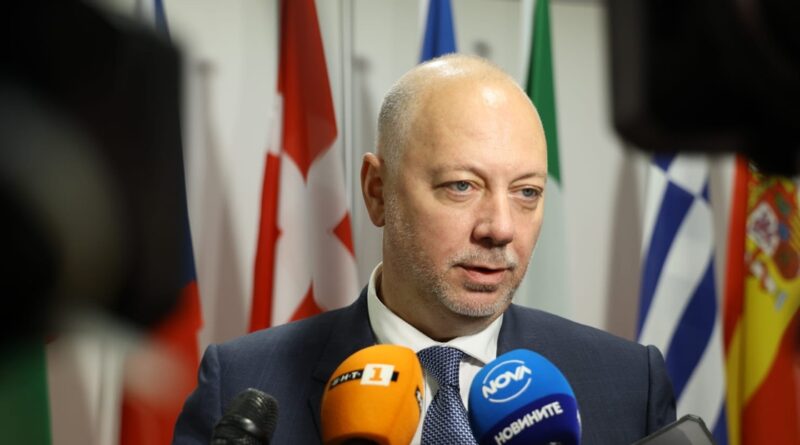
Bulgaria has one month – until November 21 – to decide what to do with the Lukoil Neftochim refinery in the country’s Black Sea city of Bourgas, Prime Minister Rosen Zhelyazkov said on October 23 at the start of the EU leaders’ meeting in Brussels.
Zhelyazkov was reacting to the sanctions imposed by the United States on Rosneft and Lukoil.
In a statement on October 22, the US Treasury Department said that the action by Office of Foreign Assets Control (OFAC) targets Russia’s two largest oil companies, Open Joint Stock Company Rosneft Oil Company (Rosneft) and Lukoil OAO (Lukoil), which are now designated.
Rosneft is a vertically integrated energy company specializing in the exploration, extraction, production, refining, transport, and sale of petroleum, natural gas, and petroleum products.
Lukoil engages in the exploration, production, refining, marketing, and distribution of oil and gas in Russia and internationally.
Rosneft and Lukoil are being designated pursuant to E.O. 14024 for operating or having operated in the energy sector of the Russian Federation economy.
Additionally, OFAC is designating a number of Russia-based Rosneft and Lukoil subsidiaries. All entities owned 50 percent or more, directly or indirectly, by Rosneft and Lukoil are blocked pursuant to E.O. 14024, even if not designated by OFAC, the Treasury Department statement said.
Zhelyazkov offered an assurance that this will not affect the production and supply of petroleum products, not in the near future, but in principle.
Lukoil Bourgas – the refinery, is part of the Lukoil Russia system, because it indirectly owns more than 50 per cent of the Russian Lukoil, so the refinery falls under this sanction regime, Zhelyazkov said.
According to the general licence, which was issued as a clarification of the implementation of the sanctions by OFAC, until November 21 there is an opportunity to carry out all necessary transactions and transfers, “so we have one month in which to make the national decision on how to approach it as a country,” Zhelyazkov said.
“I want to say right away that this does not hinder the production and supply of petroleum products, because, you know, the refinery has not been working with Russian oil for a long time.”
However, he said, the refinery will face difficulties due to transactions and the use of the SWIFT system in view of its ownership. According to the sanctions, services for Russia with this system have been suspended.
Asked about the possibility of the refinery being set on fire, as happened in Romania, Hungary and Slovakia, Zhelyazkov said: “The Ministry of Interior and the State Agency for National Security have taken all necessary measures, both with regard to the refinery and Rosenets, to prevent sabotage.”
The opposition view
Ivailo Mirchev, co-leader of Yes Bulgaria – part of the opposition We Continue the Change – Democratic Bulgaria coalition – said that under no circumstances should Neftochim fall into the hands of the Bulgarian mafia.
Mirchev said that Yes Bulgaria was insisting that on October 23, a hearing by Parliament’s energy committee should be held of the ministers of energy, economy and finance in connection with the new US sanctions.
He said that the signal from the US is extremely serious, and the Bourgas refinery is key to the country’s strategic infrastructure.
“Bulgaria must quickly decide what to do so that there is no fuel crisis and that we adequately meet the opportunity after Washington’s sanctions against Lukoil. The sooner the Bourgas refinery is freed from Lukoil, the better for our country and its freedom from Russian influence,” Mirchev said.
He said that the refinery should not fall into the hands of the Bulgarian mafia, because that would be even worse than the current situation.
“Delyan Peevski wants to buy the Lukoil-Neftochim refinery, stand at its entrance and exit and drain it, as Multigroup was drained 20-30 years ago,” Mirchev said, the former a reference to Delyan Peevski, the Magnitsky Act-sanctioned leader of the Movement for Rights and Freedoms – New Beginning party.
“It is necessary to very quickly help the refinery fall into the hands of a normal foreign investor, preferably a Western one, so that we do not depend on Putin’s whims and Bulgarian consumers do not suffer from what he is doing in Ukraine,” Mirchev said.
He said that the risk is great, since the country uses fuel mainly from the refinery, and the abrupt imposition of sanctions carries the potential for a crisis in the fuel market.
Mirchev cited a number of proposals from his party for the state to have its own representative in the refinery, so that its interests are adequately protected.
When asked about the proposal to sell Lukoil after approval by the State Agency for National Security, Mirchev cited the position of Yes Bulgaria, that such legislation is in the interest of Peevski.
“Most likely, it is related to interests in the refinery and a building owned by Russia at 20 Shipka Street in Sofia,” Mirchev said.
Borissov: ‘A complex issue, very delicate’
Boiko Borissov, leader of GERB-UDF – Parliament’s largest group and the holder of the mandate to govern – said that the Bulgarian authorities had prior information about possible sanctions on Russian oil companies, and specifically on Lukoil, and therefore, as a preventive measure, a bill was introduced requiring an inspection by the State Agency for National Security when selling the company.
“I consider myself a fairly informed person for a long time. Both Britain and the States, what they are doing, I knew it would come to this and we simply got ahead of events. Now we have spoken with the Minister of Finance, with the Governor of the Bulgarian National Bank – to follow it very carefully, because this is no joke.”
“We could run out of fuel at any moment. What are the sanctions on banks that service transfers, the purchase of oil, for its sale? A complex issue, very delicate, and we are ready to have all options for possible action if necessary,” Borissov said.
Borissov did not rule out the possibility of the US rethinking its position.
Central bank: ‘No direct credit risk to banking system’
In a media statement on October 23, central Bulgarian National Bank (BNB) said that it was reviewing and analyzing the potential consequences for the banking system in the country of the application of these sanctions.
“At a systemic level, no direct credit risk has been identified that would affect the stability of the banking system in the country,” BNB said.
In strict compliance with the applicable European and national legal framework, including the provisions related to international sanctions and anti-money laundering measures, as well as internal rules and procedures, credit institutions will independently make decisions regarding their contractual relationships with potentially affected customers, the central bank said.
“This will be done when assessing the risk of establishing or maintaining a business relationship, in accordance with the requirements of the Anti-Money Laundering Measures Act (AMLA), and taking into account the possibility of applying secondary sanctions to persons or institutions that violate the OFAC regime.”
BNB said that it was in close coordination with the Ministry of Finance and other relevant national authorities in relation to assessing the impact of the sanctions and taking appropriate measures, where necessary.
“Bulgarian National Bank continues to monitor the development of the situation, maintaining active communication with national and international institutions, and will inform the public in the event of circumstances requiring additional actions or clarifications,” the statement said.
Budget committee head: ‘No disruptions expected on fuel market in Bulgaria’
Delyan Dobrev, the GERB-UDF MP who heads Parliament’s budget and finance committee, told reporters on October 23 that no disruptions are expected in the fuel market in Bulgaria as a result of the sanctions imposed by the US against Lukoil.
“The Bulgarian Parliament is acting proactively and you know that about three weeks ago we adopted a bill at first reading in committee and in the plenary hall, by which the sale of Lukoil goes through a state permission, first of the State Agency for National Security and then through permission from the Cabinet. That is, we have taken measures even proactively,” Dobrev said.
He offered an assurance that there is no reason for concern among consumers.
“I do not expect any disruptions in the fuel market. People should be calm,” he said, adding that the common European market is large and there are many fuel producers.
Radev: Government must ‘take all measures’
President Rumen Radev expects the government to take all measures to prevent a fuel crisis in Bulgaria after the US imposed sanctions on the oil companies Lukoil and Rosneft, he said on October 23.
It is too early to speculate on the effect of imposing sanctions on Russian oil companies, Radev said.
He said that the escalation on the international stage is already underway: “As you can see – the escalation is there. And every day – I have said it for a long time – every day the continuation of this war will lead to escalation in all other spheres.”
Radev commented on what measures the government should take: “Preserving our interest and most importantly – this is the big task before the government – to ensure that – firstly, there is no fuel crisis and secondly, that prices do not rise”.
(Photo of Zhelyazkov: government.bg)


