
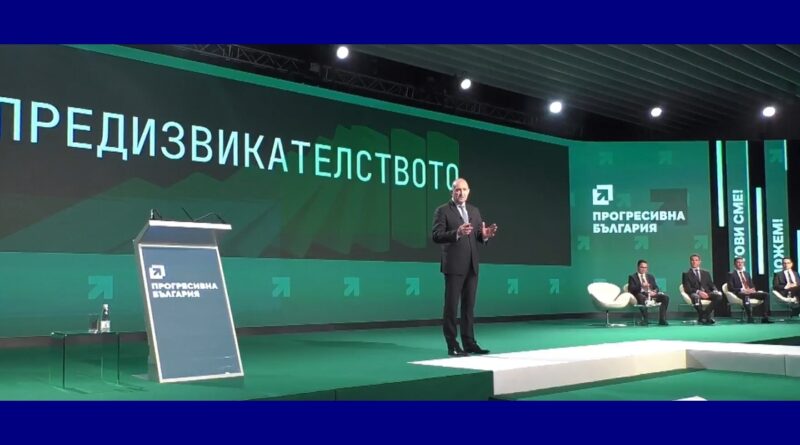
Bulgaria’s 2026 elections: Radev launches programme, with emphasis on economy
On the eve of the official campaign period of Bulgaria’s April 19 early parliamentary elections, ex-president Roumen Radev launched the electoral programme of his Progressive Bulgaria, with an emphasis on the economy and no message on foreign policy.
Radev is seen by opinion polls as having the largest share of support among those who intend to vote, but well short of being able to form a government without a coalition, and prospects for a governing coalition are unclear.
In opening remarks at the event in the National Palace of Culture on March 19, Radev described his political project as a “powerful political alternative” to return Bulgarians’ trust in their state, with “clear rules for everyone”.
He spoke of “dismantling the oligarchic model”, which, he said, controlled the institutions of state, political parties, the media and the judiciary.
The aim of his project, according to Radev, is to prevent “oligarchic” access to public finance and to free the private sector from “racketeering by oligarchs”.
Radev said that it was “critically important” to have an independent prosecution service.
He stated the intention to change the Supreme Judicial Council and “elect a new legitimate Prosecutor-General”.
Radev said that “this may not happen, depending on the mathematics of the National Assembly”.
He spoke of reforming the security and intelligence services and the Interior Ministry.
Radev pledged transparency of ownership of the media and support for investigative journalism.
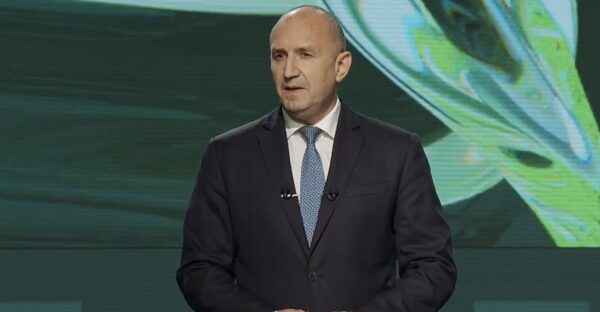
Beyond these opening remarks, much of the presentation, lasting more than an hour and a half, was taken up by the “economics team” that joined Radev on stage.
These included Ivan Vassilev, introduced as an expert on control of public finances, Stefan Delchev, introduced as a leading expert on public finances, Plamen Dulev, who introduced himself as the long-time owner of businesses in Austria, Alexander Pulev, introduced as a financier in the area of investments, and Konstantin Prodanov, introduced as an expert on international finance.
The introduction for Prodanov omitted to mention that he is a former leader of former president Georgi Purvanov’s Bulgarian Socialist Party breakaway left-wing ABV party, a post to which Prodanov was elected in 2017. In the run-up to the April 2026 elections, Purvanov has been a harsh critic of his successor as head of state, Radev.
In the presentation, there were also endorsements for Radev’s economic programme from a Spanish and a German business leader.
Among the ideas put forward in the presentation were the creation of an “Investments Ombudsman”, tax investments for reinvestments, the use of AI to scrutinise public spending, digitalisation of administrative processes, and expanding Bulgarian business to new markets in the United States, North Africa, Middle East and Far East.
At the close of the presentation, Radev spoke of other priorities. None of these reflected positions for which he was well known while head of state, such as opposing Bulgarian military aid for Ukraine and saying, in a presidential election debate, that “Crimea is Russian”.
Radev spoke of modern infrastructure, cheap and promising energy, the battle against poverty, solving the demographic crisis, ensuring Bulgarian children’s access to quality education, reducing payments by citizens for health care, protecting nature while ensuring a balance between development and nature conservation, the fight against crime in particular against young people using narcotics, strengthening military modernisation, tourism that lasts all four seasons and he spoke in praise of Bulgaria’s “wonderful sports people”.
But he did not mention Ukraine, Russia or Crimea.


