
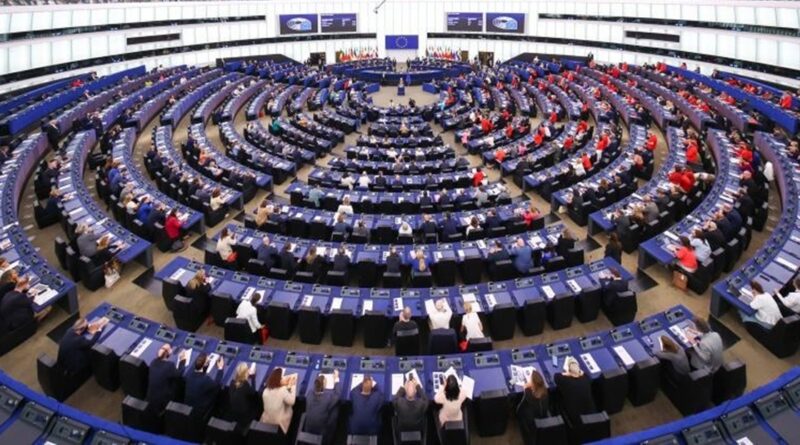
European Parliament vote: Children should be at least 16 to access social media
In a vote on November 26, the European Parliament called for ambitious EU action to protect minors online, including an EU-wide minimum age of 16 and bans on the most harmful addictive practices.
The European Parliament adopted a non-legislative report by 483 votes in favour, 92 against and with 86 abstentions, expressing deep concern over the physical and mental health risks minors face online and calling for stronger protection against the manipulative strategies that can increase addiction and that are detrimental to children’s ability to concentrate and engage healthily with online content.
To help parents manage their children’s digital presence and ensure age-appropriate online engagement, the European Parliament is proposing a harmonised EU digital minimum age of 16 for access to social media, video-sharing platforms and AI companions, while allowing 13- to 16-year-olds access with parental consent.
Expressing support for the the European Commission’s work to develop an EU age verification app and the European digital identity (eID) wallet, MEPs insist that age assurance systems must be accurate and preserve minors’ privacy.
Such systems do not relieve platforms of their responsibility to ensure their products are safe and age-appropriate by design, they said.
To incentivise better compliance with the EU’s Digital Services Act (DSA) and other relevant laws, MEPs suggest senior managers could be made personally liable in cases of serious and persistent non-compliance, with particular respect to protection of minors and age verification.
The European Parliament, in its vote, made a number of other calls.
These include a ban on the most harmful addictive practices and default disabling of other addictive features for minors (including infinite scrolling, auto play, pull-to-refresh, reward loops, harmful gamification); a ban on sites not complying with EU rules; and action to tackle persuasive technologies, such as targeted ads, influencer marketing, addictive design, and dark patterns under the forthcoming Digital Fairness Act.
MEPs also called for a ban on engagement-based recommendation systems for minors; application of DSA rules to online video platforms and outlawing of loot boxes and other randomised gaming features (in-app currencies, fortune wheels, pay-to-progress); and protection of minors from commercial exploitation, including by prohibiting platforms from offering financial incentives for kidfluencing (children acting as influencers).
They also called for urgent action to address the ethical and legal challenges posed by generative AI tools including deepfakes, companionship chatbots, AI agents and AI-powered nudity apps (that create non-consensual manipulated images).
In a separate statement on November 26, the Council of the EU said that the EU is stepping up its efforts to fight child sexual abuse.
EU member states’ representatives agreed on the Council position on a regulation to prevent and combat child sexual abuse, the statement said.
The new law, once adopted, comes with obligations for digital companies to prevent the dissemination of child sexual abuse material and the solicitation of children.
The relevant national authorities will have the power to oblige companies to remove and block access to content or – in the case of search engines – delist search results.
The regulation also establishes a new EU agency, the EU Centre on Child Sexual Abuse, to support member states and online providers in implementing the law.
Under the new rules, online service providers will be required to assess the risk that their services could be misused for the dissemination of child sexual abuse material or for the solicitation of children. On the basis of this assessment, they will have to implement mitigating measures to counter that risk.
Such measures could include making available tools that enable users to report online child sexual abuse, to control what content about them is shared with others and to put in place default privacy settings for children.
(Photo: EC Audiovisual Service)


