
Bulgarian President Radev vetoes proposed rules on sale of Lukoil assets
Bulgarian President Roumen Radev said on November 5 that he vetoed the Investment Promotion Act amendments that provide that the Lukoil refinery in Bourgas and the company’s subsidiaries may be sold only after clearance from the State Agency for National Security (SANS) and the Cabinet.
The bill was passed by Parliament last month, after the United States Treasury Department announced US sanctions on Lukoil and Rosneft, which the Bulgarian government said affected the refinery in Bourgas and other Lukoil assets in Bulgaria.
In his motives, Radev said that the amended Investment Promotion Act would put the Cabinet in a “functional and operational dependence” to SANS, insofar as any decision on the sale of Lukoil assets is concerned, despite the agency being a subordinate one to the Council of Ministers.
Such a situation was constitutionally inadmissible and ran counter to “the logic of functioning of the structures of the executive branch [of government],” Radev said.
Radev also pointed out that the Investment Promotion Act already had provisions that required SANS and State Intelligence Agency input in any sale of certain strategic assets, as well as provisions involving assets held by investors from Russia and Belarus.
Passing laws that targeted specific entities, such as Lukoil and its subsidiaries in this case, was also against the constitutional principle of the rule of law, as well as the letter and spirit of Bulgaria’s law on legislative acts, he said.
Radev also used the veto of the Investment Promotion Act to revive his criticism of the recent changes to the SANS Act, which changed the way the head of the agency is appointed – by act of Parliament, as opposed to presidential decree.
When he vetoed that bill, which was later overturned by the National Assembly, Radev argued that such appointments risked becoming politicised and dependent on the whims of the government coalition at the time an appointment is made.
In this latest veto, Radev said that with Parliament able to appoint and dismiss the head of SANS, “there is a serious danger that the professional assessment of risks and threats to national security could be ignored in favour of short-term interests of the governing coalition.”
Bulgaria’s constitution grants the head of state a limited power of veto, through enabling the President to return legislation to the National Assembly for further discussion.
The National Assembly may overturn the President’s veto through a simple majority vote or accept the veto and review the vetoed clauses. Since taking office in January 2017, Radev made liberal use of the power and this was his 44th vetoed bill.
The National Assembly overturned the veto on all but eight occasions – seven times the veto was accepted by MPs and, in the other case, the government coalition at the time failed to muster the support needed to overturn it.
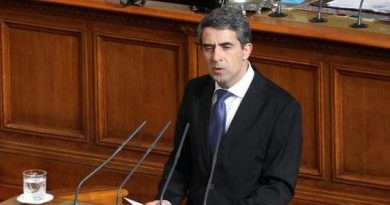
(Roumen Radev photo: president.bg)
Please support independent journalism by clicking on the button below. For as little as three euro a month or the equivalent in other currencies, you can support The Sofia Globe via patreon.com and get access to exclusive subscriber-only content: