
Bulgaria’s Parliament widens powers of competition body, opposition says it will be ‘powerful cudgel’
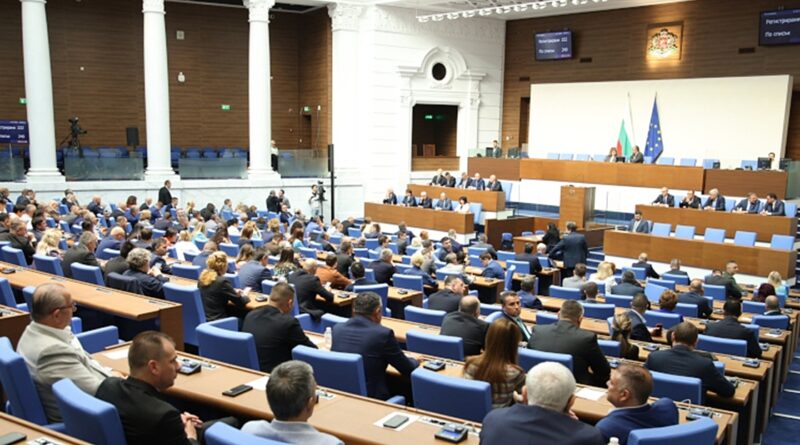
With the votes of the ruling majority, Bulgaria’s Parliament approved on October 23 the second and final reading of amendments to the Competition Act that expand the powers of the Competition Protection Commission (CPC), over opposition objections that the body was being turned into a “powerful cudgel”.
The CPC is being allowed to conduct on-site inspections during sector analysis proceedings, similar to the on-site inspections carried out in sanction proceedings.
On-site inspections are carried out only after a court order from the Administrative Court – Sofia District, and this is subject to judicial review in the Supreme Administrative Court.
The CPC will be able to use external experts, both during on-site inspections and for the purposes of specific proceedings. When it comes to on-site inspections, the experts used will be limited to computer specialists who will be engaged only in technical tasks.
The draft law introduces a new procedure, which is initiated at the request of a respondent in the proceedings who is ready to admit its participation in a cartel.
It also envisages the introduction of the so-called call-in option mechanism, which gives the CPC the right to request notifications in cases of suspicion in already concluded concentrations, when the total turnover of the two undertakings exceeds 25 million leva within six months of the transaction.
The amendments change the sanctions that the CPC may impose in the event of established prohibited practices in the supply of agricultural products. The CPC may apply a sanction in the amount of 10 per cent of the trader’s turnover for the transitional financial year, as the bill includes the possibility for the CPC to reduce the amount of the sanction approved by the rules adopted by it.
Until now, the law has fixed an upper limit of the sanction for large retail chains of up to 300 000 leva.
The bill also provides for an amendment to the Electronic Communications Act, creating the possibility, if necessary, for the CPC to obtain data from enterprises providing public electronic communications networks and services.
While the amendments were approved with the support of the ruling majority – GERB-UDF, Movement for Rights and Freedoms – New Beginning, the Bulgarian Socialist Party – United Left and ITN – the opposition expressed concern about a lack of clarity in the definition of unfair practices and a risk of the CPC’s powers becoming excessive.
Martin Dimitov of opposition coalition We Continue the Change – Democratic Bulgaria said: “A superpower is being created for the CPC during a sectoral analysis to be able to go wherever they want to enter and conduct an on-site inspection, and again it can lead to extremely unpleasant developments, they can go to the addresses of people who are managing bodies, they can go anywhere and the CPC has this power and should have it, but it should be in strictly regulated cases”.
WCC-DB MP Daniel Lorer said: “This turns the CPC into a truly powerful cudgel”.
WCC-DB’s Yavor Bozhankov said that the “entire business in Bulgaria” could see their offices entered tomorrow with the great sector analysis”.
Alexander Ivanov of GERB-UDF responded: “I assure you once again that the work of the Commission for the Protection of Competition with this bill will first enter into the European standards and norms under the regulations, which have been repeatedly cited”.
Economy Minister Petar Dilov said that the amendments were largely based on OECD recommendations.