
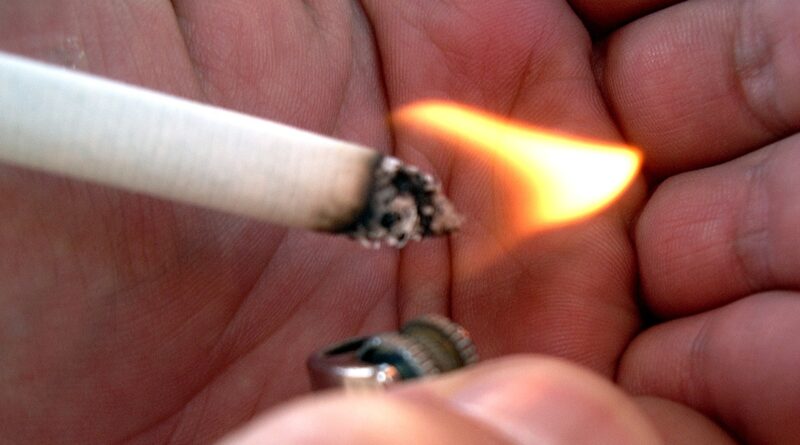
European auditors: EU not up to the task of fighting the illicit tobacco trade
From illicit production to smuggling, the illicit tobacco trade continues to pose a serious problem for the EU, as it negatively impacts its finances, public health and security, according to a new report by the European Court of Auditors (ECA), released on September 8.
Although the European Commission (EC) and EU countries have undertaken efforts to combat this global criminal phenomenon, their action is not robust enough, the auditors say.
Illicit production across the EU is increasing, smuggling methods are getting more sophisticated, and new tobacco products are on the rise. Against this backdrop, the auditors criticise poor cross-country cooperation, which suffers from persistent gaps and lacks a concerted EU-wide approach.
The illicit tobacco trade has changed significantly in recent years.
Organised crime groups have strategically relocated production from Ukraine to the EU in order to shorten supply chains and access consumers more directly.
Although smuggling remains a problem, illicit manufacturing sites have been detected in almost all EU countries, and illicit production has grown across the EU.
For instance, in a large-scale illicit cigarette production factory in Belgium, each machine was capable of producing around a million cigarettes per hour. In the largest illicit cigarette factory dismantled in Spain, three million packets of counterfeit cigarettes were seized, that is, 56 times the height of Mount Everest if the cigarettes were stacked horizontally.
“The EU cannot afford to let its fight against the scourge of illicit tobacco go up in smoke,” Petri Sarvamaa, the ECA member leading the audit, said. “If we are serious about safeguarding citizens’ health, wallets and security, the Commission and member states must up their game to fight criminal activity head-on.”
The illicit tobacco trade deprives EU and member state budgets of 13 billion euro a year, according to the EC’s estimate. However, this figure should be treated with caution, as it is based on external studies.
The fact remains that the Commission lacks a reliable and independent EU-wide estimate of the illicit tobacco market, its structure and its economic impact, for example in terms of lost tax revenues. Such data, however, are crucial for determining the magnitude of the problem and designing an effective response. As it stands, the EC’s reporting is largely based on seizures, and so does not provide a full picture of the situation.
Over the past decade, the EU and its member states have taken measures to combat the illicit tobacco trade.
However, EU law is not harmonised, and member states’ efforts are uneven.
For example, key production inputs such as raw tobacco and production machinery, and new types of products such as heated tobacco products and liquids for e-cigarettes, are not treated in the same way across the EU.
At the same time, the EU regulatory framework gives member states a free hand in choosing counter-measures, thus leading to enforcement gaps that organised crime groups can exploit. In particular, as national control systems and enforcement approaches differ, such as in the definition of offences and the severity of penalties, this can encourage criminal activities to relocate to laxer jurisdictions.
Furthermore, EU countries are inconsistent in the way they exchange information.
In the EU, responsibility for combating the illicit tobacco trade is shared between several stakeholders.
However, no single entity has a clear coordinating role, meaning that initiatives are fragmented. The auditors thus call on the EC to assume a more active role in combating the illicit trade in tobacco products.
Although overall tobacco consumption has continued to fall, the quantity of illicit tobacco products in the EU has risen in recent years.
In 2023, the EC estimated that the quantity of illicit tobacco products was 8.8 per cent of total cigarette consumption. Excluding cigarettes, the illicit tobacco market amounts to nearly 21 000 tonnes in the EU. According to estimates, these new products make up 13 per cent of the market value of tobacco products sold in the EU, and attract younger consumers.
Illicit tobacco products are very attractive for organised crime groups due to their high profitability and comparatively low risk (penalties have traditionally been light and detection rates low).
Such illegal activity not only provides a significant source of income for criminals but, by offering cheaper tobacco products, also undermines efforts to reduce tobacco consumption. Ultimately, it leads to losses in terms of customs duties, value-added tax and national excise duties.
The audit assesses the effectiveness of the action taken by the Commission and the member states.
The auditors carried out field visits in Belgium, Spain, Poland and Romania, and include examples of illicit manufacturing sites in their report. ECA special report 23/2026 “Combating the illicit trade in tobacco in the EU: Fragmented efforts and persistent gaps” is available in 24 EU languages on the ECA website.
(Photo: Rodrigo Matias/ sxc.hu)


