
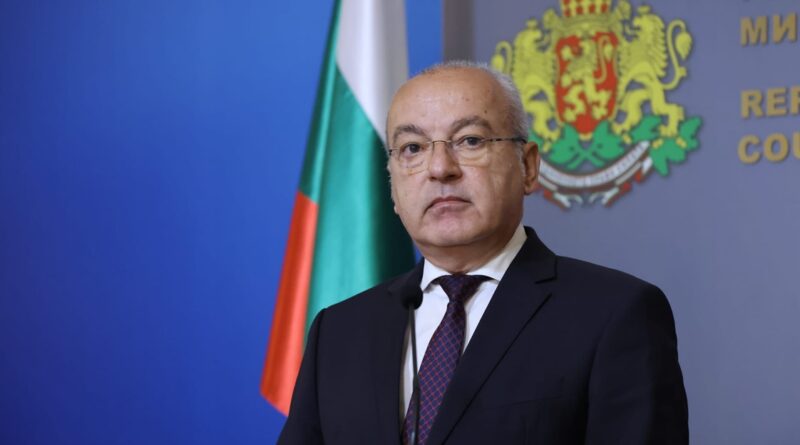
Finance Minister: Euro cannot be blamed for inflation in Bulgaria
The rise in inflation in Bulgaria coincided with its adoption of the euro but the euro cannot be blamed for the inflation, Deputy Prime Minister and Finance Minister Gulub Donev told a conference in Sofia on September 25.
“The crisis in the Strait of Hormuz began during this period. All of this had an impact,” Donev told the “Building Resilience Together: Bulgaria’s Membership in the European Stability Mechanism” conference.
“Bulgaria is an open economy that relies on imports. All these shocks and fluctuations affect the prices of all goods and services,” he said.
“Although some might wish to attribute the rise in inflation to the euro, there is no objective evidence to support this.”
“Prices began to rise as early as the summer of the previous year. This was linked to the increase in electricity and fuel prices,” said Donev, who serves in a government headed by Roumen Radev, the former president and now prime minister who has insisted that Bulgaria was “not ready” for the euro.
“We are now facing another shock in the Black Sea region – disrupted supply chains,” Donev said.
The wheat harvest has concluded with record yields, yet due to the situation in the Black Sea region, this produce cannot be exported, he said.
“Exports to other countries are also hindered by low water levels in the Danube River. This, too, drives inflation. We rank third in terms of inflation growth within the euro zone.”
“There is no way to prevent this rise; we do not know what a further escalation of the conflict might lead to. The rise in inflation in Bulgaria cannot be attributed to the euro.”
Donev said that after Bulgaria’s accession to the euro zone, Bulgarian citizens and businesses have noticeably felt greater stability in the Bulgarian markets, have greater trust in institutions, in fiscal stability.
“Investments have almost doubled since last year. We have stable economic growth, which is higher than that of the countries in the euro zone – 2.8-2.9%, that is, almost three times, but inflation has increased by 5.1 per cent on an annual basis. This poses challenges that we are working on,” the said.
Donev also drew attention to the increase in Bulgaria’s credit rating by international rating agencies:
“The markets assess that Bulgaria has a stable regular government and a parliamentary majority,” he said.
“These results provide stability and predictability of politics in Bulgaria. We have a course with a clear perspective, with a clear programme that has been publicly announced, with priorities in key areas,” Donev said.
The euro became Bulgaria’s currency on January 1 2026.
As The Sofia Globe reported, annual inflation in January was 3.5 per cent, in February 3.3 per cent, and in March, 4.1 per cent.
In April, after the start of the US-Israeli attacks on Iran and the consequent rise in fuel prices, annual inflation rose to 6.8 per cent, followed by 6.9 per cent in May, dropping to 5.4 per cent in June, 4.5 per cent in July and climbing again in August, to 5.1 per cent.
(Photo: Finance Ministry)


