Bulgaria’s Foreign Minister confirms government opposes some proposed sanctions on Russia
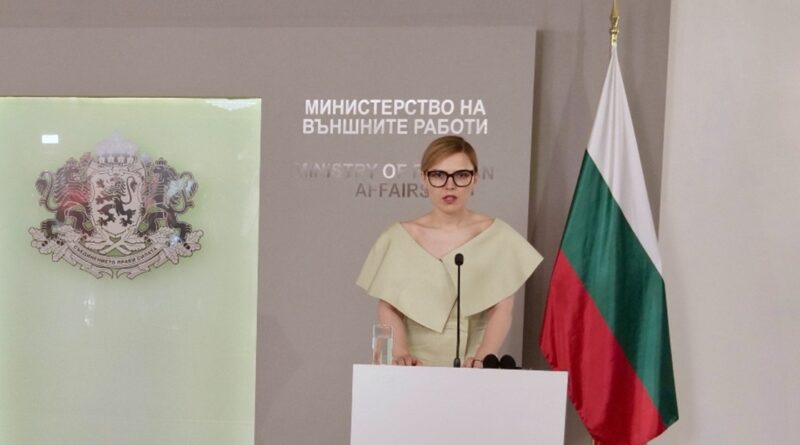
Bulgaria’s Foreign Minister Velislava Petrova confirmed on June 17 that the country’s government opposes some of the proposals in the 21st package of sanctions on Russia – including those on Russian Orthodox Patriarch Kirill – describing them as “symbolic”.
As The Sofia Globe reported at the time, European Commission President Ursula von der Leyen put forward the proposed 21st package of sanctions on Russia on June 9.
Politico reported on June 17 that Bulgaria had signalled that it opposes parts of the EU’s 21st Russian sanctions package, according to two diplomats (for Morning Trade subscribers).
Petova, speaking to reporters, said: “Our main goal is to reach a situation where effective negotiations can be held”.
“There are a number of elements that we do not support – on the one hand in the energy sector, and on the other – sanctions related to Russian Patriarch Kirill, which fall into the category of symbolic measures. They have the potential to be counterproductive,” Petrova said.
She said that the package is currently being discussed at the European Union level, with many countries having reservations, and it is not yet in its final version.
“The Bulgarian position is clear – we support sanctions that have a real economic effect, but do not lead to greater damage for the member states than for the country waging the war,” Petrova said.
“Sanctions are intended to exert economic pressure so as to reach a situation in which continuing the war is not profitable and to encourage a return to negotiations. When it comes to sanctions that are primarily symbolic in nature and not have real economic consequences, Bulgaria opposes them,” she said.
Until now, the idea of putting Kirill Moskovsky (Vladimir Mikhailovich Gundyaev) on the EU blacklist was invariably blocked by Hungary when Viktor Orban was prime minister. But with the coming to power of the new government of Peter Magyar, the country has expressed its readiness to finally allow the head of the Russian Orthodox Church to be subject to sanctions.
Bulgaria has so far taken a cautious stance on issues related to the Russian Orthodox Church and its patriarch.
During previous discussions of European sanctions against Kirill, it was among the countries that expressed reservations, arguing for the need to protect religious freedom and avoid measures against spiritual leaders.
In 2018, Kirill arrived for the March 3 celebrations in Bulgaria and was greeted at the airport by Iliana Yotova, then vice president. She knelt before him and kissed his hand.
Subsequently, the Russian patriarch was received by then-president Roumen Radev. Kirill directed sharp criticisms at the Bulgarian state, expressing dissatisfaction that soldiers from other nations who participated in the Liberation War in 1877-1878 were mentioned in official speeches.
Radev, whose took office as Prime Minister on May 8 2026, heads a government that, among other things, has said that Bulgaria will no longer provide weaponry to Ukraine.
(Photo of Petrova: Foreign Ministry)