
Bulgaria’s Parliament votes new law on anti-corruption commission
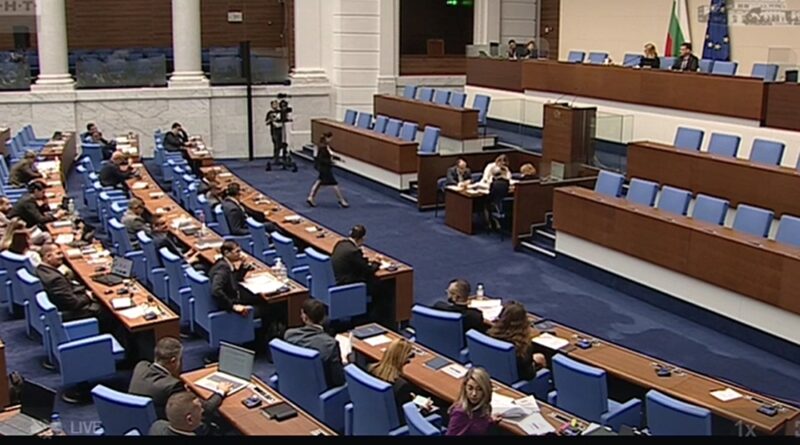
Bulgaria’s Parliament voted on May 29 to approve the second and final reading of a bill on combating corruption among persons holding public positions, which envisages the establishment of a five-member anti-corruption commission.
One of the commission’s members will be elected by the National Assembly, one will be appointed by the President, one will be elected by the general assemblies of the Supreme Court of Cassation and the Supreme Administrative Court, and one will be elected by the Supreme Bar Council.
The bill envisages that the fight against corruption is carried out through monitoring, investigation of corruption crimes, as well as verification and analysis of information in non-compliance reports.
The bill provides that the commission will be an independent specialist permanent state body for the prevention and counteraction of corruption among persons holding public positions.
Bulgarian citizens with high professional and moral qualities who have a higher legal education, a master’s degree and at least 10 years of legal experience and are of an age that allows them to complete their five-year term of office before reaching the age of 65 may be elected or appointed as members of the commission, respectively.
The commission’s five-year term begins to run from the date of the entry into office of its members.
The election, respectively the appointment of new members of the commission, shall be held no later than one month before the expiration of the mandate of the current members.
A member of the commission is entitled to one mandate and may not hold a position in state or municipal bodies; be a member of political parties or coalitions or carry out other activities that affect the commission member’s independence.
Every six months, the commission must will present a report on its activities to the standing committee of the National Assembly responsible for the prevention and counteraction of corruption, which will hear the chairperson and its members.
Every year by March 31, it will have to present to the National Assembly an annual report on its activities during the previous calendar year. Within the same period, the report will be submitted to both the President and the Cabinet and will be published on the commission’s website.
The investigative functions worried the opposition.
Atanas Slavov from Democratic Bulgaria said: “Where will these investigative inspectors come from? Will we bring them in from Germany, from France, from Italy, will we do a ‘clean hands’ operation?”
“Hopefully, but it won’t happen like that. We shouldn’t expect miracles. The big victory will be when the prosecutor’s office starts working for the citizens, not for the shady lobbies,” Slavov said.
Velislav Velichkov of We Continue the Change warned of possible abuse: “What worries me is the excessive possibility of using operational-search methods and special intelligence means at the level of a preliminary check, without ensuring the necessary control over persons with immunity.”
“For me, this contradicts the constitution. For example, I consider the introduction of agents among MPs to be unacceptable”.
Roumen Radev’s Progressive Bulgaria rejected the concerns.
“If we cut the powers of the commission and do not allow the use of special intelligence means and the carrying out of other operational-search activities, how will this commission perform its function?” Ivan Vachev of Progressive Bulgaria said.
As The Sofia Globe reported at the time, Bulgaria’s previous National Assembly voted in January 2026 to shut down the previous version of the commission.