Sofia Metro introduces new generation of metro trains
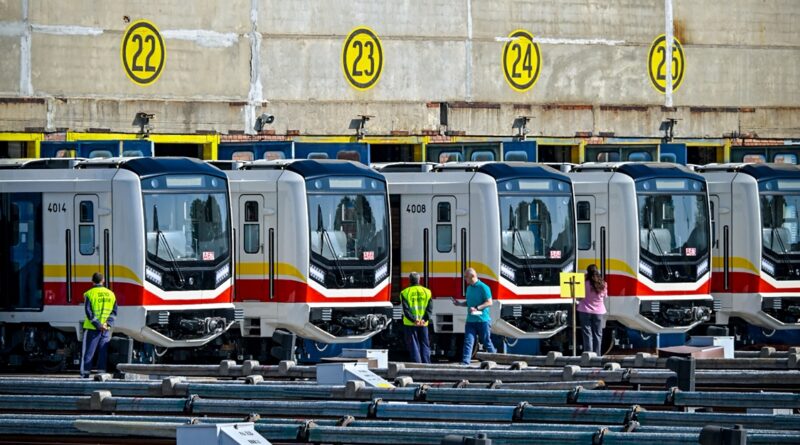
The Sofia Metro is introducing a new generation of metro trains – the first four trains coming into service on May 26, Sofia municipality said.
“So far, seven out of a total of eight new four-carriage metro trains of the latest generation have been delivered for the needs of the capital’s metro,” Sofia mayor Vassil Terziev said.
“They are equipped with high-tech systems for control, safety, air conditioning, video surveillance, energy efficiency, and thousands of people will feel the difference in the way they travel every day,” Terziev said.
The new trains are part of the Metro Rolling Stock Modernization and Renewal Programme and are designed to increase capacity and travel comfort on the network, the municipality said. They will gradually replace the oldest operating trains, delivered in 1991 and launched in 1998, 28 years ago.
The new metro trains will be introduced in stages and will run on lines 1, 2 and 4.
A total of 8 Škoda metro trains have been ordered, with the last one – the eighth train – expected to arrive in Bulgaria in June 2026. The public procurement for the delivery was won by Škoda.
The total investment value for the delivery of the eight new Škoda metro trains is 68.5 million euro.
The project is being implemented within the framework of a procedure conducted by Metropolitan EAD, with part of the financing being provided through the Operational Programme Transport and Transport Infrastructure 2014 – 2020. The programme also provided advance financing of 25.4 million euro excluding VAT.
The cost of a new metro train is approximately 8.6 million euro, including high-tech control, safety, air conditioning, video surveillance, and energy efficiency systems, the statement said.
The introduction of the new metro trains will allow for the optimization of schedules and the reduction of the intervals between individual trains, especially on the second metro line, the municipality said. It said that this was of key importance given the upcoming extension of the route and the construction of the new Pancho Vladigerov metro station between the Slivnitsa and Obelya stations.
A further eight8 new trains are expected to serve line 3. Metropolitan has a contract with Siemens Inspiro for their delivery dated July 19 2023, and it is planned to start in October this year. The plans are to deliver all eight trains by February 2027. This will complete the entire process of renewing the oldest trainsets in the system.
The new metro trains are designed according to modern European standards and offer a significantly higher level of comfort, safety and energy efficiency.
Each train consists of four carriages with a maximum length of 79.8 metres and a dead weight of 116 300 kilograms. The design speed reaches 90 km/h, which allows for fast and efficient passenger service in conditions of intensive urban transport.
The interior is entirely single-space and fully walkable between the carriages, which facilitates the movement of passengers and creates a feeling of more space and comfort, the municipality said. The capacity of one train is up to 762 passengers, with specialized spaces provided for people with reduced mobility, as well as strollers and bicycles.
The video surveillance system provides additional security for both passengers and staff, with recordings stored in non-volatile memory, the statement said
The new trains are designed with a focus on lower energy consumption. They are equipped with asynchronous motors with the ability to recuperate (return) energy, which results in 28 per cent lower energy consumption compared to trains with conventional motors. The control is carried out using modern microprocessor technology.
The extension to Poduyane with three stations is expected to be launched this summer, and six metro stations through Slatina will be ready by the end of 2027.
A contract for the extension of two km of the metro along Tsaritsa Yoanna Blvd. in Lyulin is about to be signed, and work is actively underway on the design of the section in the direction of Studentski Grad, Terziev said.
(Photo: Sofia municipality)