Gyurov: Caretaker government preparing ordinance on energy poverty
Bulgaria’s interim government is preparing an ordinance on energy poverty, caretaker Prime Minister Andrei Gyurov said on Facebook on March 29, two days after his administration announced a package of measures to overcome the economic consequences of the crisis in the Middle East.
Gyurov said that the caretaker government’s package of measures has one clear goal – to stop the rise in prices for Bulgarian consumers.
“A rise in prices that is caused by the conflict in the Middle East. A war that we did not start, we do not control, and we cannot say when it will end,” Gyurov said.
The most important sector, he said, is transport: “That’s where the increase in fuel prices is felt most strongly, and if we don’t act, it will directly affect everything else – from travel to food and goods.
The first measure announced is the postponement of the introduction of tolls by several months , which, according to Gyurov, means 30 million euro less costs for carriers – costs that, in his words, would directly affect prices.
“This measure affects all vehicles over 3.5 tons – large trucks, agricultural machinery, even small vans that deliver food to people,” he said.
“In parallel, we have started negotiations with the European Commission for additional support of 50 million euro for the transport sector,” Gyurov said.
He said that another important priority is food.
“We want people to have access to Bulgarian fruits and vegetables,” he said.
“For this reason, we are supporting agricultural producers by reducing the excise tax on fuels and paying subsidies earlier. This way, they will be able to produce more and will do so now, when it is most important.”
Gyurov said that one of the strongest anti-inflationary measures is related to electricity for businesses.
At high prices, there will be working compensation so that businesses do not pass on their costs to people.
This applies to everyone from industry to small businesses, hair salons, manicurists, hospitals, schools, kindergartens. These measures must reach every person, especially the most vulnerable.
That is why direct assistance of 20 euro has already been introduced due to increased fuel prices, he said.
He said that next steps including creating 15 000 jobs for young people and the permanently unemployed.
Gyurov said that the caretaker government is preparing a regulation on energy poverty.
“We are working to reduce product taxes that burden the prices of white and black appliances,” he said.
According to him, public transport already has been subsidized with 50 million euro.
“We will also support intercity transport in remote and hard-to-reach areas. There will also be special support for school buses,” he said.
Gyurov said that the most important thing is that these measures work, which is why increased control is being introduced, with the National Revenue Agency, the Consumer Protection Commission and the National Statistical Institute monitoring whether prices are actually being held down.
“We are also creating a special headquarters for price stability. It will monitor whether the measures are working, whether new ones are needed or whether some should be dropped. Our goal is clear – to make sure that this crisis is felt as little as possible in the daily lives of Bulgarian citizens,” he said.
In Bulgaria, according to the fuelo.net website, while the average price of a litre of A95 petrol was 1.25 euro on February 27 (the day before the beginning of the US-Israeli attacks on Iran), as of March 29 it was 1.47 euro.
While the average price of a litre of diesel was 1.29 euro on February 27, as of the afternoon of March 29 it was 1.64 euro, according to the website.
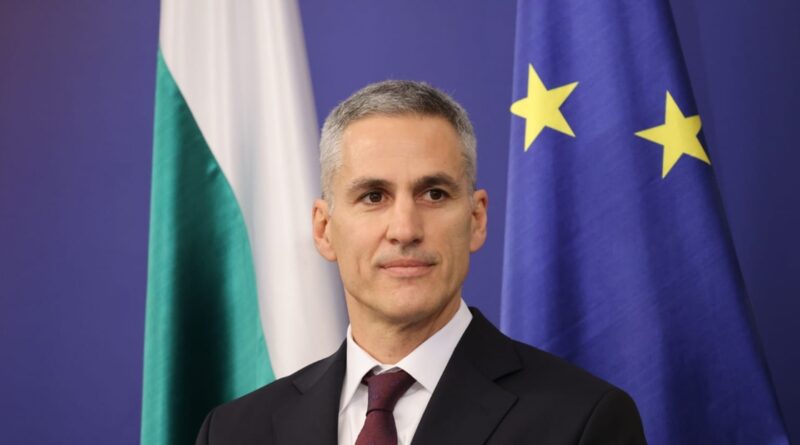
(Photo via Gyurov’s Facebook page)