EU foreign ministers sanction Russian individuals over Bucha massacre, cyber-attacks, disinformation
The Council of the European Union announced on March 16 sanctions on several Russian individuals, variously over the 2022 Bucha massacre, cyber-attacks and spreading disinformation.
In the context of the sad fourth year mark of the Bucha massacre that took place between February and March 2022, the Council today adopted restrictive measures against nine individuals who played a major role in the events and are therefore responsible for actions undermining or threatening the territorial integrity, sovereignty, and independence of Ukraine, the Council of the EU said.
The Council is notably listing Colonel General Aleksandr Chayko, former Commander of the Eastern Military District and the most senior Russian military officer on the ground in Ukraine at the outset of the full-scale invasion. He was lead commander in Ukraine when Russian troops entered Bucha.
The new listings also include other high-ranking military officials who have commanded Russian troops in Ukraine in the early days of its aggression, and who have committed atrocities against residents of Bucha and neighbouring areas such as Hostomel, Irpin and Borodianka.
In their roles, they have led their units at the time hundreds of civilians were murdered, in some cases as result of brutal executions.
The troops under their command have also been involved in looting, torture, and forcing civilians to remove the bodies of dead Russian soldiers. One of the listed individuals is also responsible for adopting a child from the Russian-occupied Donetsk Oblast, who was illegally deported to Russia.
Their actions constitute crimes against humanity and war crimes.
The nine individuals are now subject to an asset freeze and EU citizens and companies are forbidden from making funds available to them. They are additionally subject to a travel ban, which prevents them from entering or transiting through EU member states.
The Council of the EU today also decided to adopt restrictive measures against an additional four individuals responsible for Russia’s continued hybrid activities, in particular Foreign Information Manipulation and Interference (FIMI) against the EU and its member states and partners.
The Council is listing today Russian propagandist Sergey Klyuchenkov, who has played an active role in spreading Russian propaganda and disinformation aimed at justifying Russia’s war of aggression against Ukraine.
In his TV and radio shows, Klyuchenkov repeatedly has called for further violence in Ukraine, including against civilians.
In addition, he has called for de-Ukrainisation of occupied territories, the occupation of Baltic states and suggested retaliatory strikes against countries which support Ukraine, including the US, Türkiye, Germany, France, and the UK.
The new listings also include the Lithuanian-born Russian news anchor Ernest Mackevičius who, as host of the evening news programme on the Russian state television, has regularly spread false narratives about Russia’s war of aggression against Ukraine, Ukraine itself and its armed forces.
Lastly, the Council is also imposing restrictive measures on propagandist Graham Phillips, and media figure Adrien Bocquet of British and French origin, respectively.
Graham Phillips has played an active role in justifying Russia’s war of aggression against Ukraine through disinformation and propaganda, regularly filming content in Russian-occupied areas, including interviews with captured British fighters, and writing propaganda articles about Russia’s occupied territories of Ukraine.
Adrien Bocquet has repeatedly positioned himself as an amplifier of Kremlin propaganda in Europe and in Russia through appearances at symbolic conflict sites, interviews with Russian television, publications on his X account and contributions to Kremlin-funded outlets.
Through their activities the designated individuals are responsible for supporting the actions and policies of the Russian government, which undermine democracy, the rule of law, stability, and security in the European Union and Ukraine.
The Council also adopted today restrictive measures against three entities and two individuals responsible for cyber-attacks carried out against EU member states and EU partners.
The Council has listed Integrity Technology Group, a China-based company, that has routinely provided products used to compromise and access devices in EU members states, across Europe and worldwide.
Between 2022 and 2023, through their technical and material support, more than 65,000 devices were hacked across six member states.
Similarly, Anxun Information Technology, a China-based company, has provided hacking services aimed at the critical infrastructure and critical functions of member states and third countries.
The two Chinese individuals also listed today by the Council, are co-founders of the company and were responsible for and involved in cyber-attacks affecting EU member states.
Lastly, the Iranian company Emennet Pasargad has unlawfully gained access to a French subscriber database and advertised its contents for sale on the dark web. They also compromised advertising billboards to spread disinformation during the 2024 Paris Olympic Games.
Additionally, the company compromised a Swedish SMS service, impacting a large number of EU citizens.
Those listed today under both regimes are subject to an asset freeze, and EU citizens and companies are forbidden from making funds, financial assets or economic resources available to them. Natural persons also face a travel ban that prohibits them from entering or transiting through EU territories.
EU restrictive measures currently apply to around 2600 individuals and entities targeted in response to Russia’s ongoing unjustified and unprovoked military aggression against Ukraine.
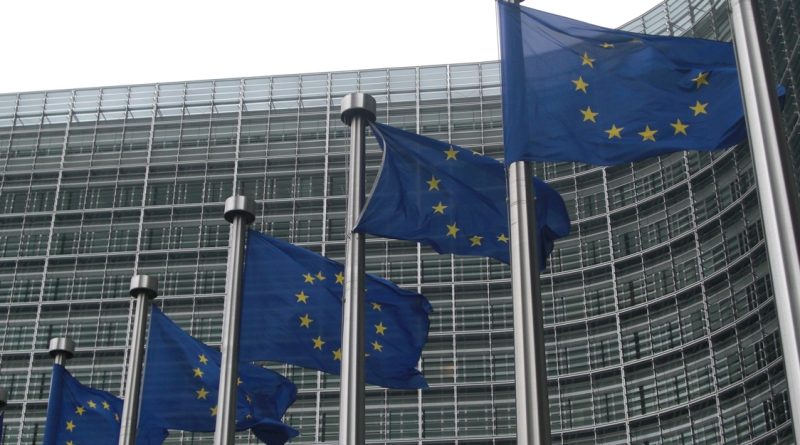
(Photo: Sebastien Bertrand)