
Controversy as outgoing PM signs up Bulgaria to Trump’s ‘Board of Peace’
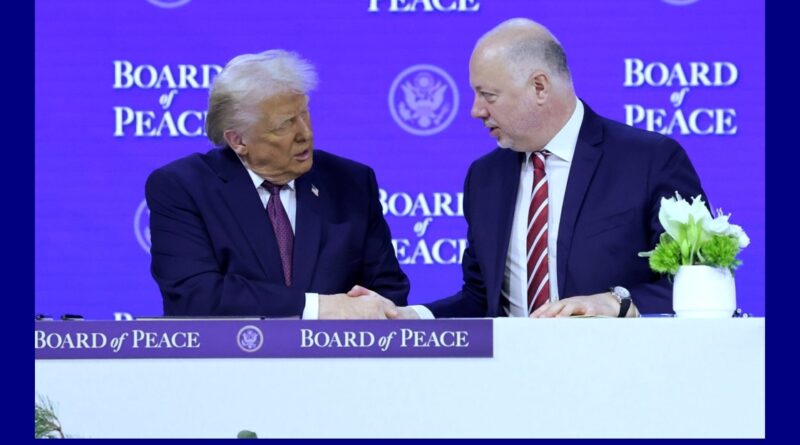
Controversy has ensued from outgoing Prime Minister Rossen Zhelyazkov signing up Bulgaria at a January 22 event to US president Trump’s “Board of Peace”.
Nineteen countries signed up at the ceremony in Davos, with only two from the European Union – Bulgaria and Viktor Orbán’s Hungary, while most EU countries are reserved about the Trump project.
Manol Peykov, an MP for opposition We Continue the Change – Democratic Bulgaria, said on January 22 that he would table a question in Parliament to Zhelyazkov about Bulgaria’s participation in the “Board of Peace”.
Peykov said on social media that he would ask Zhelyazkov what the outgoing government’s vision is on the issue and “isn’t it correct for such a strategic decision to be made with ratification by the Bulgarian Parliament, and not on the executive branch’s own initiative?”.
Zhelyazkov’s government resigned in December, a step unanimously approved by Parliament, and with the process of offering mandates to form a new government having come to nothing, Bulgaria is headed towards the appointment of a caretaker government and early parliamentary elections.
On January 21, the Bulgarian presidential administration said that Roumen Radev – who announced his resignation as head of state on January 19 – had just before his resignation received an invitation from Trump to join his “Peace Council”.
Radev had not committed Bulgaria to participation in the Trump initiative.
Magnitsky Act-sanctioned Delyan Peevski, widely seen as holding sway over the outgoing government, had insisted that Bulgaria should join the initiative. Peevski has been campaigning for the US to lifts its sanctions on him.
The Bulgarian government information service said on January 22 that the Bulgarian government had on January 21 given a mandate to Zhelyazkov to sign Bulgaria’s accession to the Board, pending ratification by the Bulgarian Parliament.
“Next week, a ratification draft law will be submitted to the National Assembly in order to obtain approval and for this accession to enter into force,” Zhelyazkov said, according to the statement.
The Prime Minister specifically emphasised that there is no financial commitment for Bulgaria, the statement said.
“Our participation is entirely voluntary and is duly appreciated by both the United States of America and the international community,” Zhelyazkov said.
Assen Vassilev, leader of We Continue the Change, told reporters: “Today, the Bulgarian government took a move that weakened Bulgaria and weakened Europe, pushing us to the poorest country in the EU – Hungary. If for (GERB-UDF leader Boiko) Borissov this means being in the heart of Europe, he has clearly made a serious mistake.”
“When Bulgaria is in a corner next to Hungary, it means that we have interrupted the dialogue with our European partners,” Vassilev said.
“This will make it much more difficult for Bulgarian business to be able to work in its largest market in the EU. It will make it much more difficult for Bulgaria to join and defend the pan-European position, which can give us strength on a global scale,” he said.
Vassilev said that this position had been taken by an outgoing government, which did not have the legitimacy to undertake such major foreign policy moves.
“The reason why we were not accepted into Schengen for 15 years, why we were not accepted into the Eurozone for 15 years, is precisely this kind of accommodating behavior to sit on both chairs and finally fall to the ground,” Vassilev said.
Bozhidar Bozhanov, co-leader of Yes Bulgaria – part of the WCC-DB coalition – told reporters: “We believe that this is a wrong, inadequate and dangerous action by this government, which has already lost its legitimacy to make decisions”.
“Tonight there is a summit of EU leaders, where this topic will also be discussed. The fact that Bulgaria is becoming a Trojan horse and standing together with Orbán…is very worrying,” Bozhanov said.
“The other countries are Belarus and those with totalitarian regimes. Bulgaria should have no place there, especially before this is discussed and a common EU position is taken,” he said.
Radan Kanev, a Bulgarian MEP with the European People’s Party, said: “This is not just a scandal, but a humiliation for every Bulgarian”.
“The presence of the Bulgarian Prime Minister in Trump’s lifelong personal ‘Board of Peace’, in the company of a handful of authoritarian leaders, turns our worthy European country into part of the company that ‘Kisses ass’. Excuse the expression. It’s not mine, I am quoting the chairman for life,” Kanev said.
“Bulgaria’s interest is the opposite – to be part of the united, courageous and dignified reaction of countries such as Denmark, Sweden, Norway, Canada, France (even the nationalist opposition!), Germany, the United Kingdom (even Farage…),” he said.
The Bulgarian government information service, in an earlier statement on January 22, said that Zhelyazkov and Foreign Minister Georg Georgiev had in Davos congratulated Nikolai Mladenov on his appointment as High Representative for Gaza, announced in recent days by the White House.
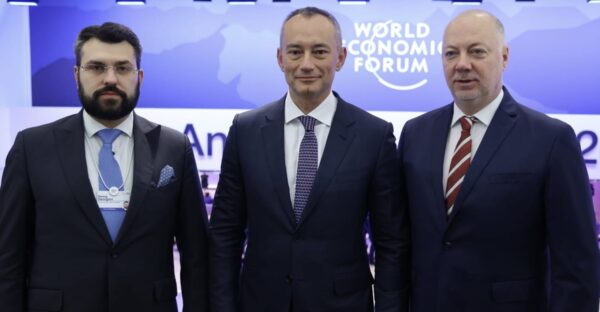
As High Representative for Gaza “he will act as the on-the-ground link” between the “Board of Peace” and the National Committee for the Administration of Gaza, according to the White House statement.
The Bulgarian government information service statement quoted Zhelyazkov as saying: “The election of Nikolai Mladenov to this responsible position is a huge recognition of his long-standing work to achieve peace and stability in the Middle East region.
“I believe that Nikolai will spare no energy and efforts in the implementation of this highly responsible mission, which also enjoys the support of US president Donald Trump,” Zhelyazkov said.
The statement said that Mladenov assured Zhelyazkov that the “Board of Peace” initiative is in line with UN Security Council Resolution 2803 of 2025, which outlines a plan for the governance, security, and reconstruction of Gaza after the conflict, as well as with Trump’s 20-point plan for peace in Gaza.
Mladenov emphasised that in the “Board of Peace’s” charter, the financial contribution of the participating states is voluntary and no state is financially obliged, the statement said.
A leaked document previously reported on by the BBC said “Board of Peace” member states would be given renewable three-year terms, and permanent seats made available to those contributing $1billion.
(Photos: government.bg)


