Eurostat: Russia’s share in EU imports of LNG drops to 15%
Russia’s share in EU imports of liquefied natural gas (LNG) decreased from 22 per cent in the first quarter of 2021 to 15 per cent in the third quarter of 2025, European Union statistics agency Eurostat said on November 28.
Eurostat said that in spite of this decline, Russia remained the EU’s second-largest supplier, although the gap with the main partner widened considerably.
The United States, which accounted for 24 per cent of EU LNG imports in Q1 2021, increased its share to 56 per cent by Q3 2025, reinforcing its position as the dominant supplier.
Russia’s share in EU imports of natural gas in gaseous state decreased from 48 per cent in Q1 2021 to 15 per cent in Q3 2025.
The reason why Russia’s share remains notable is that a few EU member states received temporary exemptions because their infrastructure does not allow them to pivot quickly toward alternative suppliers, Eurostat said.
Over the same period, Norway’s share increased the most (+10 per cent), making it the EU’s largest supplier at 25 per cent.
Unlike oil and coal, imports of LNG from Russia have not been fully sanctioned by the EU.
Imports of LNG from Russia fell at the beginning of the war, before rising again from the fourth quarter of 2023. This led the EU, in May 2025, to introduce an updated roadmap to ensure the complete phase-out of its dependency on Russian energy products.
In particular, the plan aims to end all imports of Russian natural gas,both liquefied and gaseous, by the end of 2027. The effects of this renewed plan are expected to become visible in the following quarters.
The EU has imposed various import and export restrictions on several products resulting in a 61 per cent decline in exports to Russia and an 89 per cent drop in imports from Russia between Q1 2022 and Q3 2025.
More recently, in Q3 2025 compared with the previous quarter, imports from Russia decreased by 1.4 billion euro while exports decreased by only 0.3 billion euro.
Consequently the EU’s trade balance with Russia, which had been in deficit until Q1 2025 and turned to a small surplus in Q2 2025, grew to 1.5 billion euro in Q3 2025. This marks the second consecutive quarter in which a positive trade balance with Russia has been recorded.
Moreover, such a surplus is unprecedented in the entire time series, which starts in 2002, Eurostat said.
The EU ban on seaborne imports of Russian crude oil along with the subsequent embargo on refined oil products contributed to a significant decrease in imports of these goods from Russia.
As a consequence, the share of petroleum oil imports from Russia fell from 29 per cent in Q1 2021 to just one per cent in Q3 2025.
In Q1 2021, Russia was by far the largest supplier of petroleum oils to the EU. By Q3 2025, the US and Norway had become the main partners, with their shares increasing by six and four percentage points, respectively, Eurostat said.
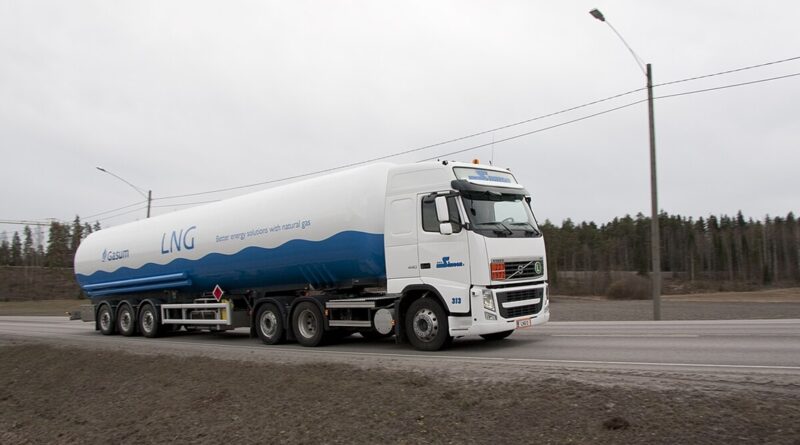
(Photo: Jukka Isokoski, via Wikimedia Commons)