Bulgaria launches communication campaign about the euro
Bulgaria’s government launched on September 2 a communication campaign about the euro, just less than four months before the country adopts the euro as its currency.
The European Union’s finance ministers approved on July 8 the final steps that will see Bulgaria use the euro as its currency from January 1 2026.
As The Sofia Globe reported, Bulgaria’s Parliament voted on July 30 to approve the second and final reading of amendments to the Euro Adoption Act. The legislation concerns steps to be taken in the run-up to and after Bulgaria’s adoption of the euro as its currency.
Display of dual pricing became mandatory as of August 8.
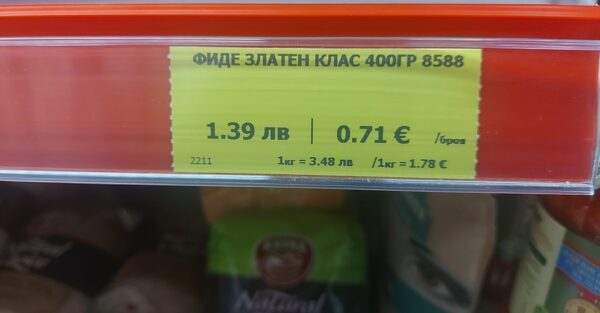
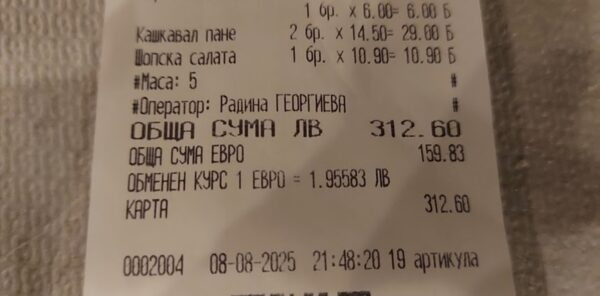
Photos: Clive Leviev-Sawyer
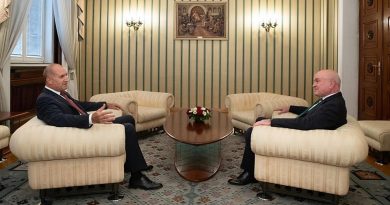
Prime Minister Rossen Zhelyazkov, speaking at the September 2 campaign launch event in Bulgaria’s seaside city of Bourgas, said that some of the advantages of Bulgaria adopting the euro were more competitiveness of the Bulgarian economy, more security, more income, even better functioning of the common European market.
In all its components, the euro has more advantages than any of the old former national currencies of the member states that have chosen this currency, Zhelyazkov said.
He said that the euro is a common, not a foreign currency.
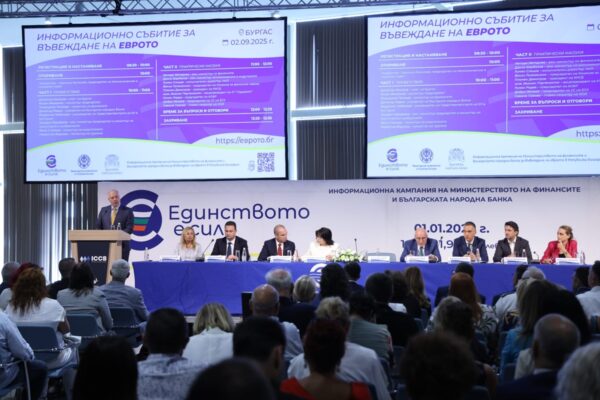
Photo: government.bg
“We are adopting the common European currency of nearly 400 million citizens of countries in the European Union,” Zhelyazkov said.
He outlined the goals and objectives of the information events of the communication campaign about the euro.
Zhelyazkov said that the campaign should not be limited only to well-known and learned clichés and should be directed with special attention to the more vulnerable groups that are most at risk and most exposed to possible manipulation and speculation.
“This campaign is informative, not propaganda, it should explain the path to the introduction of the euro,” he said.
He emphasised trust in institutions and the enormous importance of investing in the truth as a countermeasure against fake news, outright lies and attempts to instill fear in society.
Investing in the truth is an expensive effort and here the media should be our ally, because the media are called to present the true information, Zhelyazkov said.
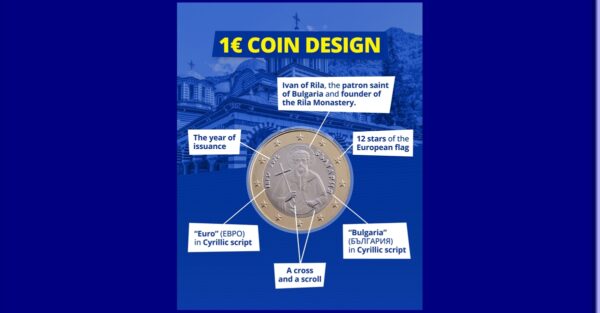
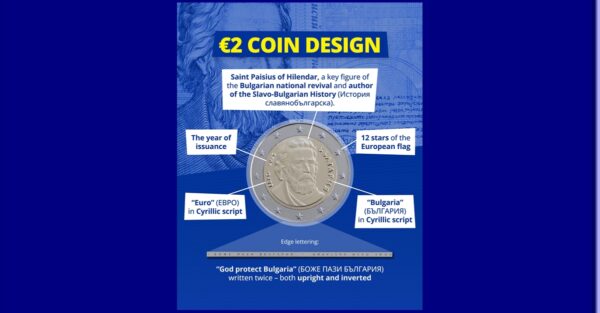
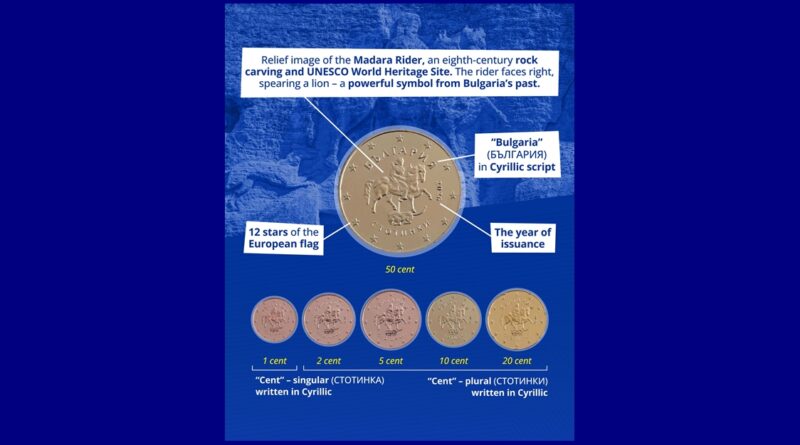
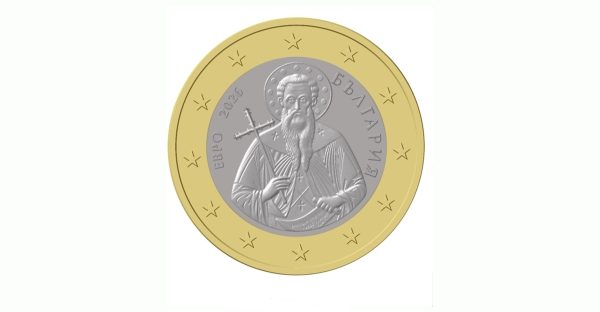
Images: European Central Bank
Finance Minister Temenuzhka Petkova told the event: “Bulgaria’s membership of the euro zone is a guarantee of economic and price stability, a guarantee of more investment, economic growth and increased income.
“Membership of the euro zone is a wonderful opportunity to develop our country in a direction that Bulgarian citizens truly deserve,” Petkova said.
However, she warned that membership of the euro zone is not a panacea in itself.
“We will have to comply with all the rules in order to be able to take advantage of the opportunities that membership offers,” Petkova said.
She said that there is no EU member state that has joined the euro zone and this has reduced the living standards of its citizens.

Images: Bulgarian National Bank
Dimitar Radev, governor of central Bulgarian National Bank (BNB), said: “We have already passed the stage of political declarations, now the central role is played by political actions that will determine how successful the transition from lev to euro will be for business, and especially for people”.
Business is among the main beneficiaries of the introduction of the euro – currency conversion is eliminated, transactions are facilitated, trade risks are reduced, and competitiveness is increased, Radev said.
He said that this was especially important for small and medium-sized companies, which will receive equal access to markets at a lower cost of capital.
The euro will provide better access to European financial markets, greater predictability, and greater interest of investors in Bulgaria, Radev said.
“This means new investments, a more flexible labour market, and accelerated economic growth,” he said.
The challenge for business now is to complete technical preparation, train its staff, and communicate with customers, Radev said.
“The true measure of the euro’s success is in the benefits for citizens – for them, the new currency means more stability and security – savings will be protected, loans will be more transparent, and purchasing power will be better preserved in the conditions of global crises,” he said.
The government is already taking measures to protect consumers – it is conducting dual price supervision, numerous measures, including the information campaign that started today, Radev said.
“The BNB is actively supporting this process so that the transition is fair and just. We publish the answers to all the questions that people send us,” he said.
Radev said that municipalities will benefit from better access to European programmes, from budget planning in euro, as well as from the growth in tourism: “Municipalities must be close to the people, promote and explain the process of transition to the euro”.
For reliable official information on Bulgaria’s transition to the euro, the Association of Banks in Bulgaria has a Q and A, in English.
The official evroto.bg website has an English-language version, while the European Commission made available on July 8 a Q and A on Bulgaria’s changeover to the euro.
For exclusive subscriber-only access to The Sofia Globe’s analysis and commentary on events in Bulgaria, please sign up to our page on Patreon: