
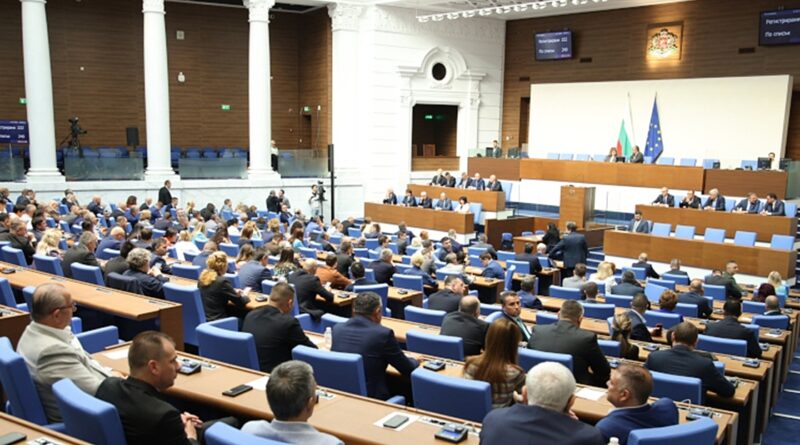
Bulgaria’s Parliament votes to slash polling stations in non-EU countries
Bulgaria’s National Assembly voted on February 5 to approve amendments to the Electoral Code that will slash the number of polling stations abroad in non-EU countries, a move that will have a massive effect in particular in Türkiye, the United States and United Kingdom.
The amendments limit the number of polling stations outside Bulgarian diplomatic and consular missions in non-EU countries to no more than 20.
Approval of the amendments comes as Bulgaria heads towards its latest early parliamentary elections, for which no date has yet been decreed, but which are expected in the second half of April.
The amendments were tabled by minority pro-Russian party Vuzrazhdane and were directly mainly at the Bulgarian electorate in Türkiye, which traditionally supports the Movement for Rights and Freedoms, now the MRF – New Beginning led by Delyan Peevski and the Ahmed Dogan loyalists of the Alliance for Rights and Freedoms (ARF).
The vote was 117 votes for, 82 against, with 10 abstentions.
Apart from Vuzrazhdane, those in favour of the amendments included Boiko Borissov’s GERB-UDF, the Bulgarian Socialist Party – United Left and populist ITN.
Those against were We Continue the Change – Democratic Bulgaria, MRF – New Beginning, ARF, Velichie and three non-aligned MPs, while Mech, one ARF MP and one non-aligned MP abstained.
Debate and voting on the amendments started soon after 9am and continued until after 7pm, with the acrimony characteristic of Bulgaria’s Parliament, numerous points of order (of which many were not, strictly speaking, points of order), personal statements and sundry adjournments of proceedings, requested by sundry parliamentary groups.
Proceedings featured two episodes of filibuster tactics, even though the filibuster is not a measure provided for in the Bulgarian Parliament’s rules of procedure, not that these rules of procedure are always strictly observed, including by the legislature’s presiding officers.
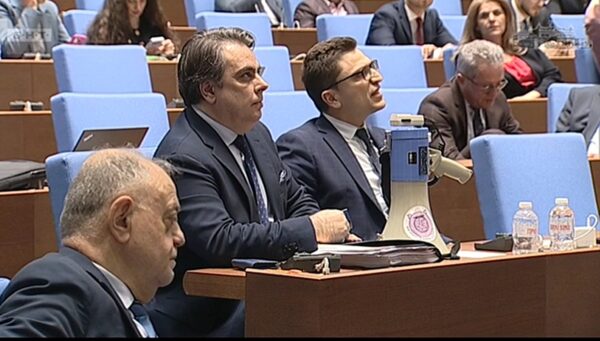
Assen Vassilev, leader of We Continue the Change, spent about 80 minutes reading into the record a list of locations in the United Kingdom and the US where, he said, the ruling majority now “wants to deprive Bulgarian citizens abroad of the right to vote”.
During the sitting, Vassilev had a megaphone on his desk, though he did not put it to use, leaving observers to wonder what the point was of it being there.
Vuzrazhane MP Georgi Hrisimirov emulated this tactic, in tediously mind-numbing length and in droning tones reading out exhaustive, if not exhausting, details of the results from all polling stations in Türkiye in the most recent early parliamentary elections, about how many people voted, and how many votes went to what Hrisimirov called “the Turkish parties”.
Hrisimirov’s invective led to a sort of debate-within-a-debate, whether it was permissible to refer to “Turkish parties” when the votes were by Bulgarian voters for the Bulgarian Parliament in respect of Bulgarian political parties.
The objections, raised by a succession of WCC MPs, including charging Vuzrazhdane with racism, fascism and that Vuzrazhane’s rhetoric that would divide the Bulgarian nation by ethnic lines, were overruled by the presiding officers. Vuzrazhdane repeatedly claimed that people in Türkiye were voting without knowing the Cyrillic alphabet and while lacking a mastery of Bulgarian.
WCC-DB derided the amendments as unconstitutional, on the grounds that they trample on the principle in the constitution of enfranchisement of all Bulgarians, while ARF said that it would seek to challenge the amendments in the Constitutional Court.
Nadezhda Yordanova of WCC-DB called on President Iliyana Yotova to veto the amendments.
The BSP – United Left’s Dragomir Stoynev asked why Bulgarians abroad should vote when they do not pay taxes in Bulgaria. Stoynev said that if Bulgarians abroad wanted to vote, they should finance the opening of polling stations, and as many as they wanted would be opened.
This led WCC-DB’s Martin Dimitrov, an economist, to cite the amount of money – about three billion euro, he said – repatriated by Bulgarians abroad, which Dimitrov said turned into revenue for the Bulgarian state.
Toshko Yordanov, of cable television presenter Slavi Trifonov’s ITN party, also spoke during the debate.


