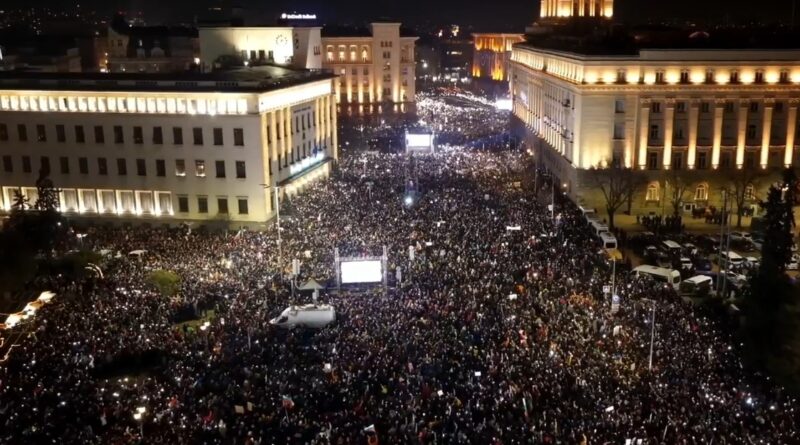
Massive turnout of many tens of thousands across Bulgaria for ‘Peevski and Borissov out of power’ protest
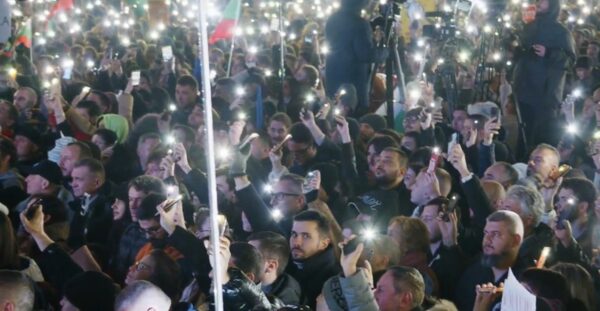
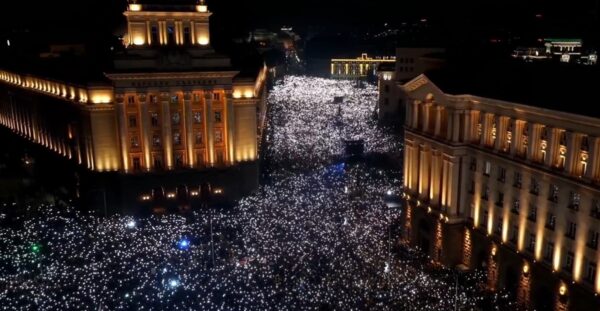
The night of December 10 saw many tens of thousands turn out in Bulgaria’s capital Sofia and in other cities across the country for a protest themed “Peevski and Borissov out of power”.
The protest gave every indication of being even larger than the December 1 protest in Bulgaria, which was billed as against the draft national Budget for 2026, but which reflected mass indignation against those in power.
The title of the December 10 protest referred to Delyan Peevski, the Magnitsky Act-sanctioned leader of the Movement for Rights and Freedoms which holds the current coalition government in power, and former three-time prime minister Boiko Borissov, whose GERB-UDF coalition holds the mandate to govern.
The protest was called by Parliament’s largest opposition group, We Continue the Change – Democratic Bulgaria, on the evening following a four-hour acrimonious debate in the National Assembly on its motion of no confidence in the Rossen Zhelyazkov government, tabled on the grounds of the government’s economic policies.
The vote on the motion of no confidence is scheduled for the afternoon of December 11, with the de facto ruling coalition expected to be able to ensure that the motion – the sixth in the Zhelyazkov government since it took office in January 2025 – will not be approved.
A core characteristic of the protests of December 1 and 10 has been the mobilisation of “Generation Z” Bulgarians – those born between 1997 and 2012 – and their anger and disillusionment with the corruption of those in power.
The December 10 protest was orientated towards this demographic, featuring the involvement of youth figures on stage, a rap performance satirising Peevski, and Bulgarian anti-establishment hard rock group Ahat.
The protest began at 6pm, centred on the “triangle of power” – the area around the Cabinet office, Presidency and the Party House being used for sittings of Parliament – and saw repeated chants of “resign!” directed at the government.
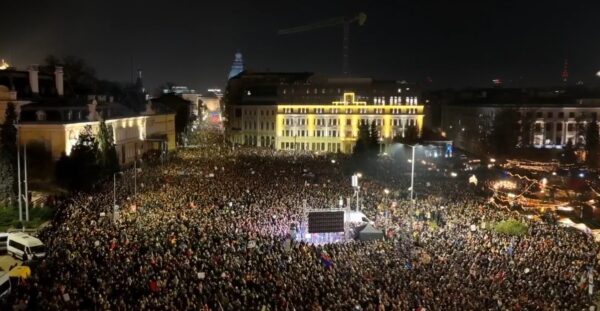
On the stage appeared representatives of Bulgaria’s ethnic Turkish and Roma minorities scathingly denouncing Peevski’s claims to be their “leader” and to speak on their behalf. The MRF, which Peevski leads following his hostile takeover of the party, formerly had its electoral base among Bulgarians of Turkish ethnicity.
Organisers of the protest also appealed for populist party ITN to withdraw its support for the government in the December 11 vote. ITN is led, albeit remotely, by Slavi Trifonov, formerly prominent on television for his show that was popular among a section of the public in Bulgaria, in spite of its unintelligent script-writing and misogynistic, nationalistic messages. Previously trying to characterise itself as anti-establishment, ITN accepted a seat at the table of Cabinet power when the coalition government was formed at the start of 2025.
The ruling majority has sought to decry the December 10 protest, claiming that as a sequel to the December 1 protest, it is meaningless because the Budget provisions about which the December 1 protest was called have been removed. Borissov also has claimed, without evidence, that the protests of December are intended to hobble Bulgaria’s euro accession, which is to take place on January 1 2026.
On December 9, Peevski’s MRF held stage-managed protests in support of the government and Peevski in various MRF stronghold towns, though not in Sofia itself. These saw “supporters” bussed-in and handed standard placards printed in advance for the occasion.
The December 10 protest against Peevski and Borissov, while bringing many thousands to the centre of Sofia, also saw massive turnouts in other major cities, including Plovdiv, Varna, Bourgas and Rousse, according to Bulgarian-language media reports.
For exclusive subscriber-only access to The Sofia Globe’s analysis and commentary on events in Bulgaria, please sign up to our page on Patreon: