
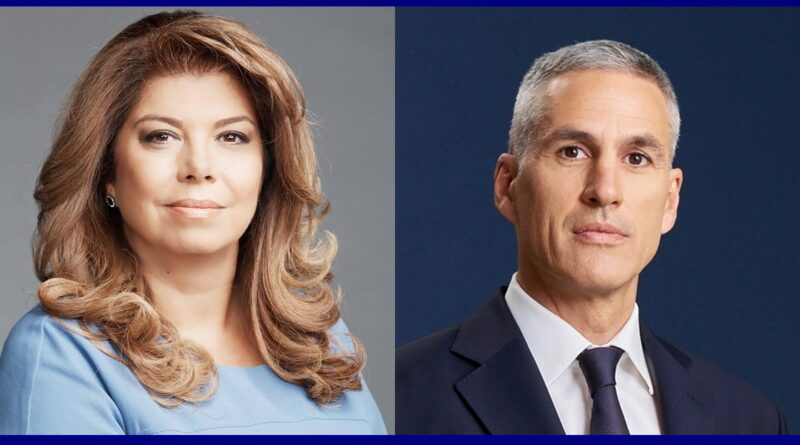
Bulgaria’s 2026 presidential elections: Yotova 52.5%, Gyurov 43.4% in second round – exit poll
Incumbent President Iliana Yotova got 52.5 per cent of the votes in the second and final round of Bulgaria’s 2026 presidential elections, defeating former caretaker prime minister Andrei Gyurov who scored 43.4 per cent, according to an exit poll by Alpha Research, the results of which were released as voting in Bulgaria headed to a close at 8pm on November 1.
A total of 4.1 per cent chose the option “I don’t support anyone”.
The Market Links agency said that Yotova got 50.7 per cent and Gyurov 44 per cent.
Yotova became Bulgaria’s president in January 2026 after Roumen Radev stepped down as head of state to enter parliamentary politics, with Radev going on to win decisive victory in the country’s April early parliamentary elections.
Yotova, with state news agency Kiril Vulchev as her running mate, was nominated by an initiative committee and stood in the election with the stated backing of Prime Minister Radev’s Progressive Bulgaria and a few left-wing parties.
Gyurov, with former acting Interior Ministry chief secretary Georgi Kandev, also was nominated by an initiative committee, and had the backing of reformist, pro-Western parliamentary groups Democratic Bulgaria and We Continue the Change, as well as some extra-parliamentary political formations.
A key dividing line in the election campaign has been Russia, with Yotova favouring dialogue with Putin’s country and opposing aid to Ukraine, speaking instead of a “coalition for peace”.
Gyurov stood on an adamantly pro-Western, pro-EU, pro-Nato platform, also criticising Radev’s government for its dismal performance on foreign policy and its failure, on the domestic front, to contain high prices. The Gyurov camp warned against the scenario of the Radev political axis possessing the presidency in addition to already having the government and the ruling majority in Parliament.
The official election campaign period passed with the backdrop of drone attacks – widely blamed on Russia – on merchant shipping off the Black Sea coasts of Bulgaria and Romania.
Yotova, in spite of the backing from Radev’s party, did less well than expected in the October 25, scraping only a narrow margin over Gyurov, who had been seen in eve-of-election opinion polls as trailing in double figures behind her.
Opponents of Yotova emphasised how, as vice president, she had granted pardons to drug dealers, including one in particular who supposed ill-health did not seem quite as grave as portrayed, given that he was involved in a prison fight close to his release, and emerging into society, went back to serious narcotics dealing.
Among the significant parties in the current Parliament, Boiko Borissov’s GERB-UDF and Delyan Peevski’s Movement for Rights and Freedoms did not nominate presidential candidates. On November 1, Borissov said that he was voting for Gyurov but was refraining from calling on his party’s supporters to follow suit. Peevski remained silent throughout the final week of the elections.
Yotova will become elected head of state in January 2027. Bulgaria’s constitution allows the president to serve for up to two terms of five years each. In 2026, she has been serving out the term to which Radev was elected, so those months do not count with respect to the term limit.
The role and powers of the president are set out in Chapter Four of Bulgaria’s constitution.
The president is commander-in-chief of the armed forces, decrees parliamentary election dates, appoints caretaker governments if required, grants citizenship, asylum and pardons and has a limited power of veto over legislation.


