
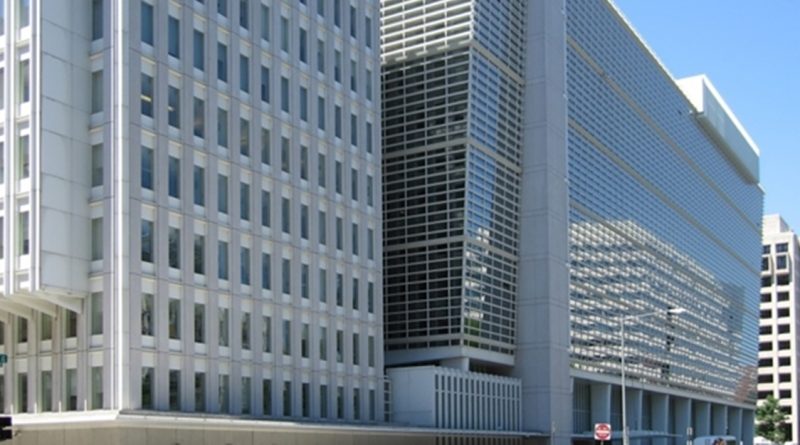
World Bank cuts GDP growth forecasts for Bulgaria for 2026 and 2027
The World Bank has reduced its real GDP growth forecasts for Bulgaria for 2026 and 2027, according to the institution’s June 2026 Global Economics Prospects report.
The World Bank forecasts real GDP growth in Bulgaria at 2.6 per cent in 2026, down by 0.3 points compared with its January forecast, and 2.9 per cent growth in 2027, down by 0.2 points compared with the January forecast.
In its June 2026 report, the World Bank said that the the global economy is facing another major shock.
The conflict in the Middle East has triggered sharp increases in energy prices, renewed inflationary pressures, and fueled expectations of tighter monetary policy, the World Bank said.
Global growth is projected to slow to 2.5 per cent in 2026, from 2.9 per cent in 2025—the lowest rate since the Covid-19 pandemic—amid weaker prospects for economies dependent on energy imports and those directly affected by hostilities.
Activity is expected to firm in 2027–28 as energy supplies recover, monetary easing resumes, and trade strengthens.
Growth in emerging market and developing economies (EMDEs) is expected to slow to 3.6 per cent this year. For all EMDE regions, growth this year is forecast to be weaker than in 2025.
Per capita income growth in EMDEs is projected to slow in 2026 to its weakest pace since the pandemic.
Risks to the outlook remain skewed to the downside, the report said.
A renewed escalation of hostilities or more prolonged disruptions to commodity flows could further raise commodity prices, intensify inflationary pressures and food insecurity, trigger financial stress, and lower growth, the World Bank said.
If energy supply disruptions prove more severe than assumed and are accompanied by substantial financial stress, global growth could fall to just 1.3 per cent in 2026, the report said.
Persistent trade policy uncertainty, geopolitical strains, and weather-related shocks also pose material risks. On the upside, broader investment in and adoption of artificial intelligence (AI) could lift activity, the report said.
(Photo: Shiny Things/ flickr.com)


