
Opposition parties slam Bulgaria’s absence from signatories on special tribunal to prosecute Russia over Ukraine
Bulgarian opposition parties have slammed the absence of Bulgaria from signatories to the initiative on a special tribunal to prosecute Russia for military aggression against Ukraine.
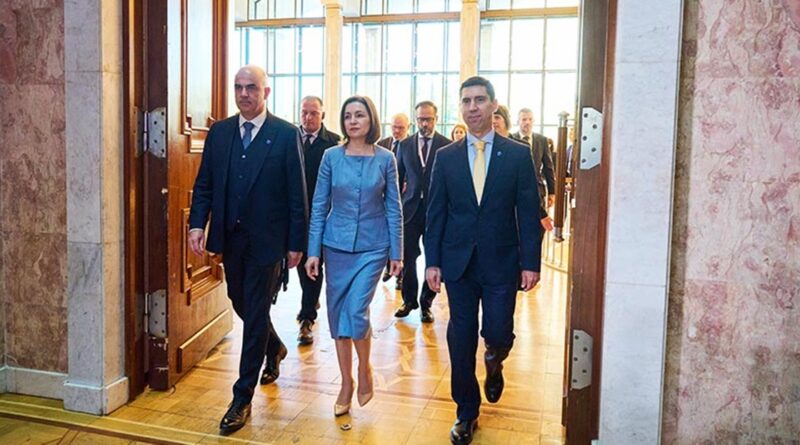
On May 15, the foreign ministers of the 46-nation Council of Europe reaffirmed their unwavering support to Ukraine by establishing an Enlarged Partial Agreement on the Special Tribunal for the Crime of Aggression against Ukraine, the Council of Europe said.
Among European Union member states, four were absent from the signatories – Bulgaria, Hungary, Malta and Slovakia.
However, the European Commission (EC) has joined the Expanded Partial Agreement on the Special Tribunal for the Crime of Aggression against Ukraine.
The EC also ratified, on behalf of the EU, the convention establishing the International Claims Commission for Ukraine. The body, of which the EU is already a founding member, will examine, assess and determine claims for compensation for damage, loss and harm caused by Russia to Ukraine and the Ukrainian people.
In a statement, the Bulgarian Parliament’s largest opposition group, GERB-UDF, said that Bulgaria’s decision not to join the initiative to create a Special Tribunal for Criminal Aggression against Ukraine was a “political mistake”.
“It is even more alarming that this is happening at a time when most European Union and Nato countries have clearly declared support for Ukraine’s international law, sovereignty and territorial integrity,” GERB-UDF said.
“This initiative is not aimed at the Russian people. It is aimed at seeking accountability for the very decision of one country to start a war against another in violation of the UN Charter — a principle on which Europe’s entire post-war security system is built,” it said.
GERB-UDF said that Bulgaria has no interest in appearing to be a country that relies on Nato guarantees, but avoids political responsibility when it must clearly take a position.
“Such behaviour is not perceived as a precaution. In international politics, it is perceived as a lack of strategic clarity.”
For Bulgaria, participation in such formats has a direct national interest, GERB-UDF said.
The Black Sea region is directly linked to Bulgaria’s security, energy, transport corridors, investments and economic stability. The weaker the international law, the more insecure the small and medium-sized countries become, it said.
“Europe’s history is a painful enough evidence of what happens when aggression is left without a political and legal response,” the coalition said.
“GERB-UDF believes that Bulgaria should be an active, predictable and respected participant in all international formats that affect Europe’s security and the future of the Black Sea region.”
Opposition party Democratic Bulgaria said in a statement that it condemns the decision of the Bulgarian government not to support the resolution of the Committee of Ministers of the Council of Europe creating the basis for the future Special Tribunal to condemn the crime of aggression against Ukraine.
“The position of the government of Roumen Radev places our country in the minority among its European partners and allies. This is in practice a refusal to officially recognise that Russia is the aggressor and Ukraine is the victim – something that President Iliana Yotova recently, albeit reluctantly, stated,” Democratic Bulgaria said.
After the Bucharest blunder that day, the Progressive Bulgaria government clearly shows that it has no intention of strengthening Bulgaria’s voice in Europe and the world – on the contrary, with its foreign policy decisions it weakens it in the service of Putin’s regime, the party said. The “Bucharest blunder” is a reference to the Bulgarian government being represented only at ambassadorial level at a May 13 meeting of the B9 states.
“For Democratic Bulgaria, the protection of international law, European solidarity and a clear position against military aggression are not a matter of conjuncture, but of values and national dignity,” it said.
As of the morning of May 16, there has been no statement on the Bulgarian government’s and Foreign Ministry’s websites explaining the country’s absence from the signatories.
Photo: Council of Europe Secretary General Alain Berset with Moldovan President Maia Sandu, centre, and Foreign Minister Mihai Popșoi, right, arrive to host the May 15 meeting of Europe’s foreign ministers at the Palace of the Republic in Chișinău: Council of Europe


