
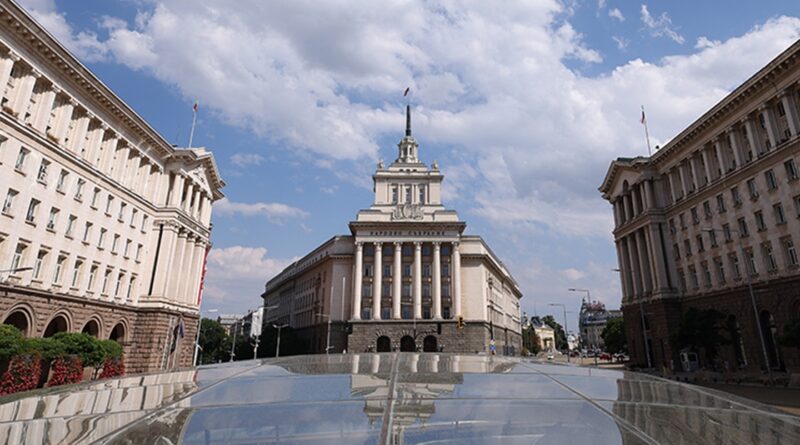
Market Links poll: GERB-UDF 18.1%, WCC-Democratic Bulgaria 14.2%
Were Bulgaria to hold parliamentary elections now, Boiko Borissov’s GERB-UDF would get 18.1 per cent of the votes from those who would go to the polling stations, while We Continue the Change – Democratic Bulgaria would get 14.2 per cent, according to a survey by the Market Links agency, the results of which were released on January 12.
The results emerged as Bulgaria appears inexorably set for early parliamentary elections in the spring.
A previous poll by Market Links, the results of which were released on December 11, showed GERB-UDF as having the support of 17 per cent of those who would vote, while WCC-DB had 14.7 per cent.
The new poll by the agency showed pro-Russian party Vuzrazhdane with 9.3 per cent (unchanged from early December) with Magnitsky Act-sanctioned Delyan Peevski’s Movement for Rights and Freedoms – New Beginning narrowly behind at 9.2 per cent (previously 9.1 per cent).
In fifth place is the Bulgarian Socialist Party – United Left with 5.5 per cent (from 4.7 per cent) and in sixth place is nationalist-populist Mech, 5.3 per cent (unchanged from early December).
Market Links’s Dobromir Zhivkov told bTV on January 12 that after the protests of last year and the resignation of the Rossen Zhelyazkov government, public attitudes remain strongly negative, and trust in political leaders continues to decline.
The poll found that 70 per cent of Bulgarians do not approve of the direction in which the country is developing, with the main reasons being a feeling of injustice, suspicions about the non-transparent distribution of public funds, and corruption – topics that, according to Zhivkov, had mobilised society the most at the end of the year.
Market Links sees as the most significant conclusion from the poll the fact that GERB-UDF has remained below 20 per cent for a second time, which the agency sees as atypical and as a sign of a serious crisis of confidence in what is currently Parliament’s largest group.
The poll also found an extremely high share of vacillating voters. In total, about 30 per cent fall into the groups “undecided”, “another formation” and “I do not support anyone”.
According to Zhivkov, about half of the vacillating voters may be attracted by a new political project, and among this group there are also positive attitudes towards President Roumen Radev.
Radev has a relatively stable approval rating, at 44 per cent, against 34 per cent disapproval.
Borissov has the most drastic drop in his approval rating, which is now 14 per cent, with 73 per cent disapproval. In early December, his approval rating was 20 per cent and his disapproval rating 68 per cent.
Zhivkov said that he saw this as an important indicator: support for the party is higher than trust in the leader, which can be read as a signal of internal erosion.
Peevski continues to have the highest disapproval rating among political party leaders.
The poll was financed and carried out jointly by bTV and Market Links and was conducted among 1008 people over 18 years old in the country in the period December 18 – 19 2025 using the methods of direct personal interviews and an online survey.
(Photo: parliament.bg)