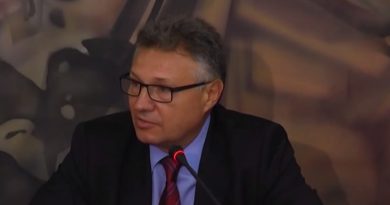

Coordination centre chief: Predictions that introduction of euro in Bulgaria would be disaster have not come true
Predictions that the introduction of the euro in Bulgaria would be a disaster did not come true, we are off to a very good start, euro adoption coordination centre chief Vladimir Ivanov told Bulgarian National Radio (BNR) on January 11.
“There is no idea of extending the period in which the lev will be used, in parallel with the euro,” Ivanov said.
“We are implementing the law, and it orders that the period be one month – until January 31. I see no reason to extend it, since the process is going very well,” he said.
After only about 10 days, the money supply of leva will be very small, Ivanov said.
He said that the system had done very well and 46 per cent of the leva that had been in circulation was now in central Bulgarian National Bank (BNB).
“Things are going quite well. I would boldly say that we are doing better than Croatia.”
“Serious business in Bulgaria has behaved very responsibly, thanks also to the activities of the banks, which is why we are seeing these results,” Ivanov said.
He said that Bulgaria’s place was in Europe and claims that the lev will return in a month are misconceptions and myths.
“The results of the inspections show that a very small proportion of people, companies, and various industries have not embraced the idea of the euro and have decided to break the law.”
There is no problem with prices for basic food products after the introduction of the euro, Ivanov, who is also the head of the Commission on Commodity Exchanges and Markets, said.
“Prices are driven by market factors. … The consumer basket is the same as it was at the same time last year – 51 euro. These are data that show that we have a stable market, and a little inflation is inevitable, it can’t help but happen,” Ivanov told BNR.
Hristo Markov, executive director of the National Revenue Agency, told Nova Televizia on January 11 that since the beginning of 2026, the agency had conducted more than 1000 inspections, bringing the total to 1706, counting in those done at the end of last year.
Markov said that only about one in 10 of inspections resulted in fines.
“The process of collecting documents and assessing whether the increases are justified is still underway,” he said.
“We rely on prevention. The goal is not to fill the budget with fines, but to stop speculative price increases. We are not a repressive body,” Markov said.
“There are some inconveniences when shopping with euro – especially in small shops. Because they say that it is more difficult to get hold of the new currency.
“But I assume that from February 1 these inconveniences will disappear. In some more remote areas, only leva are still used, but this will gradually change,” he said.
He said that a “detailed and quite good” analysis was done by BNB experts together with the private sector in deciding on the dual currency transition period.
“It shows that the best option is for the period for parallel use of leva and euro to be one month. In many other countries, this period was even shorter – about 14-15 days,” he said.