
Bulgaria’s euro era dawns
As the stroke of midnight brought January 1 2026, Bulgaria became the 21st member of the euro zone, with the Association of Bulgarian Banks (ABB) and media reports saying that the transition to the common European currency had gone smoothly.
The changeover from leva to euro as Bulgaria’s currency took place 19 years after the country joined the European Union and a year after it became a fully-fledged member of the Schengen visa zone.
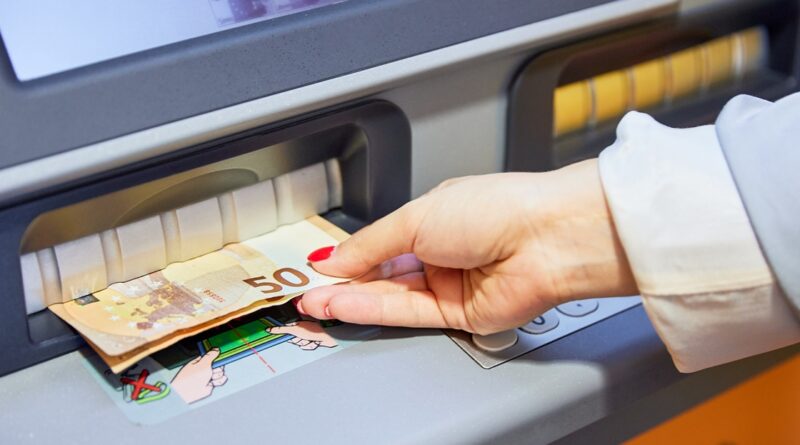
In the hours around midnight, ATMs and bank accounts switched over from leva to euro.
ABB chief secretary James Jolovski told Bulgarian National Radio (BNR) on January 1: “Last night was the culmination of a long process that has been underway as preparation in the banking sector.
“While everyone was celebrating, colleagues in the banks worked extremely intensively to make this transition happen. It went completely successfully,” Jolovski said.
Payment systems company Borica said that the first successful withdrawal of euro from ATM was reported to have taken place at 20 seconds past midnight in the Sunny Beach resort.
The transition went smoothly with minimal disruption to key services – a result of timely preparation, a strict schedule and excellent interaction between institutions, banks, payment service providers and technology operators of the infrastructure, the company, which ensures the operability of the national card and payment infrastructure, said.
Jolovski told BNR: “Everything went according to plan..
“Currently, all banks are gradually starting to launch their digital channels, mobile applications, and internet banking, so people can also see their balances, which are converted at the fixed rate. Everything went smoothly ,” he said.
Jolovski gave an assurance that it is normal for different situations to arise in connection with payments in leva and euro, but they should not cause concern and discomfort in people :
“Both the lev and the euro are legal tender until January 31”.
“Merchants also don’t have to worry if they don’t have any euro available – they can return in lev. There is no reason to worry,” he said.
He indicated that various accesses and services will be restored in stages . However, he said this process is complex and different for each bank.
Regarding card systems, “they launched in the range we expected,” Jolovski said.
He said that now everyone can withdraw euros at an ATM and pay with a card.
Jolovski reiterated that all accounts are converted automatically, without fees, at the fixed rate .
“Payments will be restored soon and transfers will also be possible through digital channels. Both deposit products and loans – everything is converted at the fixed rate without fees. No new account is needed, no card replacement is needed, no new IBAN. Everything is kept as it is.
“People do not need to physically go to exchange their banknotes and coins at a bank, because they can use them at retail outlets. No specific effort is required. We continue to use our leva as before ,” he said.
He said that if people had any leva left after January 31, they could exchange them at banks and at the Bulgarian National Bank.
He gave an assurance about fixed interest rates, which remain as they are: “The interest rate policy of banks depends mostly on market conditions.
“It depends on the price of the resource, which is extremely cheap in Bulgaria. The other important factor is the European Central Bank’s policy. It is currently stable. We do not expect any deviation in interest rates, they are stable. We do not expect any shocks or significant changes in them.”
(Photo: EC Audiovisual Service)


