
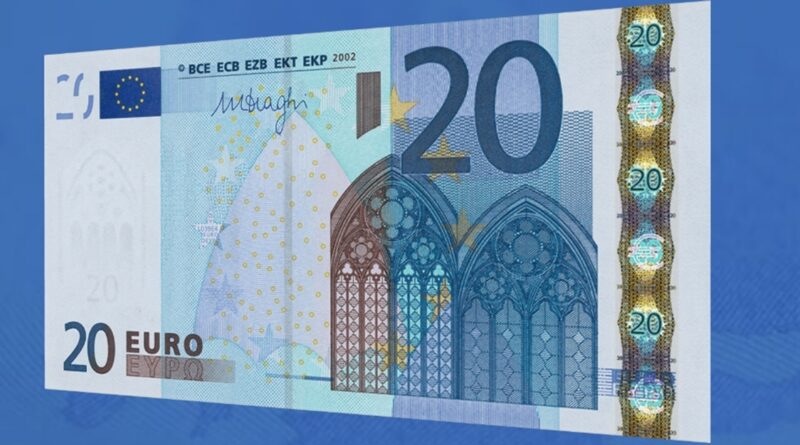
EC: Bulgaria joins the euro zone on January 1 regardless of political situation
Bulgaria will join the euro zone on January 1 2026 regardless of the political situation, a spokesperson for the European Commission (EC) said at a regular midday briefing in Brussels on December 12.
The statement came a few hours after Bulgaria’s Parliament accepted the resignation of the Rossen Zhelyazkov government, which was tabled the previous day against a background of massive street protests in Bulgaria and abroad against the ruling majority.
At the EC briefing, a correspondent for Bulgarian National Radio asked whether or not Bulgaria’s euro accession could be delayed, in the context of the government’s resignation, President Roumen Radev’s repeated claims that the country is not ready for the euro, and pro-Russian opposition party Vuzrazhdane saying that it would table a decision to postpone euro accession by a year.
The EC spokesperson said that the situation was quite clear, that there were a number of criteria to be met to adopt the euro, and Bulgaria had met all key criteria.
All the necessary decisions had been taken and as of January 1 2026, Bulgaria would become part of the euro zone.
“Regardless of how the political situation develops, the necessary decisions have been made and remain in force indeed,” the spokesperson said.
Zhelyazkov, who took office as Prime Minister in January 2025, announced on February 25 that Bulgaria had asked the EC and the European Central Bank (ECB) for special convergence reports on the country’s readiness for the euro.
On June 4, the EC and ECB reports said that Bulgaria was ready to adopt the euro as of January 1 2026.
On July 8, the process of approval by the relevant European institutions was completed, opening the way for Bulgaria’s euro accession.
Bulgaria became a member of the European Union on January 1 2007, with the accession treaty providing that on meeting the criteria, it would join the euro zone. This has the status of a ratified international treaty, and according to the constitution, these are not subject to national referendums.
Bulgaria’s Parliament repeatedly has rejected draft decisions for a referendum on euro accession, on those constitutional grounds and because the majority of elected representatives in a succession of Parliaments have been in favour of Bulgaria adopting the euro.
For reliable official information on Bulgaria’s transition to the euro, the Association of Banks in Bulgaria has a Q and A, in English.
The official evroto.bg website has an English-language version, while the European Commission made available on July 8 a Q and A on Bulgaria’s changeover to the euro.
For exclusive subscriber-only access to The Sofia Globe’s analysis and commentary on events in Bulgaria, please sign up to our page on Patreon: