
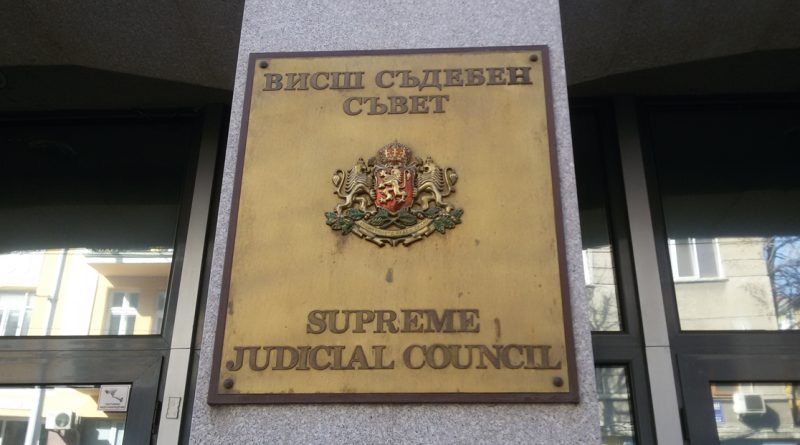
Bulgarian Parliament elects 11 members of Supreme Judicial Council
Bulgaria’s National Assembly voted on November 20 to appoint 11 members of the country’s Supreme Judicial Council (SJC), the body tasked with the appointment of senior magistrates in Bulgaria’s judiciary.
Parliament held individual appointment votes for all 21 nominees. Vote tallies showed that the candidates that secured appointment were uniformly backed by the governing Progressive Bulgaria, alongside the opposition We Continue the Change (WCC) and Democratic Bulgaria.
The three parliamentary groups have a combined 168 MPs, enough to meet the qualified two-thirds majority of 160 MPs in the 240-seat National Assembly, required for the appointment of SJC members.
Most successful candidates, save three, were also backed by the opposition GERB and Movement for Rights and Freedoms (MRF) parties. Only pro-Kremlin party Vuzrazhdane, whose sole nominated candidate was not elected, voted against all successful appointments.
Of the 11 members of the SJC appointed by MPs on November 20, seven were nominated by Progressive Bulgaria and two apiece by WCC and Democratic Bulgaria.
The council has 25 members and is presided over by the Justice Minister, who is not, however, a member of the SJC. Of the 25 members, 11 are elected by Parliament, 11 by magistrates and three are members ex officio – the country’s prosecutor-general and the heads of the two high courts, the Supreme Court of Cassation and the Supreme Administrative Court.
The 11 members elected by magistrates are voted by their respective branches – six by judges, four by prosecutors and one by investigators. This last one is part of the prosecutors college of the SJC, as the National Investigative Service is subordinated to the prosecutor’s office in Bulgaria’s judiciary.
MPs similarly elect six members of the SJC to the judges college and five to the prosecutors college.
The current SJC line-up, often criticised as being unduly under the influence of MRF leader Delyan Peevski – who is subject to US sanctions under the Magnitsky Act -has been in office nearly five years past the expiration of its five-year term.
That is because Bulgaria’s pollical instability since 2021, which saw eight parliamentary elections in five years, resulted in fragmented parliaments, some of them very short-lived, that had little appetite for tackling the issue of electing SJC members.
(Photo: Clive Leviev-Sawyer)
Please support independent journalism by clicking on the button below. For as little as three euro a month or the equivalent in other currencies, you can support The Sofia Globe via patreon.com and get access to exclusive subscriber-only content:


