
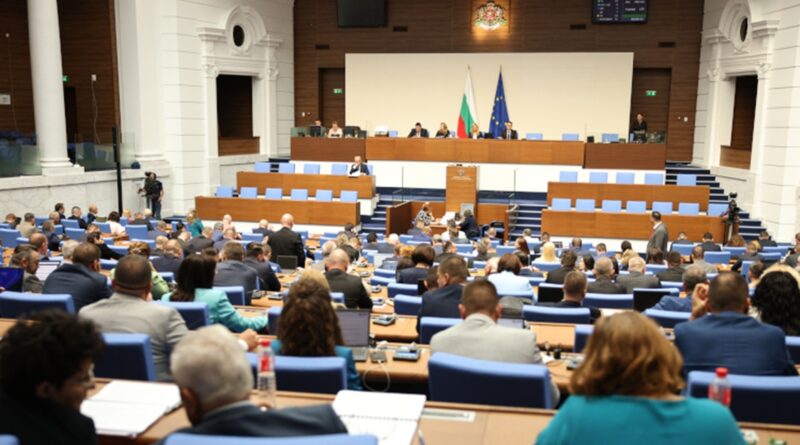
Bulgaria’s Parliament approves Public Servants Act amendments, introducing integrity tests
Bulgaria’s Parliament approved at a special sitting on August 25 amendments to the Public Servants Act, which introduce integrity tests for posts deemed to be at high risk of corruption and which allow public servants to work from home up to two days a week.
The amendments are among laws and amendments required for Bulgaria to receive funds under the Recovery and Resilience Plan, with the August 25 completing the process of approving the required legislation.
Proof of having passed an integrity test will be required for first-time appointees to posts with a high risk of corruption.
Such posts include chief secretaries and administrative secretaries of executive authorities, the permanent secretary of the Ministry of Foreign Affairs, the permanent secretary of defence and municipal secretaries.
High corruption-risk positions included those held by officials in managerial and expert roles who initiate, organize and conduct public procurement procedures and sign contracts, as well as officials in managerial and expert roles involved in preparatory activities, the procedures for selecting concessionaires, or the monitoring of concession contract implementation under the Concessions Act. Other posts are also listed.
The integrity test certification will be valid for three years from the date of notification of the result.
An applicant who fails such a test will have to wait a year before undergoing the test again.
The department where a public servant is employed may allow the employee to work from home for no more than two days of the working week.
The first reading of the amendments was approved on July 29, with several proposals by opposition groups being rejected.
The other legislative steps earlier approved by Parliament between the end of April and the end of July include a Countering Corruption among Persons Holding Public Offices Act, as well as amendments to five more laws – the Water Act, the Criminal Procedure Code, the Judiciary Act, the Renewable Energy Act and the Activities of Collective Investment Schemes and Other Collective Investment Undertakings Act.
(Archive photo: parliament.bg)


