
Split: We Continue the Change and Democratic Bulgaria to sit as two separate groups in new Parliament
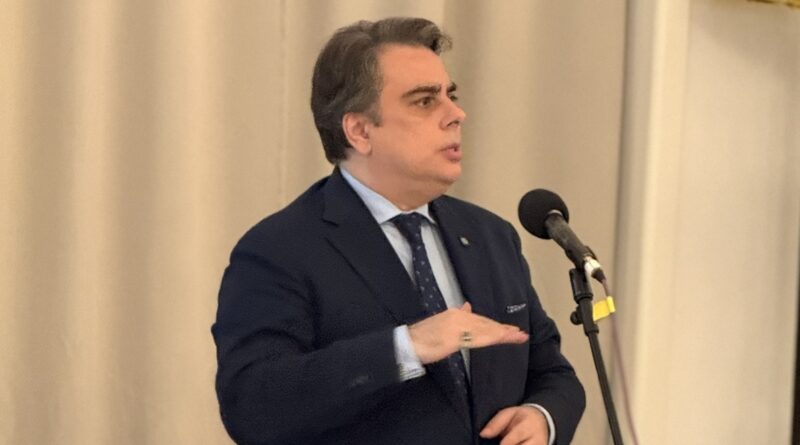
The constituent parts of the We Continue the Change – Democratic Bulgaria electoral coalition will sit as two separate parliamentary groups in the country’s newly-elected National Assembly, WCC leader Assen Vassilev said on April 29.
Vassilev was speaking to reporters on the eve of the first sitting of the 52nd National Assembly, elected in early parliamentary elections on April 19, and in which WCC-DB won 37 out of 240 seats, a share that was third place. His announcement was preceded by talks lasting some hours between leaders of WCC and Democratic Bulgaria on relations between the two constituent parts of the coalition.
As two separate parliamentary groups, Democratic Bulgaria would have 20 MPs and WCC 17, according to informal calculations.
Vassilev’s statement to reporters came after long months of tensions and internal communication problems within the WCC-DB coalition, which was founded on the basis of the whole being greater than the sum of its parts.
His WCC proposed to their coalition partners an agreement on a “parliamentary union” using the name “Strong Bulgaria in a Strong Europe” – the slogan of WCC-DB in the April 2026 elections.
It envisages the two groups nominating a joint candidate in Bulgaria’s autumn 2026 presidential elections and pursuing joint legislative initiatives, and holding coordination meetings on policies such as judicial reform.
Vassilev told reporters: “What I think we will expect and what we saw in 2022, when we were separate as formations, is that there are currently people who stand on the right and do not vote for the common formation because they think that the WCC’s policies are too left-wing”.
“We think they [the policies] are centrist, but some people are dissatisfied. Parties on the right spectrum have emerged, albeit small ones. Similarly, there were people who support the WCC, but think that some of the policies proposed by the DB are too right-wing,” he said.
“Obviously, two parliamentary groups will be registered. What we proposed to our colleagues and they said they would discuss is a parliamentary alliance for joint action,” Vassilev said.
“So we are moving forward absolutely together with a parliamentary union. The only difference is that two separate groups will be lit up on the [parliamentary group voting results] scoreboard,” he said.
Within the WCC-DB coalition, Democrats for a Strong Bulgaria – part of the Democratic Bulgaria coalition – publicly had opposed a split into two parliamentary groups.
Yes Bulgaria, also part of the Democratic Bulgaria coalition, had publicly called for – in contrast to a split – the constituent parties within WCC-DB to become a single political entity.
With the prospect of WCC-DB sitting as two separate parliamentary groups, this would be irrevocable under the Bulgarian Parliament’s rules, which do not allow floor-crossing or the formation of a new parliamentary group after the first sitting.
Article 13 (1) of the rules of procedure of the National Assembly says: “Each parliamentary group shall, by the end of the first sitting, submit to the Speaker of the National Assembly a decision on its formation, the name of the group and a list of the leadership and members signed by all its MPs. The Speaker of the National Assembly shall announce the parliamentary groups and their leadership at the same sitting of the National Assembly”.
Once an official parliamentary groups is formed, for which a minimum of 10 MPs is required, it is set in stone, unless the number of members falls below 10. Defections and mergers are not allowed within the life of a Parliament, according to the legislature’s rules. If an MP leaves a parliamentary group, that MP must sit as a “non-aligned” member. So too if a parliamentary groups ceases to exist, its members sit as “non-aligned” MPs.
DSB leader Atanas Atanassov, speaking to reporters in brief comments after the April 29 talks between WCC and DB, described the decision to have two separate parliamentary groups as a “political mistake”.


