
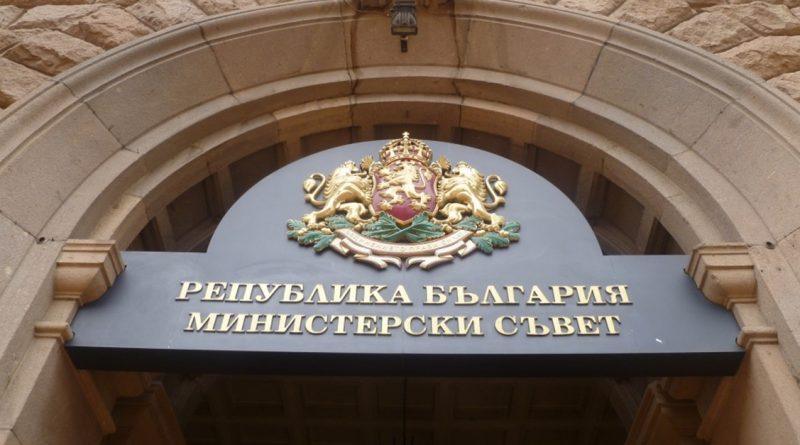
Bulgaria’s caretaker government refers Parliament’s vote on ‘Board of Peace’ to Constitutional Court
Bulgaria’s caretaker government has asked the Constitutional Court whether Parliament’s vote obliging it to table the ratification of the “Board of Peace” charter, signed by the previous government, contradicts the constitution.
According to the caretaker government, Parliament’s decision contradicts the constitution and the procedure for concluding international treaties.
“It contradicts the principle of the rule of law, the principle of separation of powers and the established authority of the Cabinet to implement the country’s domestic and foreign policy in accordance with the constitution and the laws,” the statement said.
As The Sofia Globe reported at the time, Bulgaria’s National Assembly voted on March 13 to oblige the government to table the ratification of the agreement on the country’s accession to Donald Trump’s “Board of Peace”.
The step was taken at the insistence of Delyan Peevski, sanctioned under the US Magnitsky Act for large-scale corruption, and was backed by Boiko Borissov’s GERB-UDF, Peevski’s MRF – New Beginning and populist party ITN.
In a recent interview with Darik Radio, caretaker Foreign Minister Nadezhda Neysnki said that the ratification of the charter of Trump’s “Board of Peace” will also commit Bulgaria financially,
“Putting him (Peevski) on and off the Magnitsky list cannot be a matter of national policy,” Neynski said.
She said that people who want their sanctions lifted should challenge this before the institutions that put them on this list, and not involve the Bulgarian state.
Neynski said that the caretaker cabinet would “unwaveringly follow our national interest in its desire to protect it.” And the uncertainty about possible actions is making the caretaker government extremely cautious.
“What happened in the National Assembly raises the question of whether it can oblige a caretaker government to submit a law for ratification. This is a procedural issue, but behind it are political interests and attempts at confrontation that will serve the election campaign,” Neynski said.
The caretaker cabinet will not table the ratification before the Constitutional Court is heard, because there are concerns that this contradicts the country’s constitution, she said.
“The debate in the National Assembly does not work for Bulgaria’s image because it unleashes political emotions that have nothing to do with Bulgarian national interests, regardless of the way they are presented,” Neynski said.
She said that the “Board of Peace” document does not have the character of an international treaty, including under US law. According to her, the charter signed by the previous government was a political gesture, although “neither the US Congress nor the Senate have ruled on the legal basis of this charter.”
Bulgaria’s Parliament held its last scheduled sitting on March 19, and no further sittings are planned as the country heads to early parliamentary elections on April 19.
In a statement on March 23, the Constitutional Court said that it had agreed to consider the case lodged by the caretaker government.
(Photo: Clive Leviev-Sawyer)


