
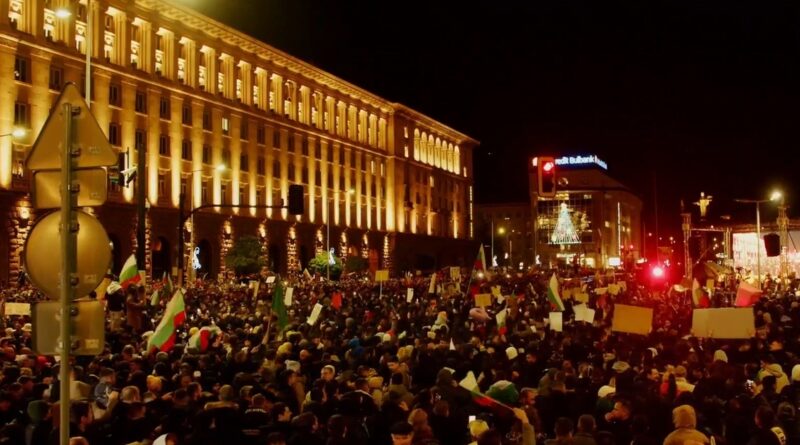
Tens of thousands in new protest across Bulgaria against draft Budget 2026
Tens of thousands of Bulgarians turned out on the night of December 1 in capital city Sofia and several other cities in Bulgaria in a mass protest against the draft Budget for 2026.
Several commentators in recent days have said that the protests – for which the catalyst is the draft Budget for next year – are not only about the draft Budget but also a sign of rejection of a de facto ruling majority dominated by Magnitsky Act-sanctioned Delyan Peevski and GERB-UDF leader Boiko Borissov.
As with the previous mass protest, the December 1 event was called by opposition coalition We Continue the Change – Democratic Bulgaria, the current National Assembly’s second-largest group.
Reports by public broadcaster Bulgarian National Television showed not only footage of the protests in Sofia, but also in Plovdiv, Varna, Bourgas and other cities.
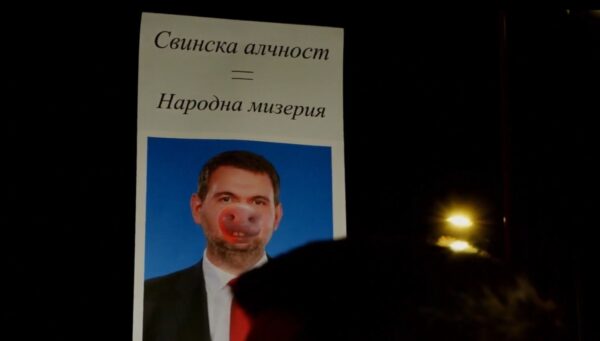
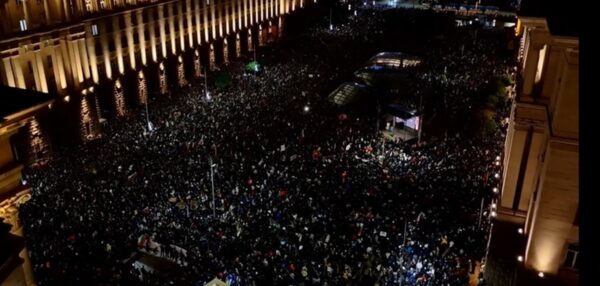
In Sofia, the protest – live-streamed on Facebook – showed images of handcuffs projected on government buildings, chants of “Resign!” “Mafia!”. All under the opposition chosen theme of “Stop the Thefts in the Budget”. There were calls for the prosecution of Peevski and Borissov.
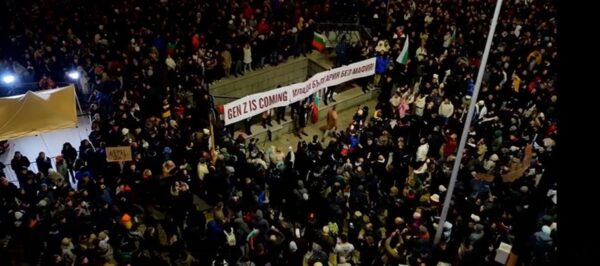
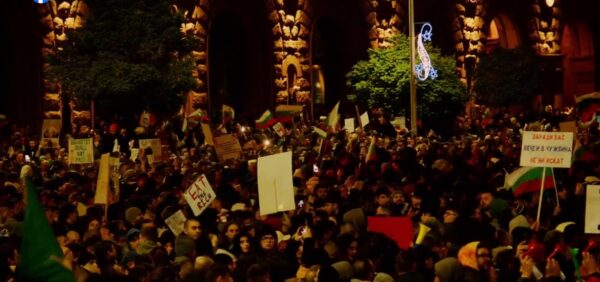
Bulgarian Prime Minister Rossen Zhelyazkov said on November 27 that the Cabinet would withdraw the 2026 Budget package, the first reading of which had been approved by the National Assembly, following a large protest against the draft Budget held outside Parliament the previous evening.
But as of the night of December 1, the draft Budget had not been withdrawn, with no decision by the National Assembly to this end, while the ruling coalition was essaying negotiations with private sector bodies, trades union associations and within itself on a new shape of what would be Bulgaria’s first euro-denominated Budget.
Objections to the draft Budget include several contentious points, including raising of taxes while handing out huge sums to the country’s already-bloated public sector. Other objections include opaqueness in the draft spending that suggests it could be used for pork-barrel spending for the politically-aligned to the players in the de facto ruling majority.
In Sofia, clips of Borissov and Bulgarian Socialist Party minority government partner leader Atanas Zafirov were played to jeers from the crowd, while there was a live crossing from Varna mayor Blago Kotsev, the subject of allegations of unlawful conduct seen by his WCC-DB as deliberate political persecution.
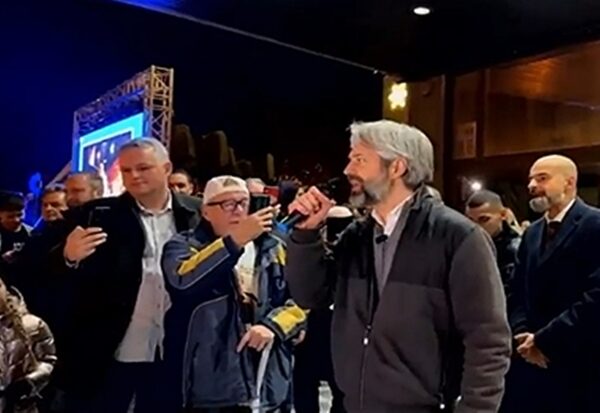
Ahead of the protest in Sofia, the Interior Ministry said that it would act against “provocations” and would mount several checkpoints for entrance to the protest venue. It said that it would shut down the protest in the event of things going wrong. These ominous messages appeared to have done nothing to deter turnout.
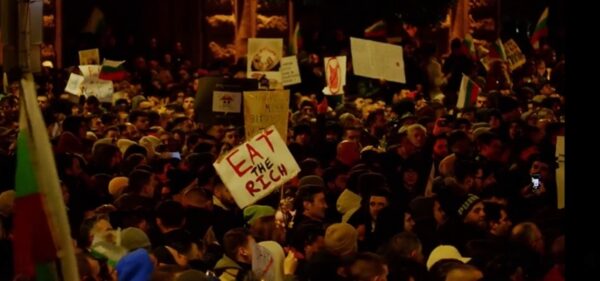
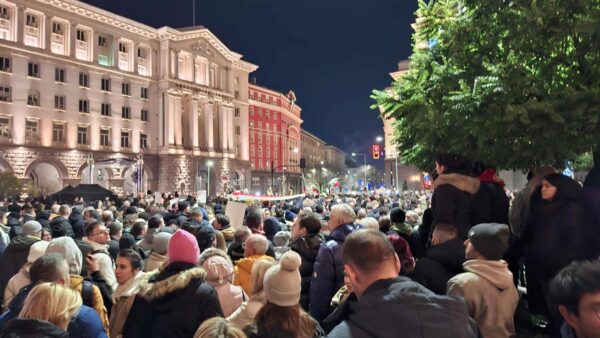
Similarly, footage from other cities, such as Plovdiv and Varna, showed turnouts for the related protests of a scale not seen for decades. On social networks, footage showed Bulgarians in capitals abroad joining in the protests.
Late in the evening, in incidents involving provocateurs, from whom the organisers of the protest distanced themselves, there were clashes outside the Sofia headquarters of Peevski’s party. This, like clearly another staged attack, saw vandalism by masked “protesters” – marshalled by unknown forces and not part of the legitimate participants of the mainstream protests – of the GERB offices in Dondukov Boulevard.