
Consumer protection body: No reports of serious breaches after Bulgaria adopts euro
There have been no reports to the Consumer Protection Commission (CPC) of serious violations after the introduction of the euro in Bulgaria, acting chairperson of the CPC Alexander Kolyachev told Bulgarian National Television (BNT) on January 2.
Kolyachev said that the CPC’s phone lines were quiet: “We have received a few isolated reports, mainly about refusal to accept payment in euro or refusal to accept payment in leva”.
He said that the commission would step up its activity this monthy, in addition to all planned ongoing inspections.
Kolyachev said that a merchant’s refusal to accept payment was subject to sanctions, but proving this was not always easy.
“It is very difficult to prove such a thing, since there has been no transaction,” he said.
He issued a reminder that under the Euro Adoption Act, merchants are not allowed to return mixed change, part in euro and part in leva.
If this happens, the consumer has the right to react: “The first thing he can do is refuse the deal. The second is to report it to the relevant authorities, which in this case is us, the Consumer Protection Commission,” he said.
However, the client can pay in a mixture of both leva and euro, if not having enough cash available in one currency.
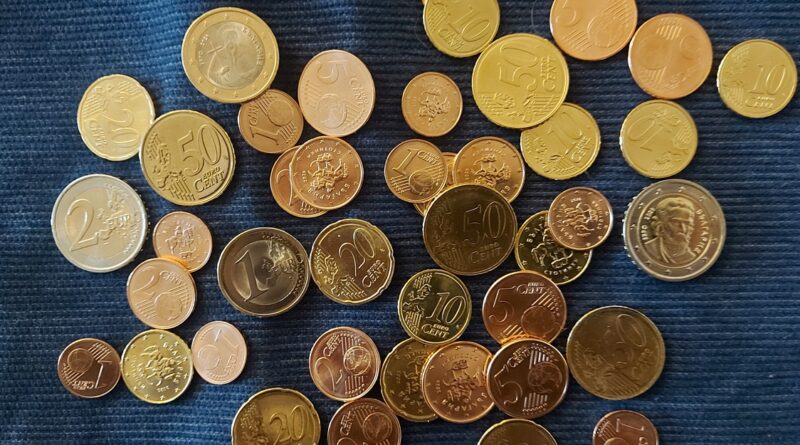
On January 2, Bulgarian media reports said that the lack of euro coins was proving to be the biggest stumbling block for the operation of small shops and cafes.
Their owners complain not about difficulties with converting from leva to euros at the cash registers, but about banks having refused to sell them starter packs with euro coins worth 102.30 euro or 200 leva – necessary for the first days of the introduction of the euro to return change.
The banks’ excuse most often was that the available quantities of euro coins for starter packs for businesses were very quickly exhausted.
James Jolovski, secretary general of the Association of Banks in Bulgaria, told Nova Televizia on January 2: “On the first working day of the new year 2026 (January 5), bank offices open and traders can stock up on the necessary amount of euro coins. The coins are now fully available in the banks”.
Media reports said that in large retail chains, there was there no problem with returning change in euro coins and smaller euro banknotes.
Most supermarkets were closed on January 1 to load their cash registers with euro.
Anna Miteva, spokesperson for the National Revenue Agency, told Nova Televizia on January 2 that the agency was stepping up control over traders across the country after the introduction of the euro.
The control covers commercial establishments throughout the country and includes both preventive actions and inspections based on reports of unjustified price increases after the introduction of the euro.
Miteva said that violations had been found in 69 cases, involving increases in prices of certain goods without clear and objective economic reasons.
In some of these cases, fines had been issued for total amount of about 45 000 leva, she said.
Miteva said that the inspections are carried out in accordance with the Euro Adoption Act and are aimed at traders who use the currency change as a pretext for speculative price increases.
“Our actions are aimed at dishonest traders. Fortunately, the honest ones are in the majority and we thank them,” she said.
Since the beginning of 2026, the National Revenue Agency has already imposed direct sanctions.
Fines for a first violation can reach up to 10 000 leva, and for a second violation, up to 20 000 leva . Sanctions for legal entities can reach 200 000 leva.
Miteva said that these sanctions are serious, especially for small and medium-sized businesses, and are aimed at preventing speculation.
“The inspections are massive and will continue. Our goal is to protect citizens from unregulated behaviour and price abuses,” Miteva said.
The National Revenue Agency sees the temporary closure of establishments as a measure of last resort and its mass use is not expected at the moment, she said.
(Photo: Clive Leviev-Sawyer)


