EU leaders blame Russia for attacks on civilian shipping in the Black Sea
Conclusions adopted by European Union heads of state and government squarely place the blame on Russia for attacks on civilian vessels in the Black Sea, including in the exclusive economic zones of Bulgaria and Romania.
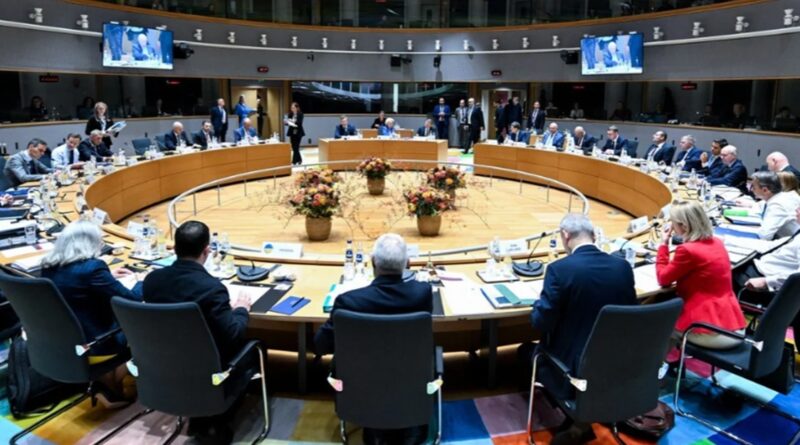
The conclusions were adopted at the close of the October 15-16 2026 meeting of the European Council.
In the past few days, four merchant ships have been hit in Bulgaria’s exclusive economic zone in the Black Sea, with two vessels sunk with loss of life, and two have been hit in Romania’s territorial waters.
In Bulgaria, Prime Minister Roumen Radev has been reluctant to blame Russia, saying that there is as yet no evidence that it is guilty. This has led, among other things, to several former prime ministers, general officers, diplomats and public figures issuing a public appeal to the Radev government to protect national security at a time of growing threats to the security of Bulgaria and the region.
In its conclusions announced on the evening of October 16, the European Council reaffirms the strategic importance of security, stability and freedom of navigation in the Black Sea.
“By targeting Ukraine’s agricultural infrastructure, Black Sea and Danube ports, border crossing points, export facilities and vessels, by blocking shipping lanes, and by destroying grain storage facilities, Russia is once again weaponising food and undermining global food security in particular in Africa, Asia and the Middle East,” the EU leaders said.
“Attacks against civilian shipping, merchant and commercial vessels, including Member State-flagged vessels, such as the recent attacks in Bulgaria’s and Romania’s exclusive economic zones in the Black Sea, are unacceptable and constitute a serious violation of international and maritime law, including the United Nations Convention on the Law of the Sea (UNCLOS),” the conclusions said.
To avoid a further deterioration of the situation, the European Council calls for the immediate restoration of safe passage for all civilian shipping, merchant and commercial vessels in the Black Sea, the document said.
It also recalls the importance of measures aimed at further consolidating the EU-Ukraine Solidarity Lanes, which are vital for sustainable grain exports.
The conclusions said that the EU supports a comprehensive, just and lasting peace in Ukraine based on the principles of the UN Charter and international law and underpinned by robust and credible security guarantees for Ukraine.
“Only a solution that respects Ukraine’s independence, sovereignty and territorial integrity can bring about a just and lasting peace,” the document said.
“Borders must not be changed by force, the aggressor cannot be rewarded and Ukraine’s long-term security and ability to defend itself must be guaranteed. The path to peace in Ukraine cannot be decided without Ukraine. The European Union will decide on matters of its competence or affecting its security.”
In accordance with the Union’s aim to promote peace, as enshrined in the Treaties, the European Council reiterates its support for diplomatic efforts to bring Russia’s war of aggression to an end, and underlines the EU’s readiness to step up its engagement in that context, the conclusions said.
Europe has a key role to play in a future settlement and will defend its interests, the EU leaders said.
“The European Council urges Russia to show genuine willingness regarding peace, agree to a full, unconditional and immediate ceasefire and engage in meaningful negotiations towards a just and lasting peace. Humanitarian relief efforts and confidence-building measures, notably the exchange of prisoners of war and the return of unlawfully deported Ukrainian children and civilian detainees, must continue as part of the pathway to peace.”
The conclusions said that the EU and its member states stand ready to contribute to robust and credible security guarantees for Ukraine, notably through the Coalition of the Willing and in cooperation with the United States.
“This will include supporting Ukraine’s ability to deter aggression and defend itself effectively, also in the long term.”
The contribution of the EU and member states will be based on their respective competences and capabilities and in line with international law.
“In this context, the European Council welcomes the agreement on the extension and revision of the mandate of the European Union Military Assistance Mission in support of Ukraine (EUMAM Ukraine). Member States remain committed to contributing to training and equipping the Ukrainian Armed Forces.”
The EU remains determined to further increase pressure on Russia so that it stops its brutal war of aggression and engages in meaningful negotiations towards peace, the conclusion said.
The European Council said that it welcomes the recent adoption of the 21st sanctions package and of a substantial number of further listings of individuals and entities.
It calls for the swift and effective implementation of the measures concerning Russian ex-combatants and for further measures, in coordination with partners, including to reduce Russia’s energy revenues, and to effectively close loopholes and fight circumvention, and to curb shadow fleet operations and undermine their business model.
“This requires a ‘whole of route’ approach and coordination among Member States and with partners, including a common approach to addressing the significant environmental, security and maritime safety risks posed by such vessels, in particular through more boarding operations, in line with international law, including UNCLOS.”
The European Council said that it regrets the United States’ decision to temporarily lift sanctions on Russian diesel.
It stresses the need to prevent grain stolen by Russia from temporarily occupied Ukrainian territories from being exported via the EU.
“The European Council reiterates that, as long as there is no just and lasting peace in Ukraine, there should not be a normalisation of Russia’s and Belarus’ participation in international sports and cultural events, particularly through the display of national symbols.”
The European Council reiterated its call on all countries to immediately cease any assistance to Russia in its war of aggression against Ukraine, whether direct or indirect, and notably through the provision of dual-use goods and components.
In particular, it strongly condemns the deployment of the North Korea’s military forces in the war against Ukraine as well as the continued military support provided to Russia by Iran, Belarus and North Korea, among others.
“The European Union remains committed to ensuring full accountability for war crimes and the other most serious crimes committed in connection with Russia’s war of aggression against Ukraine and fully supports ongoing efforts within the framework of the Council of Europe towards the operationalisation of the International Claims Commission for Ukraine and the Special Tribunal for the Crime of Aggression against Ukraine,” the conclusion said.
“The European Council urges Russia and Belarus to immediately ensure the safe and unconditional return to Ukraine of all unlawfully deported and transferred Ukrainian children and other civilians.”
The European Council said that it acknowledges the importance of the extension of temporary protection for displaced persons from Ukraine until March 2028.
“The European Union remains committed to supporting Ukraine’s repair, recovery and reconstruction, in coordination with international partners, including in the areas of demining assistance and psychological and psychosocial rehabilitation.”
(Photo: Council of the EU)