
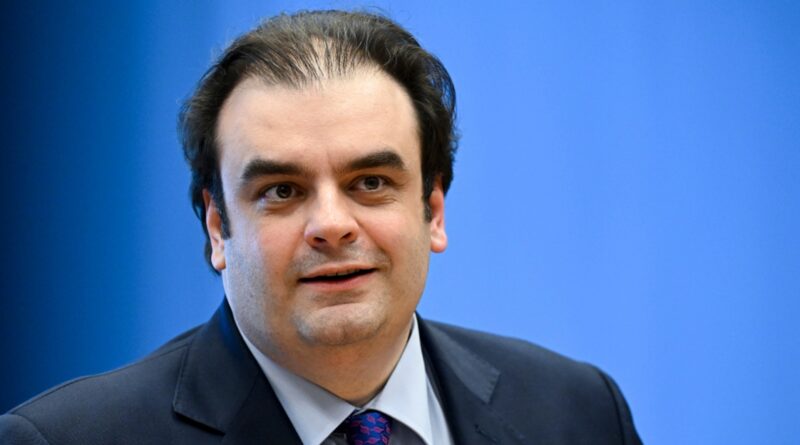
Eurogroup president congratulates Bulgaria on ‘smoothly executed process’ of euro transition
The Eurogroup congratulates the Bulgarian authorities on a smoothly executed process of the transition to the euro, Eurogroup president Kyriakos Pierrakakis said on January 19, according to a statement by the Council of the EU after the Eurogroup’s first meeting since January 1 2026 when Bulgaria adopted the euro as legal tender.
“The euro is at the heart of our European project as a pillar of economic stability and prosperity, bringing together now a total of 21 countries that use the common currency,” Pierrakakis said.
This was the first Eurogroup meeting attended by Bulgaria’s Finance Minister as a full member.
The first item on the agenda of the Eurogroup meeting was the Bulgarian Finance Minister, the European Commission and the European Central Bank updating ministers on the state of play of Bulgaria’s changeover to the euro.
Bulgaria’s Finance Ministry said in a statement that minister Temenuzhka Petkova assured her colleagues from the Eurogroup that the transition to the euro is proceeding successfully.
All major systems are functioning normally – money circulation is ensured, payments are made without interruption, payment systems are working stably, and the administration, business and public are adapting without significant difficulties, Petkova said.
According to Petkova, the national information campaign, conducted by state institutions in partnership with the non-governmental sector, with its diverse tools, including nearly 2000 information events and meetings held on a different scale and for different target groups throughout the country, had increased the level of awareness of the process to 80 per cent, and public support for the euro already permanently exceeds the percentage of opponents.
Among the priorities of state institutions at the moment, Petkova highlighted consumer protection. The dual price indication is in effect from August 2025 and will last until August 2026, and the period of dual circulation of the lev and the euro is until the end of January.
Violations of the Euro Introduction Act, including the ban on unjustified price increases, are sanctioned by the National Revenue Agency and the Consumer Protection Commission – the main control bodies in this area, Petkova said, adding that inspections are carried out mainly on the basis of reports from the public, and these are a priority.
Petkova said that more than 4.3 billion euro have been put into circulation at the moment, with nearly 60 per cent of the leva cash already withdrawn.
“Although any major change requires some time for adaptation, we are confident that the euro will quickly become a natural part of citizens’ everyday lives and will contribute to greater economic stability for Bulgaria and the euro zone as a whole,” Petkova said.
(Photo of Pierrakakis: Council of the EU)