
Bulgaria’s Radev government invokes ‘constructive abstention’ on European Peace Facility aid for Ukraine
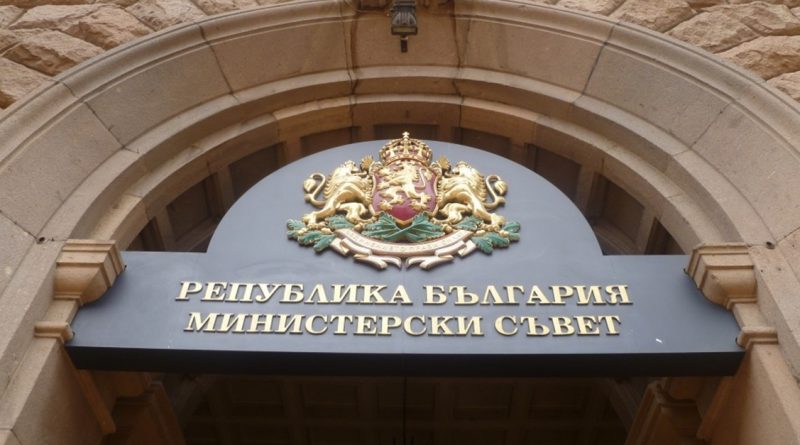
The Roumen Radev government has invoked the “constructive abstention” provision regarding the EU’s European Peace Facility on financing the purchase of new lethal weapons for Ukraine, according to a Bulgarian government information service statement after a regular weekly meeting of the Cabinet on October 21.
The European Peace Facility was established by EU ministers in March 2021 as an extra-budgetary instrument of the European Union.
It finances military or defence initiatives within the framework of the EU’s Common Foreign and Security Policy.
All EU member states are required to provide a financial contribution, which is calculated on the basis of gross domestic product, the Bulgarian government information service statement said.
“Commitments under the mechanism were made by previous governments, and any failure to make required payments would result in the accrual of interest and the inability to recover funds for assistance already provided,” it said.
The current legal framework allow an EU member state to exercise its right of “constructive abstention” by not supporting a certain decision in the field of the Common Foreign and Security Policy, without blocking it being adopted, the statement said.
“The financial contribution due from the Republic of Bulgaria under the European Peace Facility for Ukraine will be used solely for measures related to non-lethal assistance to Ukraine,” it said.
“Bulgaria will insist on priority use of the Bulgarian financial contribution under the European Peace Facility to the regions in Ukraine where representatives of the Bulgarian national minority live, and the possibilities for this are in the process of being clarified with the European Commission,” the statement said.
The statement, parroting the Radev line about “peace” by opposing military aid to Ukraine for that country to defend itself against Putin’s Russia’s illegal war, said: “As a country in the Black Sea region, the Republic of Bulgaria has a strategic interest in the cessation of hostilities in the immediate vicinity of its borders”.
“Focusing entirely on non-military assistance sends a clear signal to the international community that Bulgaria supports the sovereignty and territorial integrity of Ukraine, but rejects the logic of endless military confrontation and seeks ways to open diplomatic channels for negotiations,” the government information service said.
The Radev Cabinet decision comes a few days before Bulgaria’s regular presidential elections, in which incumbent President Iliana Yotova is seeking election in her own right as head of state, with the backing of Radev’s political party, with the line of proposing a “coalition for peace” and a refusal to lay the blame for the war, notorious for the Kremlin’s war crimes including deliberate mass killing of civilians and illegal abductions of Ukrainian children, on Putin ruler’s Russia. In the presidential elections, the Yotova ticket is banking on not alienating its Russophile electorate.
(Photo: Clive Leviev-Sawyer)


