Bulgaria’s caretaker PM: About 20 euro a month for lowest-income people to compensate for high fuel prices
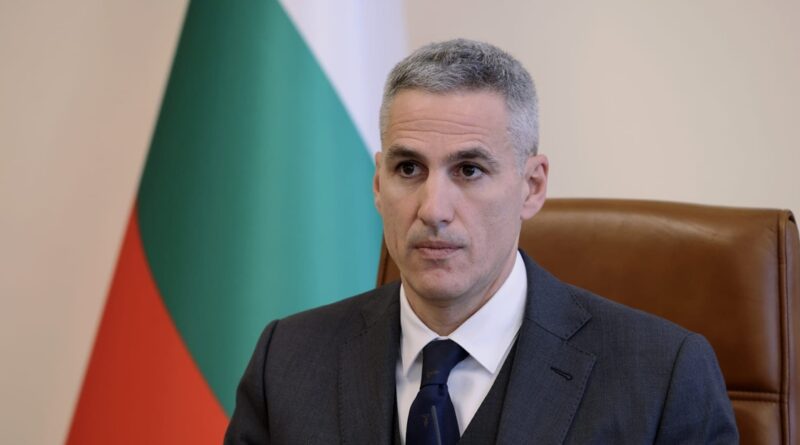
Up to 20 euro per person a month will be given to people with the lowest incomes due to the increase in fuel prices, Bulgaria’s caretaker Prime Minister Andrei Gyurov told reporters on March 15.
The measure will be valid as long as fuel prices are high due to the conflict in the Middle East.
“We have defined criteria that are income-based,” Gyurov said.
“Those who are up to twice the poverty line, own a car or lease, have paid their taxes and fines, will receive 20 euro directly into their accounts in the months in which we see a high price level,” he said.
“The measures are aimed directly at Bulgarian citizens. They will be credited to their accounts, without the need for them to submit applications, receive vouchers or use such things for election campaigns.”
Gyurov set up an interdepartmental commission on the issue on March 10, which he heads, and on March 12 provided the first outline of its proposals.
In his March 15 comments, Gyurov said that the caretaker government would activate the 20 euro compensation measure as soon as possible, within the month of March.
“The estimates about these funds are between 20 and 30 million euro, depending on the groups of Bulgarian citizens who will fall under the measure,” he said.
The funds would be provided through the state budget, Gyurov said.
The measure was not “helicopter money” and would not distort the market, he said.
The second measure that the caretaker government is preparing for business is the postponement of the measure to increase toll fees.
Reducing the excise tax on fuels is not an option, because according to European directives Bulgaria currently at the minimum.
“Of course, we can take a populist approach and put a price ceiling. But the result will be that fuel will disappear – it will be exported abroad and sold at higher prices.”
He said that the fuel price increase in Bulgaria is the lowest in Europe, even compared to its neighbouring countries – the difference is between 20 and 50 cents for different types of fuel.
Gyurov said that there is currently an increase in the range of between 15 per cent and 25 per cent from the levels in the weeks before the conflict in the Middle East.
According to the fuelo.net website, the average price of a litre of A95 petrol has risen from 1.25 euro on February 27 – the day before the US-Israeli attack on Iran began – to 1.36 euro on March 15.
The average price of a litre of diesel has risen from 1.29 euro on February 27 to 1.49 euro on March 15.