
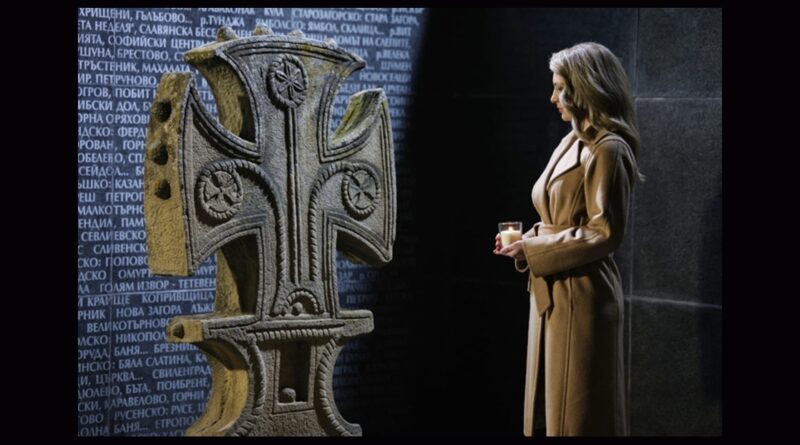
Commemorations held in Bulgaria for victims of communism
Commemorations were held in Bulgaria’s capital city Sofia, as well as other cities and towns, on February 1, the 81st anniversary of the communist-era “People’s Court” sentencing 147 people from the ousted monarchist government to death, with the executions carried out immediately.
In 2011, the government of the time, acting on the recommendation of former presidents Zhelyu Zhelev and Petar Stoyanov, declared February 1 the day of commemoration of victims of the communist regime.
Those sentenced to on February 1 1945 included three regents, eight royal advisers, 22 former cabinet ministers, 67 former MPs and 47 generals and senior military officers.
In 1996, the supreme court overturned most of the sentences of the “People’s Court”, in1998, the Constitutional Court ruled that the “People’s Court” to have been unconstitutional and in 2000, Bulgaria’s Parliament approved a resolution that the communist regime – which ruled Bulgaria from 1946 to 1990 – had been criminal.
The 2026 commemorations included a requiem mass at St Nedelya church in Sofia and the laying of wreaths at the monument near the National Palace of Culture in the Bulgarian capital.
The wreath-laying was attended by MPs and Sofia city councillors from We Continue the Change – Democratic Bulgaria (WCC-DB), GERB-UDF and the Movement for Rights and Freedoms – New Beginning.
Ivailo Mirchev, co-leader of the Yes Bulgaria party – part of WCC-DB – said: “These are things that should never be repeated, political opponents, people who, by the way, have been killed simply because of, even out of pure envy, have been brought before the People’s Court”.
“They were not even connected in any way to being enemies of the communist regime and it is good that we honour the dead on days like today, but this should never be repeated,” Mirchev said.
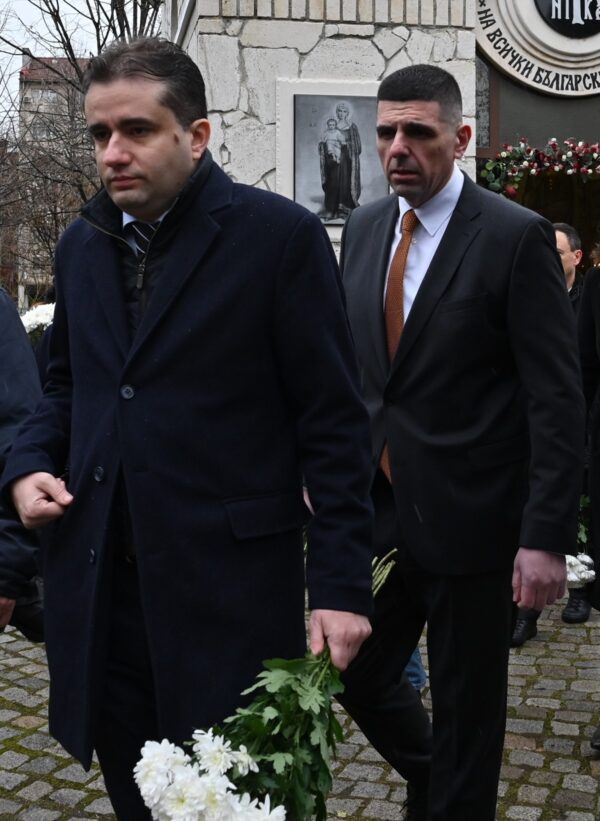
Yes Bulgaria co-leaders Bozhidar Bozhanov and Ivailo Mirchev at the February 1 2026 laying of floral tributes to the victims of the country’s communist era.
UDF leader Roumen Hristov said: “We must not forget what happened 81 years ago on this dark date.
“The so-called People’s Court with 135 members sentenced nearly 2700 people to death and 1300 to life imprisonment. The greatest repressions in Eastern Europe were in Bulgaria,” Hristov said.
“They happen in a short period of time, unlike other countries, but the 110 camps continue in the mid-seventies – something that must not be forgotten and we must bow our heads and pay tribute to the people and their loved ones for this ugly event that happened in the history of the Republic of Bulgaria,” he said.
On Facebook, the Speaker of the National Assembly, Raya Nazaryan of GERB-UDF, said: “February 1 remains in our history as a crime against the ideal of freedom, a crime against the human right to defence and as an example of an act based on political impudence and self-dealing with any inconvenient opponent”.
“By marking this dark date, we are more categorical than ever that this should never happen again,” Nazaryan said.
“We pay our respects to the victims of the communist dictatorship with the clear awareness that we are indebted to their memory. We are obliged to objectively convey the facts of history to future generations, to free our society from the burden of the remnants that glorify communism and to never allow such self-dealing, cruelty and lawlessness towards any political opponent,”she said.
“I count on all democratically minded people, regardless of their party today, to unite to ensure justice and a dignified memory for the victims of the communist dictatorship,” she said.
In the National Assembly on January 30, there were declarations by WCC-DB, GERB-UDF and MRF – New Beginning against the “People’s Court”, but an attempt by WCC – DB for a minute of silence for the victims of communism was ruled out on procedural grounds.
However, MPs from most groups rose for a moment of silence, but with those from the Bulgarian Socialist Party (BSP) and minority pro-Russian party Vuzrazhdane refusing to do so.
On February 1, a commemorative event was to be held in the evening at St Joseph’s Roman Catholic cathedral in Sofia, to be addressed by historian Professor Momchil Metodiev, Kultura editor-in-chief Toni Nikolov and Father Paolo Cortesi, parish priest at Belene, the site of a notorious prison camp used by the communist regime.
In Plovdiv, the BSP headquarters and the Alyosha monument which commemorates the 1944 invasion of Bulgaria by the Red Army were splashed with red paint overnight.
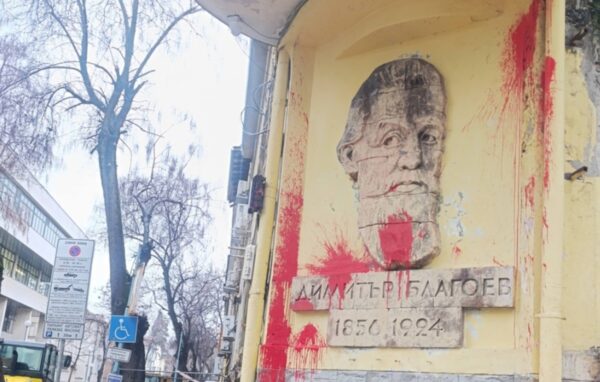
Photo: BSP
Plovdiv media reported that there was a civic initiative to place a plaque on the Alyosha monument reading: “This monument is dedicated to those who occupied Bulgaria, killed and repressed its intelligentsia and turned it from a modern European country into a backward Soviet province”.
As evidenced by this week’s verbal clashes in Parliament, February 1 is a divisive day in contemporary Bulgaria, with those who commemorate emphasising the repression of the communist era, while those against are from the Russophile camp, nostalgic for the communist era and who also claim that those commemorated included fascists and pro-Nazis.
The fissures in how Bulgarians view key dates in its history are also exposed on the September 9 anniversary of the Red Army invasion, which the pro-Russian camp sees not as an invasion but a “liberation”.
March 10, marked as the anniversary of the 1943 prevention of the deportation of the Bulgarian Jess to the Nazi death camps of the Holocaust, is also the subject of division. Some insist that the full historical record shows Bulgaria’s involvement in the deportation of Jews to death camps from the “new lands” administered by Bulgaria at the time, while others deliberately ignore this. The role of Tsar Boris III is also disputed, whether he was complicit in the plan for the deportations or was a “saviour” of the Bulgarian Jews.
So too, November 10, the anniversary of the 1989 fall of the Zhivkov communist regime following the fall of the Berlin Wall, gets politicians arguing, whether that was the dawn of an era of democracy or the gateway to a flawed transition.
More recently, a new date has become the subject of dispute between rival camps – January 1 2026, when Bulgaria adopted the euro as its currency. Pro-European politicians, leading economists and business people see it as not only an opportunity but also the completion of EU member Bulgaria’s European integration. Others, in particular the pro-Russian and Euroskeptic camp, insist on claiming that it means disaster.
(Main photo: parliament.bg)


